
La Cambre Abbey
Catholic·Belgium·Active parish and educational institution with historical buildings·12th century
La Cambre Abbey, also known as Ter Kameren Abbey, is a former Cistercian monastery located in Brussels, Belgium. Founded around 1196, it was a significant religious site that reached its peak in the 13th century. Though suppressed during the French Revolution and largely rebuilt in the 18th century, parts of the medieval structure remain, and today the site houses a Catholic parish, a community of Norbertine canons, the Belgian National Geographic Institute, and a prestigious visual arts school.
Key Facts
- ›Founded around 1196 by noblewoman Gisèle with support from Villers Abbey.
- ›Reached its apogee in the 13th century, a period of significant spiritual influence.
- ›Suppressed during the French Revolution and abolished in 1796.
- ›Most current buildings date from the 18th century, with the church, refectory, and capitular hall wing retaining medieval character.
- ›Currently houses a Catholic parish, Norbertine canons, the Belgian National Geographic Institute, and the La Cambre visual arts school.

Gothic, French, Neoclassical, Louis Xv
- Abbey Church With Medieval Character
- Refectory
- Capitular Hall Wing
- 18th-Century French-Style Buildings
- Terraced Gardens Restored In the 18th-Century Manner
- Albert Bouts' Painting 'the Mocking of Christ'
Ter Kameren Abbey, Abbaye De La Chambre De Notre-Dame, Camera Beatae Mariae
GisèLe, Saint Boniface of Brussels, Saint Alix, Maximilie De Berghes, SéRaphine Snoy, Guillaume Des Marez, Henry Van De Velde
- Founded Around 1196
- Saint Boniface of Brussels Resided and Died Here
- Saint Alix Lived Here
- Suffered Looting and Fire In the 14th Century
- Abbey Church Rebuilt In 1400
- Site of Refuge For the Widow of Count Egmont In 1568
- Largely Destroyed By Calvinists In 1581 and During French Invasions Around 1672
- Rebuilt In the 18th Century
- Suppressed and Closed In 1796 During the French Revolution
- Used As A Military Hospital, Cotton Manufacture, and Poor House In Subsequent Years
- Belgian Royal Military Academy Occupied the Site Between 1874 and 1908
- Became A Parish Church In 1909
- Belgian National Geographic Institute Occupied Premises From 1871 To 2020
- Occupied By German Troops During Wwi
- Restoration Efforts Began In the 1920s
- Higher Institute of Decorative Arts Opened In 1927
- Designated A Historic Site On June 30, 1953
- Religious Life Restored By Norbertine Canons In 2013, Closed In 2020
About La Cambre Abbey
La Cambre Abbey, also known by its Dutch name Ter Kameren Abbey, is a former Cistercian monastery with a rich and complex history located in the city of Brussels, Belgium. Situated in the Maelbeek valley, it was founded around 1196 by Gisèle, a noblewoman from Brussels, with the support of Villers Abbey. The abbey flourished, particularly in the 13th century, a period marked by the presence of influential figures such as Saint Boniface of Brussels and Saint Alix.
History and Development
The abbey experienced periods of both prosperity and destruction. The 14th century brought challenges with looting and a significant fire in 1381, though the abbey church was rebuilt in 1400 in a sober Gothic style. The 16th and 17th centuries saw further destruction during religious wars, leading to extensive rebuilding in the 18th century in a French architectural style. The abbey's monastic life came to an end with its suppression during the French Revolution in 1796. Following its closure, the site underwent significant transformations, serving as a military hospital, a cotton factory, and a poor house. The Belgian Royal Military Academy occupied the grounds from 1874 to 1908, and the Belgian National Geographic Institute was a long-term resident from 1871 to 2020.
Legacy and Current Use
Restoration efforts in the early 20th century helped preserve the abbey's historical fabric. In 1927, the prestigious visual arts school, École nationale supérieure des arts visuels de La Cambre (ENSAV), was established on the former abbey grounds. Today, La Cambre Abbey is a multifaceted site. Its church functions as a Catholic parish, and it is home to a community of Norbertine canons. The site also preserves significant architectural elements, including the 18th-century buildings, the medieval church, refectory, and capitular hall wing, as well as terraced gardens that have been restored to their 18th-century appearance. The former abbey was designated a historic site in 1953.
Source: Wikipedia ↗
Frequently Asked Questions
When was La Cambre Abbey founded?
La Cambre Abbey was founded around 1196 by a noble lady from Brussels named Gisèle. Its establishment was supported by the monastic community of Villers Abbey.
What is the religious tradition of La Cambre Abbey?
Historically, La Cambre Abbey was a Cistercian monastery. Today, the abbey church serves as a Catholic parish of the Archdiocese of Mechelen–Brussels and is home to a community of Norbertine canons.
What happened to La Cambre Abbey during the French Revolution?
La Cambre Abbey was suppressed during the French Revolution and the monastery was closed in 1796. While it escaped complete dismantling, most of its buildings were demolished, and the remaining structures were repurposed for various uses.
What important figures are associated with La Cambre Abbey?
Saint Boniface of Brussels, a theologian and bishop, spent the last eighteen years of his life at the abbey and is interred there. Saint Alix, a mystic, also lived in the community. Later, Constantia Rubens, daughter of Peter Paul Rubens, was among the Bernardine nuns.
What is the architectural style of La Cambre Abbey?
While most of the current buildings date from the 18th century in a French style, the abbey church retains its medieval character and is described as Gothic, illustrating the transitional period between primitive and Flamboyant Gothic styles. Some later additions and restorations also incorporate neoclassical elements.
Is La Cambre Abbey still an active monastery?
Religious life was restored at La Cambre Abbey in 2013 by Premonstratensian canons, who led the Christian community and managed the parish. However, this priory closed in the summer of 2020.
Related Monasteries
Herkenrode Abbey
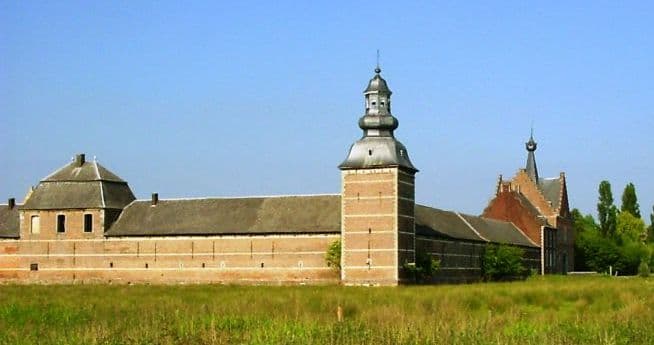
Herkenrode Abbey was a significant Cistercian nunnery founded around 1182 in Kuringen, Belgium, becoming the wealthiest women's monastery of its order in the Low Countries. Though it faced decline in the 15th century, it experienced a revival and underwent reconstruction in the 18th century. The abbey was dissolved by the French Revolutionary Army in 1795, leading to its dispersal and eventual ruin, though much of its 16th-century stained glass has survived and is considered globally significant.

Tongerlo Abbey
Tongerlo Abbey is a Premonstratensian monastery located in Tongerlo, Belgium, with a history dating back to around 1133. It played a significant role in the Campine region, serving as a large religious and educational center and influencing local politics. After a period of disestablishment during the Napoleonic era, the abbey was re-established in 1838 and remains an active monastery today, notable for its historical library and a museum housing a life-size copy of Leonardo da Vinci's "The Last Supper."

Louvain-la-Neuve
Louvain-la-Neuve is a planned town in Belgium, established to house the French-speaking Université catholique de Louvain (UCLouvain) following linguistic disputes in the 1960s. Designed with a focus on pedestrian accessibility, its city center is built on a concrete slab with vehicular traffic routed underground. While initially conceived as an academic hub, it has diversified with cultural and commercial amenities, aiming for a balanced community beyond its student population.