
Timadeuc Abbey
Timadeuc Abbey, officially the Abbey of Notre-Dame de Timadeuc, is a Trappist monastery founded in 1841 in Bréhan, Brittany, France. It was established by monks from La Trappe Abbey, with its location chosen by Dom Joseph Hercelin. The abbey has a complex history, including periods of construction, damage from arson, and legal challenges, but also played a significant role in the French Resistance during World War II.
Key Facts
- ›Founded on July 22, 1841, by three monks from La Trappe Abbey.
- ›Located in Bréhan, Morbihan department, Brittany, France.
- ›Elevated to abbey status in 1847.
- ›Played a significant role in the French Resistance during World War II, sheltering airmen and weapons.
- ›Known for its artisanal food production, including Trappe de Timadeuc cheese and Le Timanoix.
- ›The current abbot is Benoît Briand, who assumed leadership in 2011.

Gothic Revival
Authentic Trappist Cheese Production, Gregorian Chant Recordings, Role In the French Resistance During Wwii
Abbey of Notre-Dame, Timadeuc, Abbaye De Timadeuc, Abbaye Notre-Dame De Timadeuc
Dom Joseph Hercelin, Father ThéOdore, Father Bernard Dugué, Brother GéRard, Countess Du Bot, Abbot Dom Dominique Nogues, Father GwenaëL, Father Gabriel Bourdier, Father Alain Christian, Father Louis De Gonzague, Bernard Dugué, Cyprien Morel, Bernard Chevalier, Brieuc Boutmy, Dominique Nogues, Gabriel Blourdier, Emmanuel De Miscault, Claude Richard, Paul Houix, BenoîT Briand
- Founded On July 22, 1841.
- Elevated To Abbey Status In 1847.
- Criminal Arson Attack In 1863.
- Expulsion and Return of Monks Under the Third Republic .
- Demolition of Original Church and Construction of New Gothic Revival Church .
- Relocation of Twelve Monks To Canada In 1903 Due To the 1905 Law.
- Significant Role In the French Resistance During World War Ii.
- Received the French Resistance Medal In 1946.
About Timadeuc Abbey
Timadeuc Abbey, also known as the Abbey of Notre-Dame de Timadeuc, is a Trappist monastery situated in Bréhan, within the Morbihan department of Brittany, France. Founded on July 22, 1841, by three monks from La Trappe Abbey, its establishment was spearheaded by Dom Joseph Hercelin, a former director of the Vannes major seminary, who chose the former seat of the lordship of Tymadeuc. The initial community faced limited resources, relying on the support of the aging Countess du Bot, who sold the dilapidated manor at a reduced price.
History and Development
The construction of the priory and its associated buildings commenced in 1842 and concluded in 1846, utilizing materials salvaged from the ruins of Rohan Castle. The church's foundation stone was laid in 1842 and it was consecrated in 1846. In 1847, the priory was officially elevated to abbey status. The monastic lifestyle observed by the early monks at Timadeuc was notably austere, involving early rising for prayer, silent meals accompanied by spiritual readings, and simple living quarters.
The abbey's history was marked by significant challenges. In 1863, a criminal arson attack caused substantial damage. Furthermore, an expulsion occurred in 1880 due to an anti-clerical decree by the Third Republic, though the monks returned in 1882. A new Gothic Revival church was constructed between 1895 and 1898, replacing the original structure. The abbey's existence was again threatened by the 1905 Law on the Separation of Church and State, leading some monks to relocate temporarily to Canada.
World War II and Modern Activities
During World War II, Timadeuc Abbey emerged as a crucial center for the French Resistance, led by Abbot Dom Dominique Nogues. The abbey provided refuge for airmen and resistance fighters and served as a storage point for weapons. Several monks were arrested for their involvement, with Father Gwenaël (Jean Thomas) dying in Neuengamme concentration camp after being tortured. The abbey's significant contributions were recognized with the French Resistance Medal in 1946.
Today, Timadeuc Abbey continues its monastic traditions, focusing on prayer and Gregorian chant, with its community having released several music albums. While farming has ceased due to an aging population, the monks are actively involved in artisanal food production. Their primary income is derived from cheesemaking, particularly Trappe de Timadeuc and Le Timanoix, and the production of fruit paste, all marketed under the "Monastic" brand.
Source: Wikipedia ↗
Frequently Asked Questions
When was Timadeuc Abbey founded?
Timadeuc Abbey was founded on July 22, 1841. The initial community consisted of three monks who arrived to establish the monastery.
What is the religious tradition of Timadeuc Abbey?
Timadeuc Abbey is a Trappist monastery, which is a branch of the Order of Cistercians of the Strict Observance.
What are the main activities at Timadeuc Abbey?
The monks' daily life is centered around prayer and Gregorian chant, with a schedule of collective prayers and Mass. They also engage in artisanal food production, primarily cheese and fruit pastes.
Did Timadeuc Abbey play a role in World War II?
Yes, during World War II, the abbey was a significant center for the French Resistance. It provided shelter for resistance fighters and weapons, and Abbot Dom Dominique Nogues was an agent of the Pat O'Leary Line.
What products are made at Timadeuc Abbey?
The abbey is known for its artisanal food production. Key products include Trappe de Timadeuc, a pasteurized cow's milk cheese, and Le Timanoix, a cheese aged with walnut liqueur. They also produce fruit paste.
Is Timadeuc Abbey open to visitors?
While the article does not explicitly state if the abbey is open to the public for visits, it is described as a popular destination for prayer and Gregorian chant, suggesting some level of accessibility for those seeking spiritual engagement.
Related Monasteries

New Melleray Abbey
New Melleray Abbey, located near Dubuque, Iowa, is a Trappist monastery established in 1849 by monks from Mount Melleray Abbey in Ireland. It has served the religious needs of the surrounding region for over a century and is notable for its Gothic Revival architecture, a significantly renovated chapel, and its business producing Trappist Caskets. The abbey continues to house an active monastic community dedicated to prayer, work, and contemplation.

Scourmont Abbey
Scourmont Abbey, also known as Abbaye Notre-Dame de Scourmont, is a Trappist monastery located on the Scourmont plateau in Chimay, Belgium. Famous for its spiritual life and the production of Trappist beer and cheese under the Chimay brand, the abbey was founded in 1850. Despite early challenges including criminal acts by some monks and the arduous task of cultivating the land, Scourmont grew to become an abbey in 1871 and has since founded other monasteries.
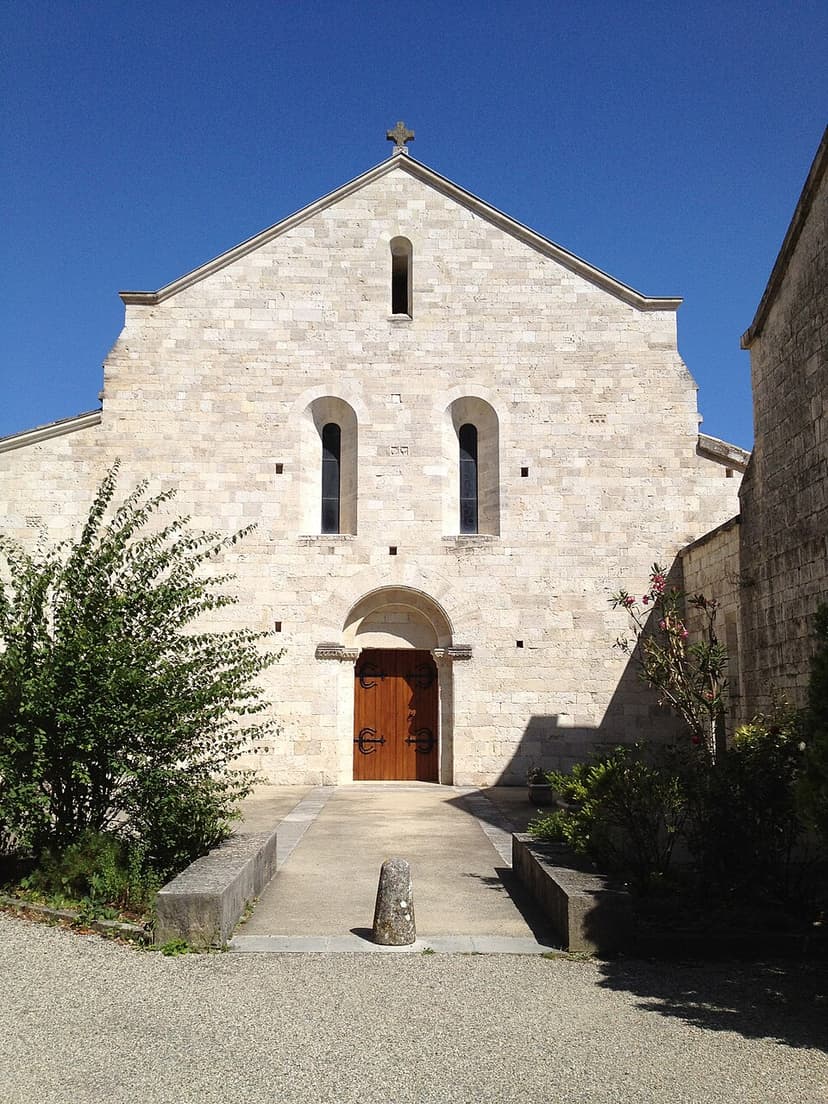
Aiguebelle Abbey
Aiguebelle Abbey, officially Abbaye Notre-Dame d'Aiguebelle, is a Trappist monastery located in the Drôme department of France, on the historical borders of Dauphiné and Provence. Originally founded as a Benedictine monastery in 1045, it was re-established as a Cistercian house in 1137 and later refounded as a Trappist monastery in 1815. The abbey is notable for preserving many of its medieval buildings and for its significant role in establishing numerous daughter houses across the globe.