
Tibet Institute Rikon
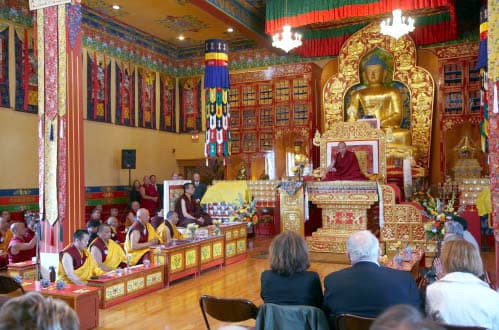
The Tibet Institute Rikon, established in 1968 in Switzerland, serves as a vital spiritual and cultural center for Tibetans in exile and promotes understanding of Tibetan Buddhism and culture to a wider audience. Founded on the advice and under the patronage of the 14th Dalai Lama, it is the only Tibetan monastery outside Asia established on his behalf. The institute houses a monastic community and a significant library, and actively engages in cultural exchange and academic research.
Key Facts
- ›Established in 1968 as a non-profit foundation to provide spiritual and cultural care for Tibetan refugees.
- ›It is the only Tibetan monastery outside Asia founded on behalf of the Dalai Lama.
- ›The institute's library is one of the world's largest Tibetan specialist libraries, holding approximately 11,000 titles.
- ›The monastic community represents the four major schools of Tibetan Buddhism.
- ›It actively promotes understanding of Tibetan culture and Buddhism through public events and research initiatives.
- ›The institute was inaugurated in 1968 under the name "Kloster zum Rad der Lehre" (Monastery for the Wheel of Teaching).

Functional Western, Tibetan Elements
- World's Largest Tibetan Specialist Libraries
- Active Monastic Community Representing Four Major Schools of Tibetan Buddhism
- Cultural Exchange and Academic Research Initiatives
- Project "Science Meets Dharma"
Kloster Zum Rad Der Lehre
14th Dalai Lama, Trijang Rinpoche, Ling Rinpoche, Henri Kuhn, Jacques Kuhn, Ueli FlüCk, Geshe Ugyen Tseten, Geshe Tamdin Rabten, Geshe GedüN Sangpo, Geshe Phuntsok Tashi, Geshe Thupten Legmen
- Switzerland Accepted A Large Number of Tibetan Refugees Starting In 1961.
- Foundation of the Institute In 1968.
- Inauguration of the Institute In 1968.
- Dalai Lama's First Visit In 1973.
- Celebration of the 50th Anniversary of Tibetan Refugees In Switzerland In 2010.
- Celebration of the Monastery's 50th Anniversary In 2018.
About Tibet Institute Rikon
The Tibet Institute Rikon, located in Zell-Rikon im Tösstal in the Töss Valley of Switzerland, stands as a significant spiritual and cultural hub for Tibetans in exile and a center for the study and promotion of Tibetan Buddhism and culture. Established as a non-profit foundation in 1968, its creation was influenced by Swiss laws that initially restricted the founding of new monasteries, leading to its inauguration as a "Monastic Tibet Institute" before full monastic status was permitted.
History and Patronage
Switzerland was one of the first Western countries to welcome Tibetan refugees in large numbers following the events of 1959. In this context, Henri and Jacques Kuhn provided crucial support, offering employment and accommodation to a group of refugees. Their efforts, along with the vision of Tibetan spiritual leaders, led to the founding of the institute. Notably, the Tibet Institute Rikon is the only monastery outside of Asia that was established on the direct behalf of the 14th Dalai Lama. He provided advice and patronage, emphasizing the importance of such institutions for the Tibetan diaspora. The Dalai Lama's first visit to the monastery occurred in 1973, and he has since made numerous subsequent visits, underscoring his connection to the Rikon community.
Architecture and Function
The institute's buildings were designed by architect Ueli Flück, blending functional Western architectural principles with traditional Tibetan elements. This design choice intentionally reflects the altered role of a Tibetan monastery in the West, rather than strictly adhering to traditional sacred architectural forms. The institute is intended to serve the spiritual and cultural needs of Tibetans living in Switzerland, while also acting as a vital forum for Westerners interested in Buddhism and Tibetan culture.
Cultural and Religious Life
The Tibet Institute Rikon serves as a vibrant center for Tibetan cultural and religious life in Switzerland. It actively organizes public events, maintains an extensive special library with approximately 11,000 Tibetan-specific titles, issues its own publications, and supports students and researchers. The institute also engages in public relations and outreach, fostering dialogue between Buddhist philosophy and Western science through initiatives like its "Science meets Dharma" project. The monastic community, comprising Buddhist monks from the four major schools of Tibetan Buddhism, works alongside the institute's staff to organize these cultural and religious activities, making Tibetan heritage accessible to a global audience.
Source: Wikipedia ↗
Frequently Asked Questions
When was the Tibet Institute Rikon founded?
The Tibet Institute Rikon was established as a non-profit foundation in 1968. Its inauguration took place on November 9, 1968, under the name "Kloster zum Rad der Lehre".
Who founded the Tibet Institute Rikon?
The institute was founded on the advice and under the patronage of the 14th Dalai Lama. Henri and Jacques Kuhn played a significant role in its establishment by offering work and accommodations to Tibetan refugees.
Is the Dalai Lama associated with the Tibet Institute Rikon?
Yes, the 14th Dalai Lama is closely associated with the Tibet Institute Rikon. He provided advice and patronage for its establishment and has visited the monastery multiple times since his first visit in 1973.
What is the significance of the Tibet Institute Rikon?
It is the only Tibetan monastery outside Asia founded on behalf of the Dalai Lama and serves as a spiritual and cultural center for Tibetans in exile. It also promotes the understanding of Tibetan culture and Buddhism for both Tibetans and Westerners.
What kind of facilities does the Tibet Institute Rikon have?
The institute includes a monastic community of Buddhist monks and a publicly accessible special library. The library is one of the world's largest Tibetan specialist libraries, containing about 11,000 titles.
What is the architectural style of the Tibet Institute Rikon?
The institute's building was designed in a functional Western style that incorporates traditional Tibetan elements. The design does not strictly adhere to traditional Tibetan sacred architecture, reflecting the altered role of a Tibetan monastery in the West.
Related Monasteries

Rongbuk
Rongbuk Monastery is a Tibetan Buddhist monastery of the Nyingma sect located near the north side of Mount Everest. Founded in 1902, it served as an important pilgrimage site and was visited by early Everest expeditions. Despite being destroyed during China's Cultural Revolution, it has since been renovated and continues to host monks and nuns.

Samye Ling Monastery
Kagyu Samye Ling Monastery and Tibetan Centre is a prominent Tibetan Buddhist complex located in Eskdalemuir, Scotland, associated with the Karma Kagyu school. Established in 1967 by Tibetan lamas Chögyam Trungpa Rinpoche and Akong Rinpoche, it evolved from a former hunting lodge into one of Europe's earliest and most significant Tibetan centers. The monastery is renowned for its preservation of Tibetan art and crafts, its architectural features including a temple and stupa, and its role in promoting Buddhist teachings and inter-religious dialogue through the ROKPA Trust.
Karma Triyana Dharmachakra
Karma Triyana Dharmachakra is a Tibetan Buddhist monastery located in Woodstock, New York, serving as the North American seat for the 17th Gyalwa Karmapa, the spiritual leader of the Karma Kagyu lineage. Founded in 1976 by the 16th Gyalwa Karmapa, it was established with Khenpo Karthar Rinpoche as its abbot, a role he held until his passing in 2019. The monastery's development was supported by Third Bardor Tulku Rinpoche and Mr. Tenzin Chonyi.