
Samye Ling Monastery
Kagyu Samye Ling Monastery and Tibetan Centre is a prominent Tibetan Buddhist complex located in Eskdalemuir, Scotland, associated with the Karma Kagyu school. Established in 1967 by Tibetan lamas Chögyam Trungpa Rinpoche and Akong Rinpoche, it evolved from a former hunting lodge into one of Europe's earliest and most significant Tibetan centers. The monastery is renowned for its preservation of Tibetan art and crafts, its architectural features including a temple and stupa, and its role in promoting Buddhist teachings and inter-religious dialogue through the ROKPA Trust.
Key Facts
- ›Founded in 1967 by Tibetan lamas Chögyam Trungpa Rinpoche and Akong Rinpoche.
- ›It is one of the oldest Tibetan Buddhist centers in Europe.
- ›The center is known for preserving and teaching traditional Tibetan art, particularly thangka painting.
- ›Features include one of the first Tibetan temples in Western Europe and a large stupa.
- ›Operates under the ROKPA Trust, which promotes Buddhism and inter-religious understanding.
- ›Designed a Buddhist tartan to represent its appreciation for Scottish culture.

Tibetan Buddhist
Tibetan Temple, Stupa, Thangka Art, Gardens With Statues, Meditation and Study Facilities
ChöGyam Trungpa Rinpoche, Akong Rinpoche, Sherab Palden Beru, Samten, Lama Yeshe Losal Rinpoche, Anandabodhi, Kalu Rinpoche, 16th Gyalwa Karmapa, Khamtrul Rinpoche, Dilgo Khyense Rinpoche, Urgyen Tulku, Lama Bla Mchog, Lama Thubten Kunsal
- Founded In 1967
- David Bowie and Leonard Cohen Were Students In 1969
- Significant Visits From Eminent Tibetan Buddhist Teachers In the 1970s
- Murder of Akong Rinpoche and Two Others In Chengdu In 2013
- Planning and Commencement of Major Temple Expansion In 2008
About Samye Ling Monastery
Kagyu Samye Ling Monastery and Tibetan Centre
Kagyu Samye Ling Monastery and Tibetan Centre, often referred to as Samye Ling, is a significant Tibetan Buddhist complex situated in Eskdalemuir, Scotland. Associated with the Karma Kagyu school, it stands as one of the oldest and most influential Tibetan Buddhist centers in Europe. The monastery's origins trace back to 1967 when Tibetan lamas Chögyam Trungpa Rinpoche and Akong Rinpoche took over Johnstone House, a former hunting lodge, transforming it into a vibrant spiritual community and study center.
History and Development
The establishment of Samye Ling marked a pivotal moment for Tibetan Buddhism in the West. Initially centered around Johnstone House, the community grew and developed under the guidance of its founders and later, Akong Rinpoche and his brother Lama Yeshe Losal Rinpoche, who serves as the Abbot. The name 'Samye Ling' itself is evocative, combining 'Samye,' the name of the first Buddhist monastic university in Tibet, with 'Ling,' meaning 'Place,' underscoring its mission to provide a similar sanctuary of learning and practice.
During the 1970s, a period of significant growth and influence, Samye Ling hosted numerous eminent Tibetan Buddhist teachers, including the 16th Gyalwa Karmapa. This era also saw notable visitors such as musicians David Bowie and Leonard Cohen, who were students at the center. The monastery has played a crucial role in the preservation of Tibetan art and crafts, with Sherab Palden Beru, a thangka master-artist, training Western practitioners in traditional techniques. The temple walls and grounds are adorned with examples of this artistry, including thangkas and sculptures.
ROKPA Trust and Public Engagement
Today, Samye Ling operates under the ROKPA Trust, an international organization dedicated to promoting Buddhism, fostering inter-religious understanding, and providing humanitarian aid. The trust's objectives extend beyond the monastery, supporting various projects worldwide. Samye Ling itself is recognized as a tourist attraction by VisitScotland, drawing visitors to its impressive gilded temple, stupas, and serene gardens. The center offers a range of courses on Buddhism, meditation, and spiritual development, making its teachings accessible to a wider audience and fostering a unique integration with the local Scottish community.
Source: Wikipedia ↗
Frequently Asked Questions
When was Samye Ling Monastery founded?
Samye Ling Monastery was established in 1967 when the Tibetan lamas Chögyam Trungpa Rinpoche and Akong Rinpoche were invited to take over the former Johnstone House property. This marked the beginning of the community known as Samye Ling.
What is the religious tradition of Samye Ling Monastery?
Samye Ling Monastery is a Tibetan Buddhist complex associated with the Karma Kagyu school. It follows the Tibetan Vajrayana tradition.
What are some notable features of Samye Ling Monastery?
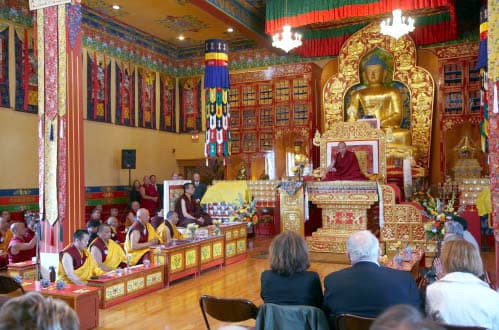
The monastery boasts one of the first Tibetan temples constructed in Western Europe, a large stupa, and extensive gardens with statues of Bodhisattvas and Buddhas. It is also a center for the creation and restoration of Tibetan art, such as thangkas.
Is Samye Ling Monastery open to the public?
Yes, Samye Ling Monastery is listed as a tourist attraction by VisitScotland and attracts visitors to see its temple, stupas, and gardens. It also offers courses on Buddhism and meditation.
What is the role of the ROKPA Trust in relation to Samye Ling?
The ROKPA Trust, formerly the Johnstone House Trust, administers Samye Ling Monastery. Its objectives include promoting Buddhism, fostering inter-religious dialogue, and providing education and relief efforts worldwide.
What is the significance of the name 'Samye Ling'?
The name 'Samye Ling' combines 'Samye,' referring to the first Buddhist monastic university in Tibet, and 'Ling,' meaning 'Place.' This signifies the monastery's connection to this historical Tibetan institution.
Related Monasteries

Rongbuk
Rongbuk Monastery is a Tibetan Buddhist monastery of the Nyingma sect located near the north side of Mount Everest. Founded in 1902, it served as an important pilgrimage site and was visited by early Everest expeditions. Despite being destroyed during China's Cultural Revolution, it has since been renovated and continues to host monks and nuns.

Tibet Institute Rikon
The Tibet Institute Rikon, established in 1968 in Switzerland, serves as a vital spiritual and cultural center for Tibetans in exile and promotes understanding of Tibetan Buddhism and culture to a wider audience. Founded on the advice and under the patronage of the 14th Dalai Lama, it is the only Tibetan monastery outside Asia established on his behalf. The institute houses a monastic community and a significant library, and actively engages in cultural exchange and academic research.
Karma Triyana Dharmachakra
Karma Triyana Dharmachakra is a Tibetan Buddhist monastery located in Woodstock, New York, serving as the North American seat for the 17th Gyalwa Karmapa, the spiritual leader of the Karma Kagyu lineage. Founded in 1976 by the 16th Gyalwa Karmapa, it was established with Khenpo Karthar Rinpoche as its abbot, a role he held until his passing in 2019. The monastery's development was supported by Third Bardor Tulku Rinpoche and Mr. Tenzin Chonyi.