
Thorberg Charterhouse
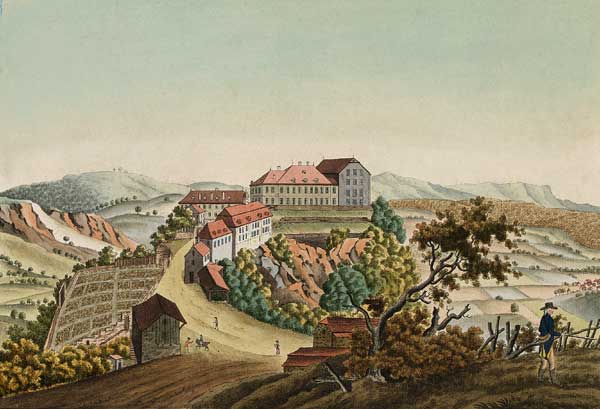
Thorberg Charterhouse, located in Krauchthal, Switzerland, was established in the 14th century on the site of a former castle. Following the Reformation, its assets were transferred to the state of Bern, and the buildings were repurposed for various charitable organizations, a prison, and a hospital. Today, it functions primarily as a correctional facility, though remnants of its monastic past, including a guesthouse and chapel, are still present.
Key Facts
- ›Founded in 1397 by Carthusian monks after inheriting estates from the von Thorberg family.
- ›Became state property of Bern in 1528 after the Reformation.
- ›Buildings housed various institutions including a prison, hospital, and reformatory.
- ›Remnants include the 16th-century women's guesthouse and chapel with frescoes.
- ›A 1998 extension marks recent developments to the site.
Baroque
- Women's Guesthouse
- Chapel With Frescoes
- Remnants of the Von Thorberg Family Castle Foundations
Schloss Thorberg
Peter Von Thorberg
Inheritance By Carthusians, Transfer To the State of Bern, Establishment of A Reformatory, Opening of A New Prison Cell Block
About Thorberg Charterhouse
Thorberg Charterhouse, known historically as Schloss Thorberg, is a former Carthusian monastery located in Krauchthal, within the Canton of Bern, Switzerland. Its origins trace back to the castle of the von Thorberg family, first documented in 1175, of which only fragments of the tower foundations now remain. The family line ended in 1397 with Peter von Thorberg, who bequeathed his estates to the Carthusians, leading to the conversion of the castle into a charterhouse.
History and Transformation
The Reformation brought significant changes to Thorberg Charterhouse in 1528, when all its assets and property were transferred to the state of Bern. The site was subsequently administered by a Vogt and used for a variety of purposes over the centuries. From the late 16th century until 1798, the buildings accommodated various care organizations, a prison, and a hospital.
In the 19th century, the site continued its role as a public institution. In 1805, the former almshouse was repurposed as a reformatory, model school, and an ancillary lunatic asylum. These were later joined by an institution for individuals who had not necessarily committed crimes warranting imprisonment. By 1849, these care organizations were replaced by a workhouse or forced labor unit. The ancillary asylum was closed in 1855 with the opening of a psychiatric clinic at Waldau. A new cell block was constructed in 1893, marking the site's firm establishment as a prison, with further extensions added throughout the 20th century, most recently in 1998.
Architectural Remnants and Legacy
Despite its transformation into a correctional facility, some elements of the former monastery remain. The women's guesthouse and the chapel, dating from 1510 to 1515, are still extant. The chapel is notable for its frescoes depicting the Adoration of the Magi and the Adoration of the Shepherds. A significant artifact, a carving of the "Man of Sorrows" by sculptor Erhart Küng, formerly part of the charterhouse, is now housed in the Historisches Museum Bern. The construction of the Baroque castle area is attributed to the period of the Landvogt. Nearby, the old sandstone quarry still shows traces of hand-working, offering a glimpse into historical labor practices.
Source: Wikipedia ↗
Frequently Asked Questions
When was Thorberg Charterhouse founded?
Thorberg Charterhouse was founded in 1397. This followed the extinction of the von Thorberg family, who bequeathed their estates to the Carthusians.
What is Thorberg Charterhouse used for today?
Today, Thorberg Charterhouse primarily functions as a prison. It has also housed a reformatory and a model school in the past.
What historical remnants of the monastery still exist?
Remnants of the Carthusian monastery include the women's guesthouse and the chapel, both dating from 1510 to 1515. The chapel features frescoes depicting the Adoration of the Magi and the Adoration of the Shepherds.
What happened to Thorberg Charterhouse after the Reformation?
After the Reformation in 1528, all assets and property of the monastery passed to the state of Bern. The income from the Vogtei Thorberg was administered by a Vogt from the Bern patriciate.
Related Monasteries

Garsten Abbey
Garsten Abbey was founded as a community of secular canons in the late 11th century and later became a Benedictine priory and then an independent abbey. It served as a significant religious, spiritual, and cultural center for centuries, noted for its beautiful High Baroque abbey church. Following its dissolution in 1787, the former monastery buildings have housed a prison since 1850.

Valdice
Valdice is a municipality in the Czech Republic, primarily known for its former Carthusian monastery. Founded in 1627 by Albrecht von Wallenstein, the monastery was abolished in 1782 and its premises were later converted into a high-security prison in 1857. Today, the former monastery complex houses the Valdice Prison, which is the main employer in the village.
Königsfelden Abbey
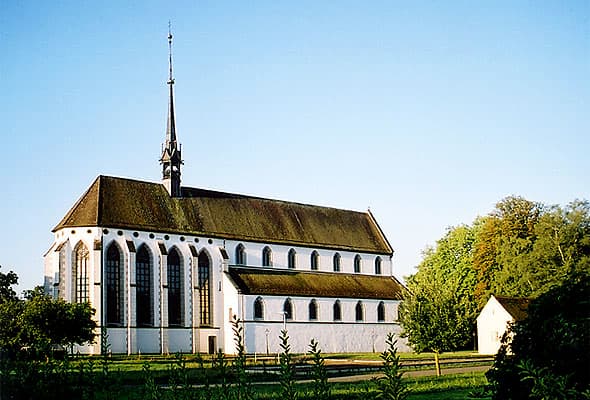
Königsfelden Abbey was a former Franciscan double monastery in Switzerland, established by the Habsburgs in the early 14th century as a memorial to King Albert I. It housed both Franciscan friars and Poor Clare nuns in separate wings. Following the Protestant Reformation in 1528, the monastery was secularized and later repurposed, with its former buildings eventually becoming a psychiatric clinic, while the church was converted into a museum.