
Garsten Abbey
Garsten Abbey was founded as a community of secular canons in the late 11th century and later became a Benedictine priory and then an independent abbey. It served as a significant religious, spiritual, and cultural center for centuries, noted for its beautiful High Baroque abbey church. Following its dissolution in 1787, the former monastery buildings have housed a prison since 1850.
Key Facts
- ›Founded between 1080 and 1082 by Ottokar II of Styria.
- ›Became an independent Benedictine abbey in 1110-1111.
- ›Its first abbot, Blessed Berthold of Garsten, championed the Hirsau Reforms.
- ›The former abbey church is a notable example of High Baroque architecture.
- ›The monastery buildings have housed a prison, Justizanstalt Garsten, since 1850.
- ›Dissolved in 1787 by Emperor Joseph II.

High Baroque
Abbey Church, Stucco Work, Dutch Tapestries, Losenstein Chapel, Sacristy, Summer Choir, Theatre
Stift Garsten
Ottokar Ii of Styria, Elisabeth of Austria, Blessed Berthold of Garsten, Pietro Francesco Carlone, Carlo Antonio Carlone, Giovanni Battista Carlone, Josef Fritzl
- Founded As A Community of Secular Canons
- Became A Priory of GöTtweig Abbey
- Became An Independent Benedictine Abbey
- Monks From Garsten Settled Gleink Abbey
- Became A Member of the Benedictine Austrian Congregation
- Dissolved By Emperor Joseph Ii
- Buildings Began Housing A Prison
About Garsten Abbey
Garsten Abbey, known in German as Stift Garsten, is a former Benedictine monastery situated in Garsten, near Steyr in Upper Austria. Its history began between 1080 and 1082 when Ottokar II of Styria founded it as a community of secular canons, intended to serve as a dynastic burial place for his family and a focal point of his rule in the Traungau region. Significant endowments, likely from his wife Elisabeth, daughter of Leopold II of Austria, provided the monastery with considerable possessions.
Transition to Benedictine Rule and Cultural Significance
In the early 12th century, the monastery underwent a significant transformation. Between 1107 and 1108, it became a priory of the Benedictine Göttweig Abbey, achieving full independence as an abbey in 1110-1111. Its first and most influential abbot was Blessed Berthold of Garsten, a proponent of the Hirsau Reforms. Under his leadership, Garsten Abbey flourished, becoming a central hub for religious, spiritual, and cultural life in the Eisenwurzen region for centuries. During this period, monks from Garsten were instrumental in settling Gleink Abbey in the 1120s. From 1625, Garsten Abbey was an integral part of the Benedictine Austrian Congregation.
Architectural Heritage and Later History
The abbey church itself remains a testament to its former grandeur, now serving as a parish church. It is celebrated as one of Austria's most exquisite examples of High Baroque architecture, designed by Pietro Francesco Carlone and completed by his sons. The church's interior is renowned for its opulent stucco work and the presence of Dutch tapestries, with the Losenstein chapel, sacristy, and summer choir being particularly noteworthy. A Christmas market is traditionally held in the square before the church, drawing visitors in late November and early December.
Garsten Abbey also possessed a theatre, a feature common in Austrian Benedictine monasteries. This theatre was eventually dismantled and relocated to Steyr in 1789, where it was reassembled and served as the town theatre until 1958. The building, still recognized as the Altes Stadttheater, now functions as a music school.
Dissolution and Transformation into a Prison
The abbey's independent monastic life came to an end in 1787 when it was dissolved by Emperor Joseph II. Subsequently, since 1850, the former monastery buildings have been repurposed to house a prison, the Justizanstalt Garsten. This institution is known for being one of the few prisons in Austria where life sentences are carried out, and it notably houses Austrian incest-rapist Josef Fritzl.
Source: Wikipedia ↗
Frequently Asked Questions
When was Garsten Abbey founded?
Garsten Abbey was founded between 1080 and 1082 by Ottokar II of Styria. It initially began as a community of secular canons and later transitioned to Benedictine rule.
What is the architectural style of the Garsten Abbey church?
The abbey church is considered one of the most beautiful examples of High Baroque architecture in Austria. It was designed by Pietro Francesco Carlone and finished by his sons.
What is Garsten Abbey used for today?
Since 1850, the former monastery buildings have been used as a prison, known as Justizanstalt Garsten. This facility is one of the few in Austria where life sentences are carried out.
Who was Blessed Berthold of Garsten?
Blessed Berthold of Garsten was the first and greatest abbot of Garsten Abbey. He was a champion of the Hirsau Reforms and is credited with building the abbey into a significant regional center.
What notable features are found within the Garsten Abbey church?
The abbey church features particularly notable stucco work and Dutch tapestries. The Losenstein chapel, the sacristy, and the summer choir are also of special interest.
Related Monasteries
Thorberg Charterhouse
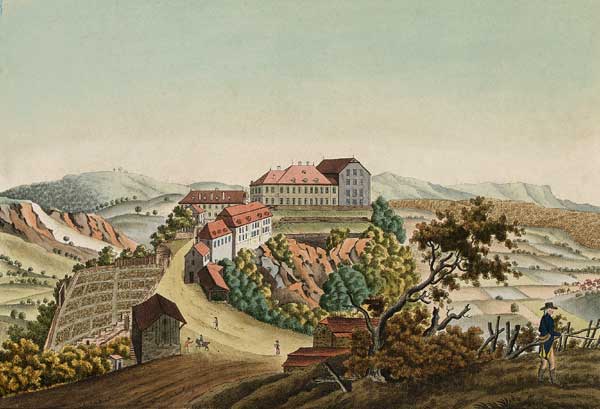
Thorberg Charterhouse, located in Krauchthal, Switzerland, was established in the 14th century on the site of a former castle. Following the Reformation, its assets were transferred to the state of Bern, and the buildings were repurposed for various charitable organizations, a prison, and a hospital. Today, it functions primarily as a correctional facility, though remnants of its monastic past, including a guesthouse and chapel, are still present.

Valdice
Valdice is a municipality in the Czech Republic, primarily known for its former Carthusian monastery. Founded in 1627 by Albrecht von Wallenstein, the monastery was abolished in 1782 and its premises were later converted into a high-security prison in 1857. Today, the former monastery complex houses the Valdice Prison, which is the main employer in the village.

Admont Abbey
Admont Abbey is a Benedictine monastery located in Admont, Styria, Austria, on the Enns River. Founded in 1074, it is the oldest monastery in Styria and is renowned for its Baroque architecture, extensive art collections, and manuscripts. The abbey famously houses the world's largest monastic library, a significant scientific collection, and a thriving community today.