
Valdice
Valdice is a municipality in the Czech Republic, primarily known for its former Carthusian monastery. Founded in 1627 by Albrecht von Wallenstein, the monastery was abolished in 1782 and its premises were later converted into a high-security prison in 1857. Today, the former monastery complex houses the Valdice Prison, which is the main employer in the village.
Key Facts
- ›The village of Valdice was founded alongside a Carthusian monastery in 1627.
- ›The monastery was established by Albrecht von Wallenstein.
- ›The monastery was abolished by Emperor Joseph II in 1782.
- ›The premises were converted into a high-security prison in 1857.
- ›The current prison is the main employer in the municipality.
- ›The monastery buildings are primarily in the Baroque architectural style.

Baroque
Church of the Assumption of the Virgin Mary, Baroque Statue of Saint John of Nepomuk
Kartouzy-Valdice, Karthaus Walditz
Albrecht Von Wallenstein, Emperor Joseph Ii, Jiří StříBrný
Monastery Founded, Monastery Abolished, Prison Established
About Valdice
Valdice is a municipality and village situated in the Jičín District within the Hradec Králové Region of the Czech Republic. Historically, it is most recognized for its former Carthusian monastery, a complex that today serves as a high-security prison. The village itself was established in conjunction with the monastery in 1627 by Albrecht von Wallenstein. This founding also saw the construction of approximately twenty houses intended for craftsmen who supported the monastic community.
Monastery and Transformation
The Carthusian monastery, built in the Baroque style, was a significant religious institution until its abolition in 1782 by Emperor Joseph II. Following the monastery's dissolution, its substantial premises remained largely unused until 1857, when the Austrian Empire established a prison within its walls. This transformation marked a new chapter for the site, shifting its purpose from religious contemplation to penal confinement.
Modern Role
Today, the Valdice Prison remains the primary economic driver for the municipality, employing over 400 people and housing up to 1,023 prisoners. The prison complex is classified as a high-security facility, and its premises are not accessible to the public. Within the former monastic complex, the Church of the Assumption of the Virgin Mary is still present, and a Baroque statue of Saint John of Nepomuk from 1696 is also noted as a cultural monument in the area.
Source: Wikipedia ↗
Frequently Asked Questions
What is Valdice known for today?
Valdice is known today for its high-security prison, which is located in the premises of a former Carthusian monastery. The prison is the main employer in the village and houses a significant number of inmates.
When was the monastery in Valdice founded?
The Carthusian monastery in Valdice was founded in 1627. It was established by Albrecht von Wallenstein.
What happened to the monastery?
The monastery was abolished in 1782 by Emperor Joseph II. Its buildings were later repurposed as a prison by the Austrian Empire in 1857.
What is the architectural style of the former monastery?
The former Carthusian monastery in Valdice was built in the Baroque style. The Church of the Assumption of the Virgin Mary is also located within the monastery complex.
Can the former monastery premises be visited?
The premises of the former monastery, which now houses the Valdice Prison, are inaccessible to the public. Access is restricted due to its current function as a high-security correctional facility.
Related Monasteries

Garsten Abbey
Garsten Abbey was founded as a community of secular canons in the late 11th century and later became a Benedictine priory and then an independent abbey. It served as a significant religious, spiritual, and cultural center for centuries, noted for its beautiful High Baroque abbey church. Following its dissolution in 1787, the former monastery buildings have housed a prison since 1850.
Thorberg Charterhouse
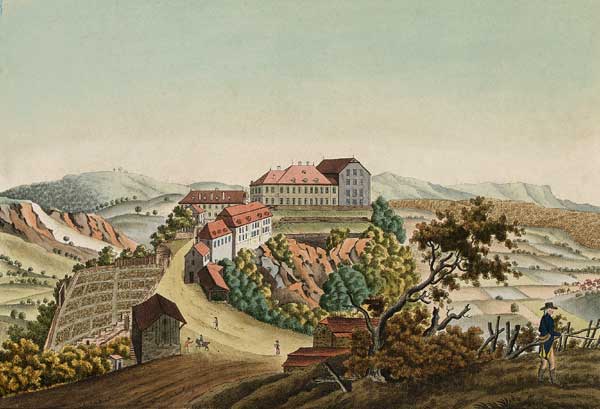
Thorberg Charterhouse, located in Krauchthal, Switzerland, was established in the 14th century on the site of a former castle. Following the Reformation, its assets were transferred to the state of Bern, and the buildings were repurposed for various charitable organizations, a prison, and a hospital. Today, it functions primarily as a correctional facility, though remnants of its monastic past, including a guesthouse and chapel, are still present.

Brno
Brno is the second-largest city in the Czech Republic, located in the South Moravian Region. Historically, it served as the capital of Moravia from the Middle Ages until 1948 and remains a significant political, cultural, and judicial center. The city is known for its blend of historical landmarks, modernist architecture, and its role as a hub for education, industry, and international events.