
Königsfelden Abbey
Franciscan·Switzerland·Museum (church), Psychiatric clinic (former monastic buildings)·14th century
Königsfelden Abbey was a former Franciscan double monastery in Switzerland, established by the Habsburgs in the early 14th century as a memorial to King Albert I. It housed both Franciscan friars and Poor Clare nuns in separate wings. Following the Protestant Reformation in 1528, the monastery was secularized and later repurposed, with its former buildings eventually becoming a psychiatric clinic, while the church was converted into a museum.
Key Facts
- ›Founded in 1308 by the Habsburgs.
- ›Served as a double monastery for Franciscan friars and Poor Clare nuns.
- ›Secularized in 1528 during the Protestant Reformation.
- ›Its church houses 14th-century stained glass windows, considered among Switzerland's most valuable.
- ›Former monastic buildings have served as a psychiatric clinic since 1868.
- ›The monastery church was converted into a museum in 2009.
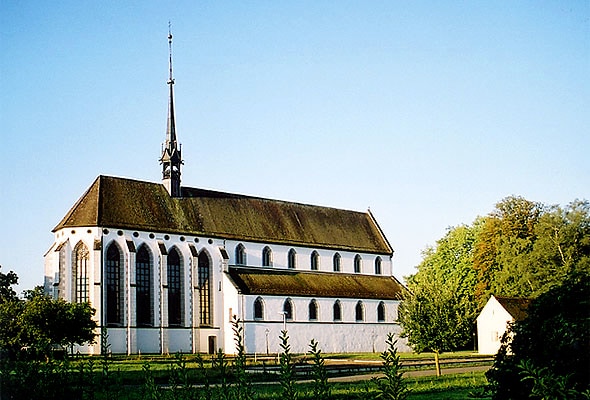
14th-Century Stained Glass Windows, Former Monastic Complex
King Albert I of Germany, Elizabeth of Carinthia, John Parricida, Agnes of Austria
- Murder of King Albert I of Germany
- Founding of the Monastery
- Secularization During the Protestant Reformation
- Establishment of A Mental Hospital
About Königsfelden Abbey
Königsfelden Abbey, located in Windisch, Canton of Aargau, Switzerland, was a significant former Franciscan double monastery. Its establishment in the early 14th century was a direct consequence of a pivotal historical event: the assassination of King Albert I of Germany in 1308. In memory of her husband, Elizabeth of Carinthia, his widow, founded the monastery around 1310-11 at the site of his murder.
The unique structure of Königsfelden Abbey housed two distinct monastic communities within the same complex. A community of Poor Clare nuns formed the contemplative heart of the monastery, while a small group of Franciscan friars attended to their spiritual needs and ministered to the surrounding populace. The monastery played a role in dynastic affairs, with Agnes of Austria, daughter of Albert I, moving to Königsfelden in 1317, though she did not join the monastic order.
History and Transformation
Königsfelden Abbey's fortunes shifted with the political landscape of the region. With the conquest of the Western Aargau by the city of Bern, the monastery lost its direct connection to the Habsburg family. A more profound change occurred in 1528 with the success of the Protestant Reformation in Switzerland, leading to the abolition and secularization of the monastery. Following this, the complex was repurposed as the administrative seat for the Bernese bailiffs of the Königsfelden district.
In the 19th century, the former monastic buildings underwent further transformation. In 1804, after the founding of the canton of Aargau, the property became state-owned and was adapted to house a mental hospital. By 1887, it had become a psychiatric clinic, a function that continues to this day, although a large portion of the original Franciscan monastery was demolished during its expansion.
Artistic and Cultural Significance
Despite its secularization and subsequent uses, Königsfelden Abbey retains a significant cultural and artistic legacy. The monastery church, converted into a museum in 2009, is renowned for its exceptional set of 14th-century stained glass windows. These windows, alongside those found in the Cathedral of Bern, are considered among the most valuable of their kind in Switzerland, offering a glimpse into medieval artistry and devotion. The abbey grounds also served as a burial site for several prominent members of the Habsburg and Austrian royal families, underscoring its historical importance.
Source: Wikipedia ↗
Frequently Asked Questions
When was Königsfelden Abbey founded?
Königsfelden Abbey was founded around 1310-11. The founding was initiated by Elizabeth of Carinthia, widow of King Albert I of Germany, in memory of his assassination.
What religious order was associated with Königsfelden Abbey?
Königsfelden Abbey was a Franciscan double monastery. It housed both a community of Poor Clare nuns and a community of Franciscan friars.
What happened to Königsfelden Abbey after the Reformation?
Following the success of the Protestant Reformation in Switzerland, the monastery was secularized in 1528. The complex then served as the residence for the bailiffs of Bern.
What is the current use of the former monastic buildings?
Since 1868, the former monastic buildings have been used as a psychiatric clinic. The monastery church was converted into a museum in 2009.
Are there any notable artworks at Königsfelden Abbey?
Yes, the monastery church, now a museum, contains a significant set of 14th-century stained glass windows. These are considered some of the most valuable in Switzerland.
Who was buried at Königsfelden Abbey?
Several members of the Habsburg family were buried at Königsfelden Abbey, including Elizabeth of Carinthia, Leopold the Glorious Duke of Austria, and Agnes of Austria.
Related Monasteries
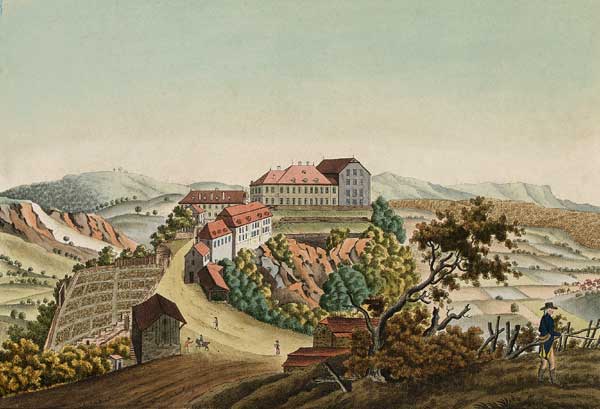
Thorberg Charterhouse
Thorberg Charterhouse, located in Krauchthal, Switzerland, was established in the 14th century on the site of a former castle. Following the Reformation, its assets were transferred to the state of Bern, and the buildings were repurposed for various charitable organizations, a prison, and a hospital. Today, it functions primarily as a correctional facility, though remnants of its monastic past, including a guesthouse and chapel, are still present.

Wonnenstein Friary
Wonnenstein Friary, also known as Mary's Rose Garden Wonnenstein, is a Franciscan friary for women located in Teufen, Switzerland. Established on land granted in 1381, the community adopted the Rule of Saint Francis by the 15th century. Despite periods of disruption, including during the Reformation, it was re-established as a Capuchin friary in 1596 and has since navigated complex territorial divisions between the cantons of Appenzell Innerrhoden and Appenzell Ausserrhoden.

All Saints Abbey
All Saints Abbey was a former Benedictine monastery located in Schaffhausen, Switzerland, founded in 1049 by Eberhard von Nellenburg. It played a significant role in the region's history and development, eventually becoming the site for the Museum zu Allerheiligen. The abbey church, Münster Allerheiligen, is the oldest building in Schaffhausen.