
Thoby Priory
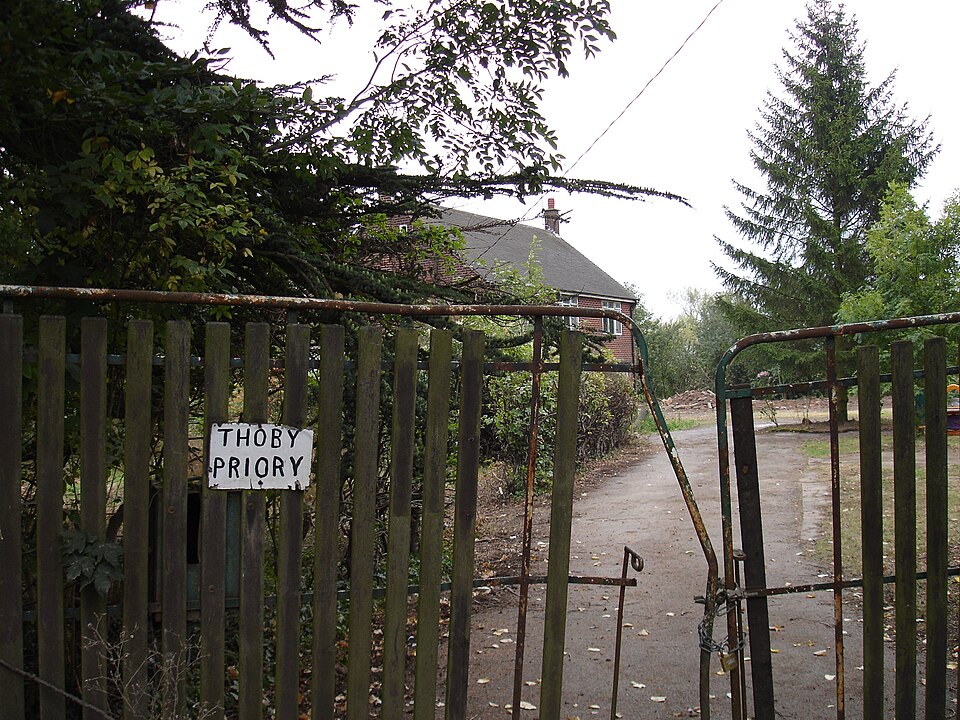
Thoby Priory was an Augustinian priory located in Mountnessing, Essex, founded around 1141. It played a role in local land ownership and religious life before its dissolution in 1525 by Cardinal Wolsey to fund his educational foundations. Today, only a fragment of the priory church remains, with the site having seen various secular uses and developments over the centuries.
Key Facts
- ›Founded around 1141 by Michael Chèvre.
- ›Belonged to the Augustinian order.
- ›Dissolved on February 15, 1525, by Cardinal Wolsey's agent.
- ›Dissolution aimed to fund Cardinal College, Oxford.
- ›Only a fragment of the priory church's south wall survives.
- ›The site later housed a mansion, which was demolished in 1953.
Gothic
Fragment of the Priory Church South Wall, Nave Arch Fragment
Gingetobye
Michael ChèVre, Tobias, Robert, Richard, Cardinal Wolsey, John Alen, Clement Vii, William Petre, William Berners, Dorothy Berners, Richard Page
- Foundation Around 1141
- Dissolution On February 15, 1525
- Suppression of Religious Houses For Cardinal Wolsey's Foundations
- Grant To Cardinal College, Oxford
- Transfer of Endowments To Ipswich School
- Wolsey's Indictment For Praemunire
- Mansion Built On the Site
- Fire In 1893 Damaging the Mansion
- Mansion Requisitioned During World War 2
- Mansion Demolished In 1953
About Thoby Priory
Thoby Priory was an Augustinian priory established in Mountnessing, Essex, around 1141. Its foundation is attributed to Michael Chèvre, who granted lands and rights to Tobias, the prior, and the canons. The priory's name evolved over time, likely from its early forms like Ginges and Gingetobye, possibly after the name of a prior. It was situated east and north of the river Wid.
Foundation and Early History
Michael Chèvre's charter, addressed to Robert, bishop of London (1141–1150), is considered a potential foundation charter for the priory. This charter included a hide of land, pannage for forty pigs, and tithes of hay and mill. Later, Richard, bishop of London (1152–1162), confirmed further gifts of the Greate Woode of Thoby and the Church of St. Giles to the priory. The advowson of the priory eventually came into the possession of the Mounteney family.
Dissolution and Later Use
The priory faced dissolution on February 15, 1525, by Cardinal Wolsey's agent, John Alen. This action was part of a papal bull from Clement VII authorizing the suppression of numerous religious houses to fund Cardinal Wolsey's educational projects, including Cardinal College in Oxford. At the time of its dissolution, Thoby Priory had a prior and two canons. Its spiritualities were valued at £18 13s. 4d. and its temporalities at £56 13s. 6½d. annually. Among its possessions were the manors of Thoby, Mountnessing, Bluntswalles, and Cubfold, along with St. Giles' Church.
The transfer of ownership was complex, involving authorization to transfer parts of the endowments to Ipswich School and later forfeiture to the crown after Wolsey's indictment. The priory was granted for life to Richard Page in 1530, with permanent ownership later granted to William Berners and his wife Dorothy in 1539. Much of the priory's land remained with the Berners family and their successors for centuries. William Petre also acquired several landholdings, including the advowson and rectory of Mountnessing.
Architectural Survival and Site History
By 1556, the west range of the priory buildings had been adapted into a large secular house, featuring a hall, buttery, parlour, kitchen, and fourteen chambers. This mansion was enlarged in the nineteenth century but was severely damaged by fire in 1893. The house experienced a gradual decline throughout the twentieth century, was requisitioned by the army during World War 2, and finally demolished in 1953. The site subsequently served various industrial purposes, including workshops, storage, and a car scrap yard.
Today, only a fragment of the priory church remains, specifically about 15 meters of the south wall of the presbytery and nave arch, dating to the 14th and 15th centuries. Archaeological surveys have uncovered oak coffins, floor tiles, and a stone figure fragment. A 1934 discovery yielded a stone coffin with a skeleton. Later evaluations in 2002 and 2014 confirmed the presence of medieval foundations and graves, though much of the priory's building material was likely reused elsewhere.
Source: Wikipedia ↗
Frequently Asked Questions
When was Thoby Priory founded?
Thoby Priory was founded around the year 1141. The charter granting land and rights to the prior and canons by Michael Chèvre is often considered the foundation charter.
Why was Thoby Priory dissolved?
Thoby Priory was dissolved on February 15, 1525, by Cardinal Wolsey's agent. The dissolution was part of a larger effort to suppress religious houses to fund Cardinal Wolsey's educational institutions, specifically Cardinal College in Oxford.
What remains of Thoby Priory today?
Today, only a fragment of the priory church survives. This consists of approximately 15 meters of the south wall of the presbytery and nave arch, dating from the 14th and 15th centuries.
Who were the key figures in the founding of Thoby Priory?
Michael Chèvre is credited with the founding of Thoby Priory, as he issued a charter granting lands and rights to Tobias, the prior, and the canons. Richard, bishop of London, also confirmed gifts to the priory.
What happened to the priory lands after its dissolution?
After dissolution, the priory's lands and buildings passed through several owners. William Petre acquired some landholdings, and a mansion was eventually built on the site. The majority of the demesne lands remained with the Berners family and their successors for centuries.
Related Monasteries
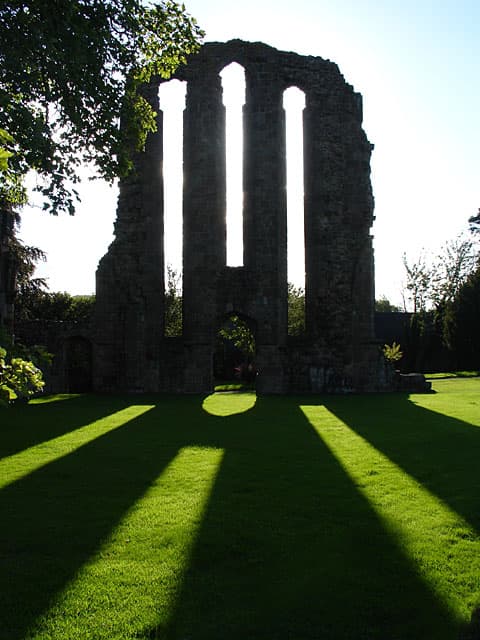
Croxden Abbey
Croxden Abbey was a Cistercian monastery located in Staffordshire, United Kingdom, founded in the 12th century by Bertram III de Verdun. It was a daughter house of the abbey in Aunay-sur-Odon, Normandy, and initially prospered through sheep farming, becoming a significant wool supplier. The abbey faced decline due to financial strains and disputes, eventually being dissolved in 1538 under the Suppression of Religious Houses Act.
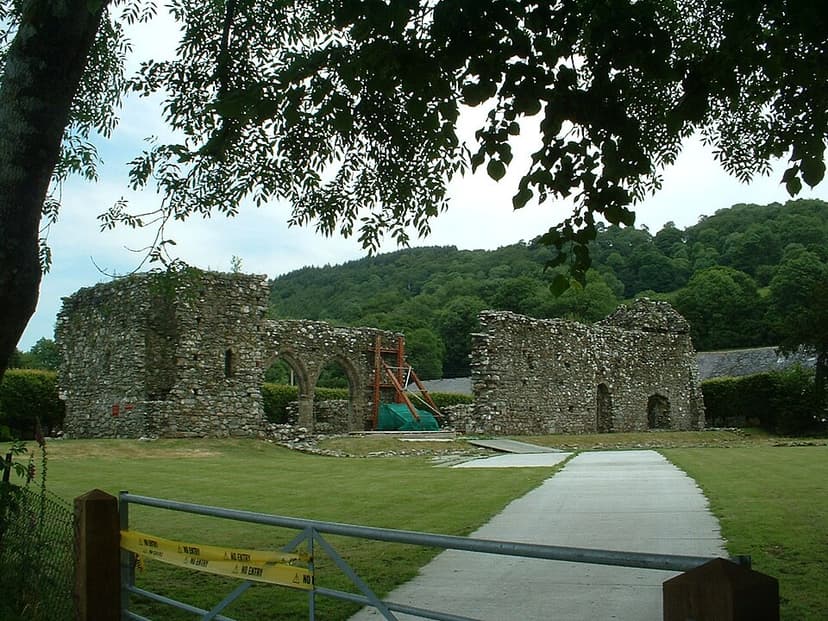
Cymer Abbey
Cymer Abbey was a ruined Cistercian monastery founded in 1189 near Llanelltyd, Gwynedd, Wales, and dedicated to the Virgin Mary. Despite royal patronage and land grants, the abbey struggled financially due to limited arable land and fishing rights, exacerbated by Welsh Wars and climate change. Dissolved in 1536-37, its remains are now managed by Cadw and are open to the public.
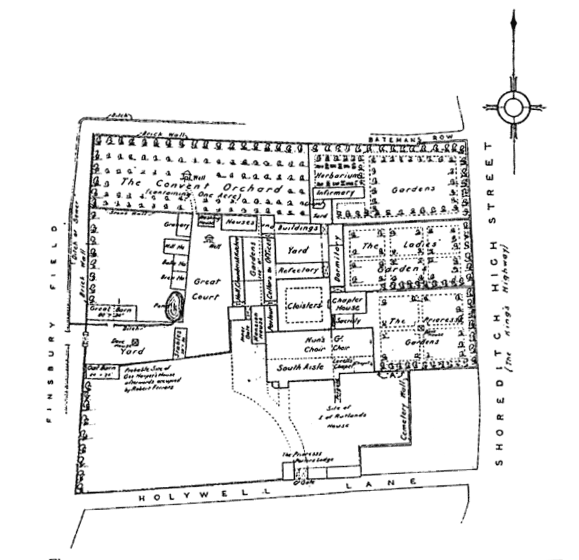
Haliwell Priory
Holywell Priory, formally the Priory of St John the Baptist, was an Augustinian nunnery located in Shoreditch, London. Established in the 12th century, it grew through endowments, including significant contributions from Sir Thomas Lovell in the reign of Henry VII, who virtually refounded the house and was buried there. The priory played a role in local social and economic life until its dissolution in 1539, after which its grounds later became the site of "The Theatre," an early playhouse associated with William Shakespeare.