
Sviatohirsk Lavra
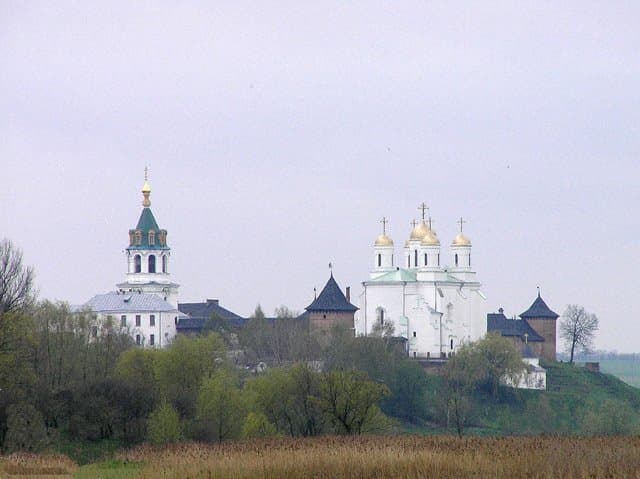
The Sviatohirsk Lavra is a prominent Orthodox Christian monastery situated on the steep banks of the Siverskyi Donets River in eastern Ukraine. Its history traces back to at least the 15th century, enduring periods of closure and restoration, notably after Soviet-era desecration. Recognized as a lavra by the Ukrainian Orthodox Church (Moscow Patriarchate) in 2004, it plays a central role in the Holy Mountains National Nature Park and has recently faced significant damage and loss due to Russian shelling during the 2022 invasion.
Key Facts
- ›First written mention of the monastery dates to 1627, with monastic settlement likely beginning in the 15th century.
- ›The monastery was shut down by Catherine II in 1787 and its lands secularized, but was later restored starting in 1844.
- ›During the Soviet era, the monastery was plundered, many monks were killed, and it was completely shut down in 1922.
- ›Before World War I, it housed approximately 600 monks.
- ›Restored after Ukrainian independence in 1991, it was officially proclaimed a lavra in 2004.
- ›The monastery provided shelter to civilians during the 2022 Russian invasion of Ukraine and sustained significant damage from shelling.

Byzantine
- Cave Monastery
- Steep Right Bank of the Siverskyi Donets River
- Dormition Cathedral Designed By Alexey Gornostaev
- Located Within Holy Mountains National Nature Park
Holy Mountains Lavra of the Holy Dormition, Sviatohirsk Cave Monastery, Sviatogorsky Uspensky Monastyr
Prince Grigory Potemkin, Alexandr Mikhailovich Potemkin, Tatiana Galitzine
- Secularization of Lands In 1787
- Restoration Beginning In 1844
- Closure and Plundering By Bolsheviks In 1922
- Restoration After Ukrainian Independence In 1991
- Proclaimed A Lavra In 2004
- Damaged By Russian Shelling During the 2022 Invasion of Ukraine
About Sviatohirsk Lavra
The Sviatohirsk Lavra, officially known as the Holy Mountains Lavra of the Holy Dormition, is a significant Orthodox Christian monastery located on the dramatic, steep right bank of the Siverskyi Donets River in eastern Ukraine. Its name derives from the surrounding landscape, the 'Holy Mountains,' and the 'Holy Dormition,' a reference to the repose of the Virgin Mary. The monastery is situated near the town of Sviatohirsk and forms the centerpiece of the Holy Mountains National Nature Park.
History and Significance
While the monastery's origins are not precisely documented, the first written mention of it dates to 1627, with evidence suggesting that monks may have settled the area as early as the 15th century. During its early existence, it was a minor monastic settlement in a region frequently raided by Crimean Tatars. The monastery faced a significant interruption in 1787 when Empress Catherine II ordered its closure, leading to the secularization of its lands.
However, the monastery's fortunes turned when Alexandr Mikhailovich Potemkin and his wife Tatiana financed its restoration, which began in 1844. Before the Russian Revolution, the Sviatohirsk Monastery was a thriving community, housing approximately 600 monks and possessing various workshops and trading buildings. The main Dormition Cathedral, a notable example of Gornostaev's design incorporating a Byzantine tower, stood as a central spiritual and architectural landmark.
Persecution and Restoration
The 20th century brought severe challenges. Following the Bolshevik Revolution, the monastery suffered numerous acts of plunder and desecration, with many monks being killed. It was completely shut down in 1922 and its grounds were repurposed into a sanatorium. The Soviet era also saw the demolition of several churches on its premises.
With the fall of the Soviet Union and Ukraine's subsequent independence in 1991, efforts to restore the monastery began in earnest. It was officially recognized as a lavra by the Ukrainian Orthodox Church (Moscow Patriarchate) in 2004. Today, the monastic community has rebounded, numbering over 100 monks and continuing to grow.
Recent Events
In recent years, the Sviatohirsk Lavra has been at the center of tragic events. During the 2022 Russian invasion of Ukraine, the monastery provided refuge to civilian populations. However, it sustained substantial damage from Russian shelling, including the destruction of several sketes and the main shrine, resulting in casualties and injuries. The Ukrainian authorities have attributed fires on the grounds to Russian forces.
Source: Wikipedia ↗
Frequently Asked Questions
When was the Sviatohirsk Lavra first established?
While the first written mention of the monastery dates to 1627, it is believed that monks first settled the area in the 15th century. The monastery has a long and complex history of existence and periods of closure.
What is the significance of the name 'Sviatohirsk Lavra'?
The name 'Sviatohirsk' refers to the surrounding 'Holy Mountains'. 'Lavra' is a title of honor given to major Orthodox monasteries, and 'Holy Dormition' is a theological term referring to the death of the Virgin Mary.
Has the monastery always been an active religious site?
No, the monastery has experienced periods of closure. It was shut down by Catherine II in 1787 and completely closed by the Bolsheviks in 1922. It was restored after Ukraine gained independence in 1991.
What happened to the monastery during the 2022 Russian invasion of Ukraine?
The monastery provided shelter to civilian refugees and suffered significant damage from Russian shelling. Several auxiliary structures were destroyed, and lives were tragically lost.
Is the Sviatohirsk Lavra part of a national park?
Yes, the monastery is the central feature of the Holy Mountains National Nature Park, established in 1997. This park encompasses the natural beauty of the region surrounding the monastery.
Related Monasteries

Bakota
Bakota is a submerged historic settlement in Khmelnytskyi Oblast, western Ukraine, located in the Podolia region. It is renowned for its 12th–14th century cave monastery, which features preserved frescoes and monk remains. Although the village itself was flooded in 1981, its historical significance as a former administrative center and its archaeological sites continue to draw interest.
Assumption Cave Monastery
The Assumption Cave Monastery, also known as Sviatohirskyi Uspenskyi Zymnenskyi monastyr, is a significant Ukrainian Orthodox cave monastery located near the village of Zymne. Its origins are attributed to monastic legend, with some accounts suggesting a connection to Vladimir the Great. The monastery has a long and complex history, marked by periods of control by different religious authorities, dissolution, and re-establishment, eventually regaining its status as a stauropegial institution in 1996.

Bakhchysarai Cave Monastery
The Bakhchysarai Cave Monastery, also known as the Dormition Monastery of the Caves, is a significant Eastern Orthodox monastic site carved into cliffs near Bakhchysarai, Crimea. While local tradition suggests an 8th-century founding, the current monastic establishment dates to the 15th century, refounded by monks from Kyiv-Pechersk Lavra. It served as a vital center for Orthodox Christians, particularly those seeking refuge, before periods of decline and closure under Soviet rule, eventually reopening in 1993.