
Bakota
Orthodox Christian·Ukraine·Submerged settlement; historical/archaeological site
Bakota is a submerged historic settlement in Khmelnytskyi Oblast, western Ukraine, located in the Podolia region. It is renowned for its 12th–14th century cave monastery, which features preserved frescoes and monk remains. Although the village itself was flooded in 1981, its historical significance as a former administrative center and its archaeological sites continue to draw interest.
Key Facts
- ›Home to a cave monastery with frescoes dating from the 12th to 14th centuries.
- ›The village of Bakota was submerged in 1981 due to the construction of the New Dniester Hydroelectric Station.
- ›First mentioned in the Hypatian Chronicle in 1240.
- ›Served as the political and administrative center of the Dniester Lowland in the 13th century.
- ›A Paleolithic archaeological site is located near the former village.
- ›Currently part of the National Environmental Park "Podilski Tovtry".

Cave Monastery, Frescoes and Paintings, Preserved Remains of Monks, Paleolithic Archaeological Site
Bakota Cave Monastery, Rock-Cave Sviaty-Mykhailivskyi Monastery
Saint Anthony of Kiev, Koriatovych Dynasty, Algirdas, Dmitry
- First Mentioned In the Hypatian Chronicle
- Became Part of Galicia–Volhynia
- Served As Administrative Center of Dniester Lowland
- Ruled By Koriatovych Dynasty
- Controlled By Algirdas
- Fortifications Constructed To Protect From Crimean Tatar Raids
- Shared Between Grand Duchy of Lithuania and Kingdom of Poland
- Inhabitants' Revolt Crushed By Poland
- New Wooden Church Constructed
- Church Destroyed
- Village Flooded For New Dniester Hydroelectric Station
- Large Portions of Rocky Hills Broke Off and Buried Caves
About Bakota
Bakota is a historic submerged settlement situated in Khmelnytskyi Oblast, western Ukraine, within the traditional region of Podolia. Once a significant political and administrative center, Bakota is now largely submerged beneath the waters of the Dniester River, a consequence of the construction of the New Dniester Hydroelectric Station in 1981. Despite its inundation, the site retains considerable historical and spiritual importance, particularly due to its ancient cave monastery.
History and Significance
The earliest mentions of Bakota appear in the Hypatian Chronicle in 1240. Historically, it was part of Kievan Rus' before transitioning to the principality of Galicia–Volhynia. In the 13th century, Bakota served as the primary political and administrative hub for the Dniester Lowland (Ponyzzia). Following periods of rule by the Koriatovych dynasty and the Grand Duchy of Lithuania, the town experienced conflict, including a revolt by its inhabitants that was suppressed by Poland in the 15th century, leading to the destruction of its fortifications.
A notable feature of Bakota is its cave monastery, which local legend attributes to Saint Anthony of Kiev, the founder of the Kiev Pechersk Lavra. The monastery's rock-hewn cells and chapels contain frescoes and paintings that are estimated to date from the 12th to 14th centuries. Preserved remains of monks have also been discovered within the caves, underscoring its long history as a place of monastic life. The area also boasts a Paleolithic archaeological site, indicating human presence from prehistoric times.
Modern Status
Following the flooding of the village in 1981, its inhabitants were relocated. In 1996, a significant landslide occurred, causing portions of the rocky hills to collapse and bury many of the ancient caves, further altering the landscape. Today, Bakota is integrated into the National Environmental Park "Podilski Tovtry," preserving its natural beauty and historical remnants. While the original settlement is lost to the reservoir, the site remains a point of historical investigation and spiritual contemplation, drawing visitors interested in its unique past and the resilience of its memory.
Source: Wikipedia ↗
Frequently Asked Questions
What is Bakota known for?
Bakota is primarily known for its historic cave monastery, which features ancient frescoes and the preserved remains of monks. It also has a Paleolithic archaeological site and was once a significant administrative center.
Why was Bakota flooded?
The village of Bakota was deliberately flooded on October 27, 1981, to make way for the construction of the New Dniester Hydroelectric Station. The inhabitants were relocated.
When was the Bakota Cave Monastery founded?
Local legend attributes the founding of the Bakota Cave Monastery to Saint Anthony of Kiev, who was also the founder of the Kiev Pechersk Lavra. The monastery's frescoes date back to the 12th–14th centuries.
What historical states was Bakota a part of?
Bakota was initially part of Kievan Rus' and later became part of Galicia–Volhynia. It was also controlled by the Grand Duchy of Lithuania and the Kingdom of Poland at different historical periods.
Is Bakota still inhabited?
The original village of Bakota was submerged and its inhabitants were resettled. While the settlement is gone, the area is now a protected environmental park and a site of historical and archaeological interest.
Related Monasteries

Sviatohirsk Lavra
The Sviatohirsk Lavra is a prominent Orthodox Christian monastery situated on the steep banks of the Siverskyi Donets River in eastern Ukraine. Its history traces back to at least the 15th century, enduring periods of closure and restoration, notably after Soviet-era desecration. Recognized as a lavra by the Ukrainian Orthodox Church (Moscow Patriarchate) in 2004, it plays a central role in the Holy Mountains National Nature Park and has recently faced significant damage and loss due to Russian shelling during the 2022 invasion.
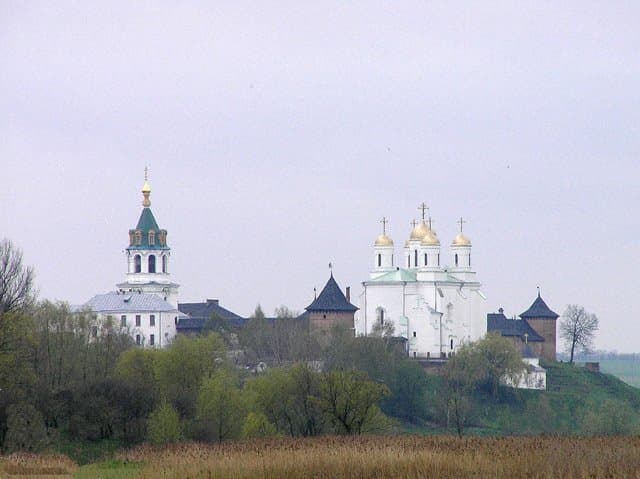
Assumption Cave Monastery
The Assumption Cave Monastery, also known as Sviatohirskyi Uspenskyi Zymnenskyi monastyr, is a significant Ukrainian Orthodox cave monastery located near the village of Zymne. Its origins are attributed to monastic legend, with some accounts suggesting a connection to Vladimir the Great. The monastery has a long and complex history, marked by periods of control by different religious authorities, dissolution, and re-establishment, eventually regaining its status as a stauropegial institution in 1996.

Bakhchysarai Cave Monastery
The Bakhchysarai Cave Monastery, also known as the Dormition Monastery of the Caves, is a significant Eastern Orthodox monastic site carved into cliffs near Bakhchysarai, Crimea. While local tradition suggests an 8th-century founding, the current monastic establishment dates to the 15th century, refounded by monks from Kyiv-Pechersk Lavra. It served as a vital center for Orthodox Christians, particularly those seeking refuge, before periods of decline and closure under Soviet rule, eventually reopening in 1993.