
Stratford Langthorne Abbey
Stratford Langthorne Abbey was a prominent Cistercian monastery founded in 1135 in what is now Stratford, London. It was one of the largest Cistercian abbeys in England, holding extensive lands and manors across Essex. The abbey played a role in royal events and was responsible for maintaining Bow Bridge, but was dissolved by Henry VIII in 1538. Today, no visible structures remain, though archaeological investigations and community gardens mark the former site.
Key Facts
- ›Founded in 1135 as a daughter house of Savigny Abbey.
- ›One of the largest Cistercian abbeys in England, controlling over 1,500 acres and 20 manors.
- ›The abbey church evolved into a large cruciform building with an aisled presbytery and chapels by the 13th century.
- ›Served as a royal retreat and resting place for nobility.
- ›Dissolved in 1538 under Henry VIII's Dissolution of the Monasteries.
- ›No visible monastic buildings remain on the original site.

- Extensive Landholdings and Manors
- Ecclesiastic Mills
- Responsibility For Bow Bridge Maintenance
- Archaeological Discoveries of Cemetery and Gatehouse
Abbey of St Mary's, Stratford Langthorne, West Ham Abbey
William De Montfichet, Henry Iii, Richard Ii, Edward Iv, Sir Peter Meautas
- Founded In 1135
- Church Expanded By 13th Century
- Became Court of Henry Iii and Site of Dictum of Kenilworth In 1267
- Flooded In 1338 and Decamped To Great Burstead
- Invaded During Peasants' Revolt In 1381
- Restored By Richard Ii
- Entertained Edward Iv In 1467
- Dissolved In 1538
About Stratford Langthorne Abbey
Stratford Langthorne Abbey, also known as the Abbey of St Mary's, Stratford Langthorne, was a significant Cistercian monastery established in 1135. Located in Stratford Langthorne, which was then part of Essex and is now within the London Borough of Newham, the abbey was one of the largest Cistercian foundations in England. It held extensive landholdings, including approximately 1,500 acres of local land and control over more than 20 manors throughout Essex. The abbey's wealth was partly derived from its ecclesiastic mills, which supplied bread to the City of London, leading to later disputes with the Guild of Bakers.
History and Development
The abbey was founded by William de Montfichet, who granted the monks his lordship of (West) Ham, along with meadows, mills, and woodland. Initially dedicated to St Mary, it grew considerably over the centuries. By the 13th century, its church had expanded from a simple cruciform structure to include an aisled presbytery, ambulatory, and side chapels. The monastic complex was surrounded by buildings for lay brothers, hospitality, and workshops for various crafts such as brewing, weaving, and tanning, supported by farm buildings and mills on the Bow Back Rivers.
Stratford Langthorne Abbey also served important historical functions. In 1267, it temporarily became the court of King Henry III, where he made peace with his barons under the terms of the Dictum of Kenilworth. Subsequent monarchs visited the abbey, and it became a popular retreat and resting place for the nobility. The abbey faced challenges, including severe flooding of the Thames in 1338, which forced the monks to relocate temporarily, and an invasion during the Peasants' Revolt in 1381, during which goods were removed and charters burned. It was later restored by Richard II.
Responsibilities and Dissolution
The abbey held responsibility for maintaining Bow Bridge, a duty that led to disputes with Barking Abbey and later landowners. The abbey's economic activities included the development of a small river port at Stratford to serve its needs and mills. The extraction of water for canals in later centuries impacted traditional water milling. Stratford Langthorne Abbey ceased to exist in 1538 with the Dissolution of the Monasteries under Henry VIII. At the time of its dissolution, it was recognized as the fifth largest abbey in England.
Modern Legacy
Today, no visible monastic buildings remain on the site of Stratford Langthorne Abbey. Much of its stone was repurposed by local landowners, and subsequent development, including the North Woolwich Railway and factories, has erased most of the original structures. Archaeological investigations have taken place, uncovering the abbey's cemetery and gatehouse. While the physical structures are gone, the abbey is commemorated through street names such as Abbey Lane and Abbey Road, and its historical influence is reflected in the coats of arms of local authorities that incorporated elements of its heraldry. The area where former council stables stood, near the identified gatehouse, is now protected as a scheduled monument and features a community garden.
Source: Wikipedia ↗
Frequently Asked Questions
When was Stratford Langthorne Abbey founded?
Stratford Langthorne Abbey was founded in 1135. The founding charter was dated July 25, 1135, detailing land grants made by William de Montfichet.
What religious order was Stratford Langthorne Abbey part of?
The abbey was a Cistercian monastery. It was a daughter house of Savigny Abbey, and later became part of the wider Cistercian order.
What was the significance of Stratford Langthorne Abbey?
It was one of the largest Cistercian abbeys in England, possessing vast landholdings and mills that supplied bread to the City of London. It also played a role in royal affairs and was responsible for maintaining Bow Bridge.
What remains of Stratford Langthorne Abbey today?
No visible monastic buildings remain on the original site. Much of the stone was repurposed, and the land was later used for railways, factories, and markets. Some artifacts, like a stone window and carving, are in All Saints West Ham Parish Church.
Where was Stratford Langthorne Abbey located?
The abbey was founded at Stratford Langthorne, which was then in Essex but is now part of the London Borough of Newham. It was also known as West Ham Abbey due to its location within the parish of West Ham.
Was the abbey involved in any significant historical events?
Yes, it became a temporary court for Henry III in 1267 and was the site where he made peace with the barons under the terms of the Dictum of Kenilworth. The abbey was also invaded during the Peasants' Revolt in 1381.
Related Monasteries
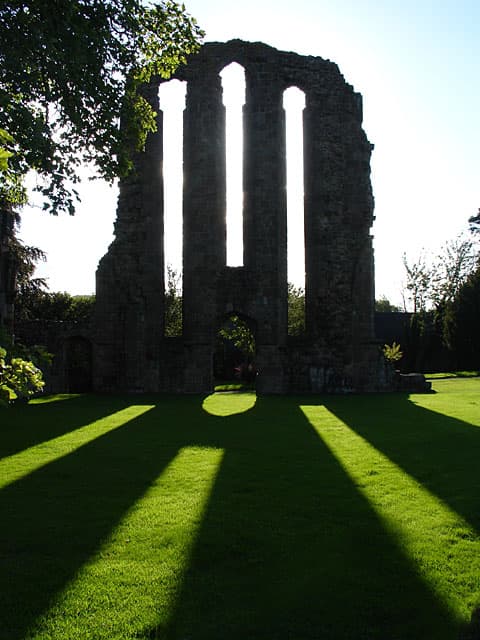
Croxden Abbey
Croxden Abbey was a Cistercian monastery located in Staffordshire, United Kingdom, founded in the 12th century by Bertram III de Verdun. It was a daughter house of the abbey in Aunay-sur-Odon, Normandy, and initially prospered through sheep farming, becoming a significant wool supplier. The abbey faced decline due to financial strains and disputes, eventually being dissolved in 1538 under the Suppression of Religious Houses Act.
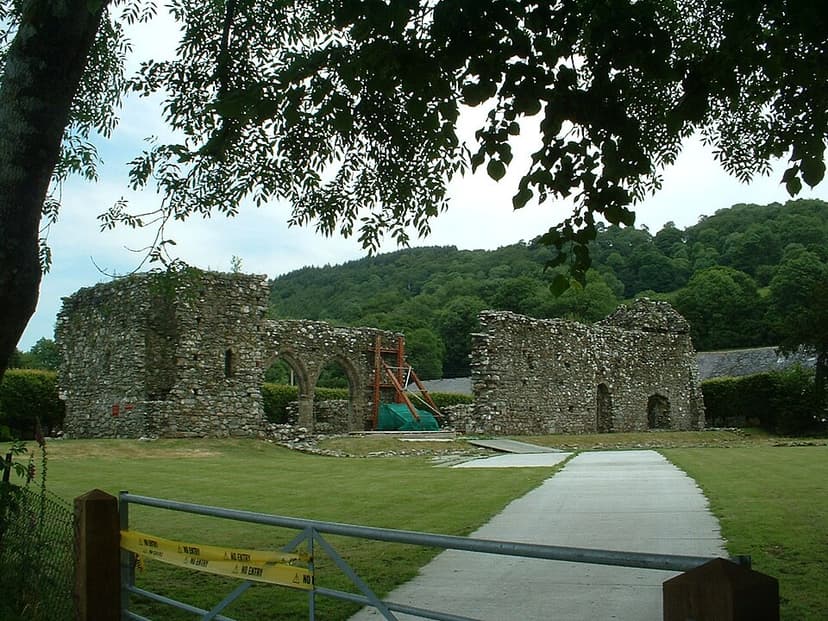
Cymer Abbey
Cymer Abbey was a ruined Cistercian monastery founded in 1189 near Llanelltyd, Gwynedd, Wales, and dedicated to the Virgin Mary. Despite royal patronage and land grants, the abbey struggled financially due to limited arable land and fishing rights, exacerbated by Welsh Wars and climate change. Dissolved in 1536-37, its remains are now managed by Cadw and are open to the public.
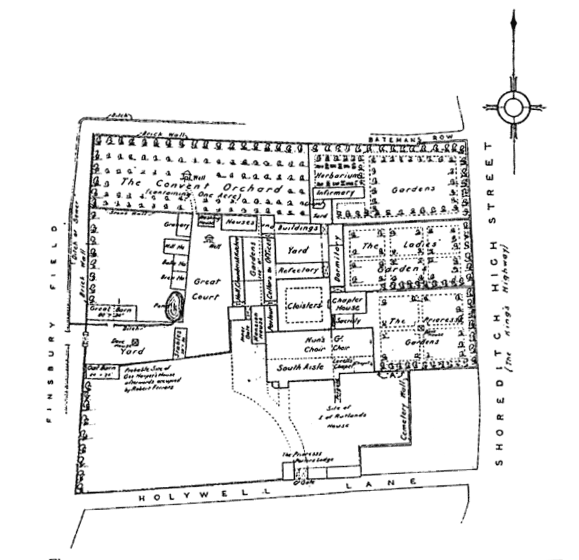
Haliwell Priory
Holywell Priory, formally the Priory of St John the Baptist, was an Augustinian nunnery located in Shoreditch, London. Established in the 12th century, it grew through endowments, including significant contributions from Sir Thomas Lovell in the reign of Henry VII, who virtually refounded the house and was buried there. The priory played a role in local social and economic life until its dissolution in 1539, after which its grounds later became the site of "The Theatre," an early playhouse associated with William Shakespeare.