
Strata Marcella Abbey
Strata Marcella Abbey was a significant medieval Cistercian monastery located near Welshpool, Wales. Founded in 1170 by Owain Cyfeiliog, it grew to become the largest Cistercian abbey in Wales by the early 13th century. The abbey played a role in Welsh independence struggles, suffering damage during conflicts and ultimately closing during the Dissolution of the Monasteries in 1536. Today, only limited remains are visible at the site.
Key Facts
- ›Founded in 1170 by Owain Cyfeiliog as a daughter house of Whitland Abbey.
- ›Became the largest Cistercian Abbey in Wales by the early 13th century, with a nave 200 feet long.
- ›Monks from Strata Marcella founded the Abbey of Valle Crucis in 1200.
- ›Supported Welsh princes in their struggles against English rule, leading to damage and poverty.
- ›Heavily damaged during the Owain Glyndŵr rising in the early 15th century.
- ›Closed in 1536 during the Dissolution of the Monasteries; its stones were used for local churches.
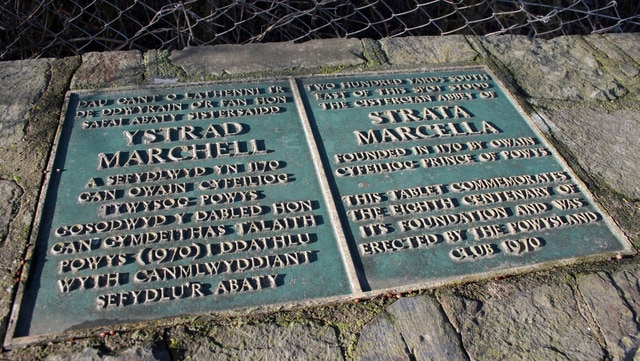
Early English
- Large Nave
- Clasping Buttresses
- Red Sandstone Columns With Clustered Shafts
- Transitional and Stiff-Leaf Capitals
- 13th Century Tiles and Stone Fragments Found During Excavations
Abaty Ystrad Marchell, Ystrad Marchell
Owain Cyfeiliog, Abbot Enoc, Gwenwynwyn, Gruffyd Ap Gwenwynwyn, Edward I of England, John De Cherleton, Owain GlyndŵR, Edward Grey, Third Baron Grey of Powis, Stephen W. Williams
- Founded In 1170.
- Moved To Present Site Within Two Years of Founding.
- Monks Founded Valle Crucis Abbey In 1200.
- Suffered Damage During Welsh Wars of Independence.
- Eviction of Welsh Monks and Replacement With English Monks In 1332.
- Buildings Heavily Damaged During the Owain GlyndŵR Rising.
- Closed In 1536 During the Dissolution of the Monasteries.
About Strata Marcella Abbey
The Abbey of Strata Marcella, known in Welsh as Abaty Ystrad Marchell, was a prominent medieval Cistercian monastery located on the west bank of the River Severn, near modern-day Welshpool in Powys, Wales. Its history is deeply intertwined with the political landscape of medieval Wales, particularly its support for Welsh princes.
Founding and Early Development
Founded in 1170 by Owain Cyfeiliog, Prince of Powys, Strata Marcella was established as a daughter house of Whitland Abbey. The abbey later relocated a short distance to its permanent site, with construction in stone beginning around 1190 and continuing into the early 13th century. By this period, Strata Marcella had become the largest Cistercian abbey in Wales, boasting a nave that measured 200 feet in length. Notably, monks from Strata Marcella were instrumental in founding the Abbey of Valle Crucis in 1200.
Role in Welsh Independence and Later Decline
As a monastery founded by Welsh princes and independent of English-founded abbeys, Strata Marcella often aligned with the Welsh in their struggles against English rule. This allegiance led to significant damage and periods of poverty, especially during the Welsh wars of independence. By the 14th century, the abbey was in decline, and in 1332, its abbot and monks were accused of working against English rule. This resulted in the eviction of Welsh monks and their replacement with English monks from Buildwas Abbey.
The abbey suffered further extensive damage during the Owain Glyndŵr rising in the early 15th century, and it never fully recovered from these assaults. Its final closure came in 1536 with the Dissolution of the Monasteries. At the time of its dissolution, the abbey had an income valued at no more than £64 a year, and only four monks remained. The site was purchased by Edward Grey, the third Baron Grey of Powis, who removed valuables, and the stone from the buildings was sold and repurposed for local churches.
Archaeological Findings
Excavations at the site, notably in 1890 by Stephen W. Williams, have revealed the scale of the former abbey church, which had an overall length of 273 feet. Discoveries included remnants of buttresses, red sandstone columns, and decorated capitals reflecting sculptural developments from the late 12th and early 13th centuries. Finds such as 13th-century tiles and stone fragments are now housed in the Powysland Museum. More recent surveys have refined some of the earlier findings. Today, the visible remains consist of only a few courses of stones from the church and cloister, situated in a meadow near the River Severn.
Source: Wikipedia ↗
Frequently Asked Questions
When was Strata Marcella Abbey founded?
Strata Marcella Abbey was founded in 1170 by Owain Cyfeiliog, Prince of Powys. It was initially established as a daughter house of the Abbey at Whitland.
What religious order was Strata Marcella Abbey part of?
Strata Marcella Abbey was a Cistercian monastery. The Cistercian order is a branch of the Catholic Church, known for its austere lifestyle and monastic traditions.
What happened to Strata Marcella Abbey?
The abbey suffered significant damage during the Welsh wars of independence and the Owain Glyndŵr rising. It was finally closed in 1536 during the Dissolution of the Monasteries, and its buildings were largely dismantled.
Are there any visible remains of Strata Marcella Abbey today?
Today, only a few courses of stones from the church and cloister remain visible in a meadow beside the River Severn. These remnants are all that survive of the once-large monastic complex.
Who is buried at Strata Marcella Abbey?
Owain Cyfeiliog, the founder of the abbey, retired there in his advanced years and was buried in the grounds upon his death in 1197. His son, Gwenwynwyn, also increased the abbey's endowments.
Related Monasteries

Basingwerk Abbey
Basingwerk Abbey, located near Holywell in Flintshire, Wales, was a ruined Cistercian monastery founded in 1132. It played a strategic role in medieval Welsh history and maintained extensive lands, notably in Derbyshire. Following its dissolution in 1536, the abbey's assets were dispersed, and its buildings fell into ruin, though parts were later repurposed. Today, the site is managed by Cadw and is a Grade I listed ruin within Greenfield Valley Heritage Park.
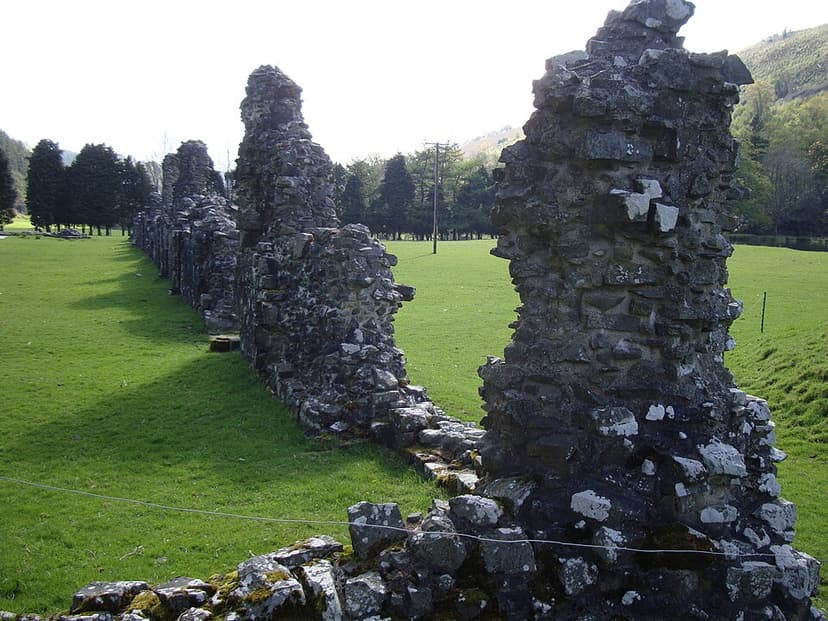
Cwmhir Abbey
Cwmhir Abbey was a Welsh Cistercian monastery founded in 1176 by Cadwallon ap Madog, though a spurious tale attributed its origin to an earlier date and founder. Situated near Llandrindod Wells in Powys, the abbey endured significant hardship due to feuds with the Mortimer family and damage during English conflicts, including the uprising of Owain Glyndŵr. Despite an ambitious construction project for its church, it was abandoned due to ongoing troubles, leading to a drastic decline in its community size by the time of its dissolution in 1536.
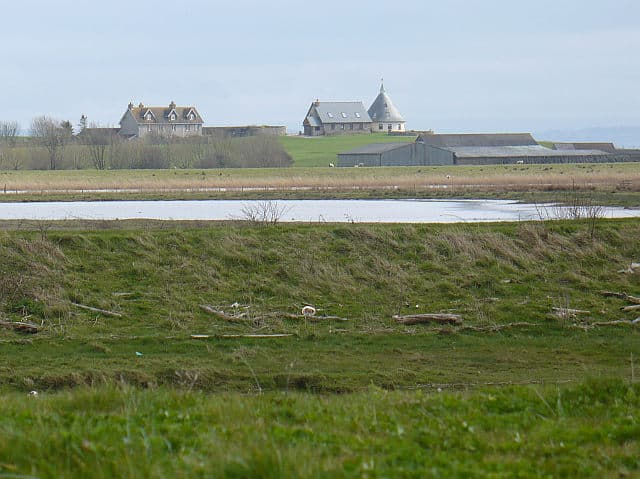
Goldcliff Priory
Goldcliff Priory was a Benedictine monastery founded in 1113 by Robert de Chandos near Newport, South Wales. Originally a subsidiary of the Abbey of Bec in Normandy, it was later made a cell of Tewkesbury Abbey. Despite its significant monastic population by the 13th century, the priory eventually passed into the ownership of Eton College following the Dissolution of the Monasteries, and today only remnants of its structure remain.