
St. Urban's Abbey
Cistercian·Switzerland·Former monastery, parts used for cultural purposes·12th century
St. Urban's Abbey, a former Cistercian monastery located in Pfaffnau, Switzerland, was founded in 1194. Over centuries, it grew into a significant landowner and a leading Cistercian house, developing a notable school that became Switzerland's first teacher training college. Despite secularization in the 19th century, parts of the abbey now serve cultural purposes.
Key Facts
- ›Founded in 1194 by the Freiherren of Langenstein and of Kapfenberg.
- ›Became an abbey with an abbot responsible for surrounding nunneries by 1266.
- ›Established a brick factory in the 13th century that evolved into a modern company.
- ›Its school became the first teacher training college in Switzerland in 1780.
- ›Secularized in 1848 and later used as a silk factory and then a psychiatric hospital.
- ›Designated as a Swiss heritage site of national significance.
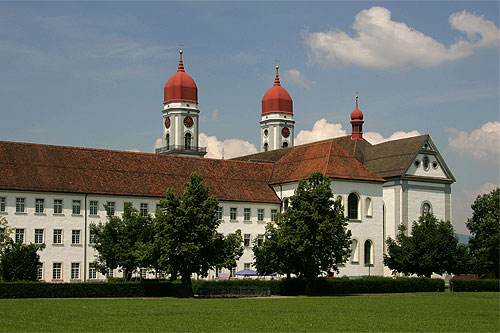
Baroque
- Baroque Chapel Built In 1690
- Rebuilt Church and Convent Buildings In Baroque Style
- Former Teacher Training College
- Swiss Heritage Site of National Significance
Kloster Sankt Urban
Ulrich Glutz, Malachy Glutz, Franz Beer, Friedrich Pfluger
Founded In 1194, Became An Abbey By 1266, Suffered A Fire In 1513, Secularized In 1848, Converted Into A Silk Factory In 1859, Became A Psychiatric Hospital In 1873
About St. Urban's Abbey
St. Urban's Abbey, known in German as Kloster Sankt Urban, is a significant former Cistercian monastery situated in the municipality of Pfaffnau, within the canton of Lucerne, Switzerland. Recognized as a Swiss heritage site of national significance, the abbey's history stretches back to its founding in 1194. It was established on land granted by the Freiherren of Langenstein and of Kapfenberg, with Lucelle Abbey serving as its mother church.
History and Development
The monastery's origins lie in a single monk's cell, but by 1195, the monks had moved to a larger site. Throughout the 13th century, St. Urban's expanded considerably through land grants, becoming a major landowner in the Langeten and Rot valleys. By 1266, it had attained the status of an abbey, complete with an abbot who also oversaw several surrounding nunneries. The abbey also engaged in significant economic activities, establishing a brick factory that evolved into a modern industrial operation, and owning farms and vineyards across the region. Its school, first documented in 1470, became a hub for humanism and reform scholarship, eventually pioneering teacher training in Switzerland.
Transformation and Legacy
In the 15th century, the city of Lucerne assumed secular authority over the abbey, influencing its reforms and solidifying its position as a prominent Cistercian institution. The abbey weathered a major fire in 1513 and saw its abbot elevated to mitred status in 1537. During the 17th century, the abbey expanded both physically and socially, with monks increasingly drawn from noble families. The early 18th century saw significant architectural transformations, with Abbot Ulrich Glutz commissioning a Baroque chapel in 1690 and Abbot Malachy Glutz overseeing the rebuilding of the church and convent buildings in the Baroque style by architect Franz Beer.
The abbey's institutional life came to an end in 1848 when it was secularized by the cantonal government. Its treasures and assets were sold, while its library was transferred to the cantonal archive. The monastery buildings underwent further transformations, serving as a silk factory from 1859 and, notably, as a psychiatric hospital from 1873 until the late 20th century. Today, portions of the historic St. Urban's Abbey are utilized for cultural purposes, hosting events such as concerts and tours, and retaining its status as a site of national heritage.
Source: Wikipedia ↗
Frequently Asked Questions
When was St. Urban's Abbey founded?
St. Urban's Abbey was founded in 1194. The first mention of the monastery was in 1196 as sanctus Urbanus.
What religious order was St. Urban's Abbey part of?
St. Urban's Abbey was a Cistercian monastery. It grew to become a leading Cistercian house in Switzerland.
What significant educational role did St. Urban's Abbey play?
The school at St. Urban's Abbey, first mentioned in 1470, became a center of humanism and reform scholarship. By 1780, it evolved into the first teacher training college in Switzerland.
What happened to St. Urban's Abbey after its secularization?
Following its secularization in 1848, the abbey's property was sold. It was later converted into a silk factory and then, from 1873, served as a psychiatric hospital until the late 20th century.
Is St. Urban's Abbey still an active monastery?
No, St. Urban's Abbey is a former monastery. It was secularized in the 19th century and its buildings have since been used for various purposes, including cultural events.
What architectural style is St. Urban's Abbey known for?
While the original buildings were established in the medieval period, the church and convent buildings were rebuilt in the Baroque style in the early 18th century by architect Franz Beer.
Related Monasteries

Hauterive Abbey
Hauterive Abbey is a historic Cistercian monastery located in Hauterive, Fribourg, Switzerland, recognized as a Swiss heritage site of national significance. Founded between 1132 and 1137, it flourished economically and culturally in its early centuries, becoming closely tied to the city of Fribourg. Despite periods of decline due to conflict and damage, the abbey underwent baroque reconstruction and was eventually secularized before being re-settled by monks and regaining its status as an abbey.

Wettingen Abbey
Wettingen Abbey was a significant Cistercian monastery founded in 1227 in Wettingen, Switzerland. Despite periods of financial hardship and religious upheaval, it experienced revivals and played a role in sheltering refugees. Dissolved in 1841 during secularization, its community re-established itself in Austria, while the original buildings in Switzerland now serve educational purposes but retain their heritage status and are open for public tours.

Wurmsbach Abbey
Wurmsbach Abbey is a Cistercian monastery for nuns situated on the northern shore of upper Lake Zürich in Bollingen, Switzerland. Founded in 1259 by Count Rudolf of Rapperswil, it initially served as a dependency of the Cistercian monks of St. Urban Abbey. The abbey church was consecrated in 1281, and the monastery has endured pillaging during historical conflicts, yet remains active and is recognized for its scenic location and herbal gardens.