
St James's Priory, Bristol
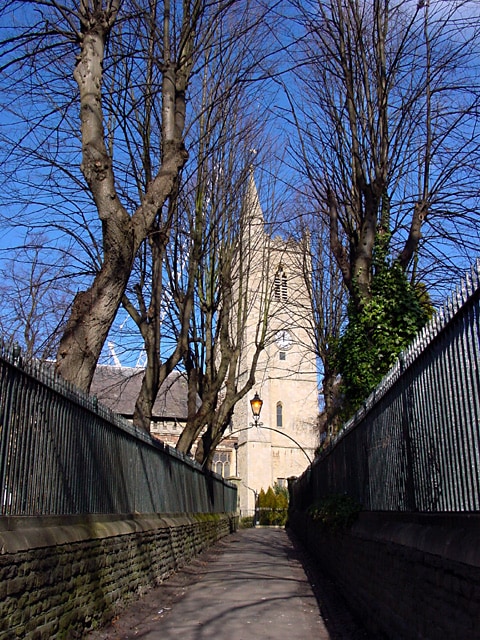
St James's Priory in Bristol was founded between 1124 and 1137 as a Benedictine priory by Robert, Earl of Gloucester. It served as Bristol's first religious house and established a planned suburb and a large cemetery. While most of the priory buildings were demolished after the Dissolution of the Monasteries in 1540, the nave of the church survived and continues to function as an active place of worship today, now serving the Catholic Diocese of Clifton.
Key Facts
- ›Founded between 1124 and 1137 as a Benedictine priory by Robert, Earl of Gloucester.
- ›Served as Bristol's first religious house.
- ›Endowed with land by Earl Robert, which was developed into a planned suburb and a large cemetery.
- ›The nave of the priory church survived the Dissolution of the Monasteries and remains in use.
- ›Re-established as a Catholic church in 1996, housing the St James Priory Project.
- ›Underwent substantial restoration completed in 2011.
Medieval
- Survived Dissolution of the Monasteries
- Site of St James's Fair
- St James Priory Project
- Fragment of Early Scientific Sundial Discovered During Restoration
Priory Church of St James, Bristol
Robert, Earl of Gloucester, Mabel Fitzrobert, Eleanor, Fair Maid of Brittany
Dissolution of the Monasteries, St James's Fair Held Annually, Restoration Completed
About St James's Priory, Bristol
St James's Priory, officially the Priory Church of St James, is a significant historical religious site located in Bristol, United Kingdom. Its origins trace back to the period between 1124 and 1137, with some sources pinpointing its establishment around 1129. It was founded as a Benedictine priory by Robert, Earl of Gloucester, an influential figure and the illegitimate son of King Henry I. This priory held the distinction of being the very first religious house established in Bristol and played a crucial role in the city's early urban development and religious life.
Founding and Early Significance
Strategically positioned across the River Frome from Bristol Castle, where Earl Robert was constructing a formidable new keep, the priory benefited from his patronage. He endowed the institution with a substantial meadow, which later became the foundation for the modern Broadmead area. The priory subsequently developed this land into a planned suburb, divided into burgage plots. Furthermore, a vast lay cemetery, covering approximately 128,000 square feet, was established, extending south from the priory complex to what is now known as Horsefair and St James's Park.
Survival and Transformation
A notable aspect of St James's Priory's history is the survival of its early nave. An agreement made in 1374 between the Abbot of Tewkesbury and the local parishioners designated the nave as their responsibility, ensuring its preservation even after the priory's dissolution. This nave, dating from 1129, survived the Dissolution of the Monasteries carried out by Henry VIII in 1540, a period that saw the demolition of most priory buildings. The priory itself was surrendered to the Crown on January 9, 1540. Subsequently, the land and the right to hold the annual St James's Fair were sold to a London merchant-tailor in 1543.
Architectural and Later History
Over the centuries, the surviving church underwent various modifications. The south aisle was widened and rebuilt in 1698, and the porch dates from the late 18th century. The north aisle was rebuilt in 1864. A traditional account suggests that every tenth stone brought from Normandy for the construction of Bristol Castle was set aside for the building of the Priory. In recent times, the building was in a state of disrepair and was placed on the Historic England Buildings at Risk Register. However, extensive restoration and reordering work was completed in 2011, funded by a Heritage Lottery Fund grant and significant public fundraising.
Contemporary Role
Following its closure as an Anglican parish church in the 1980s, the nave of St James's Priory was re-established as a Catholic church in 1996 by the Little Brothers of Nazareth. This marked the revival of its religious function and led to the establishment of the St James Priory Project. This project provides support services to vulnerable individuals, particularly those with histories of substance dependency and mental illness. The church remains an active place of worship within the Catholic Diocese of Clifton, a testament to its enduring presence in Bristol.
Source: Wikipedia ↗
Frequently Asked Questions
When was St James's Priory founded?
St James's Priory was founded between 1124 and 1137. Some sources specify the founding date more precisely as circa 1129.
Who founded St James's Priory?
The priory was founded by Robert, Earl of Gloucester, who was the illegitimate son of Henry I. He endowed the priory with land and the right to hold a fair.
What happened to St James's Priory during the Dissolution of the Monasteries?
Following the Dissolution of the Monasteries by Henry VIII on January 9, 1540, St James's Priory was surrendered to the crown. The priory buildings were demolished, with only the nave of the church being preserved.
What is the current status of St James's Priory?
Today, the former priory church of St James is an active church within the Catholic Diocese of Clifton. It also houses the St James Priory Project, which supports vulnerable individuals.
What was St James's Fair?
St James's Fair was an annual fair granted to the priory by Earl Robert. It grew to become one of Bristol's most important fairs, held for fifteen days, and was a significant source of income for the church, supporting its decoration and activities.
Was the priory church ever in danger of being lost?
Yes, before its recent restoration, the building was listed on the Historic England Buildings at Risk Register and described as being in very bad condition. Substantial restoration work was completed in 2011, and it is no longer on that register.
Related Monasteries
Cașin Monastery
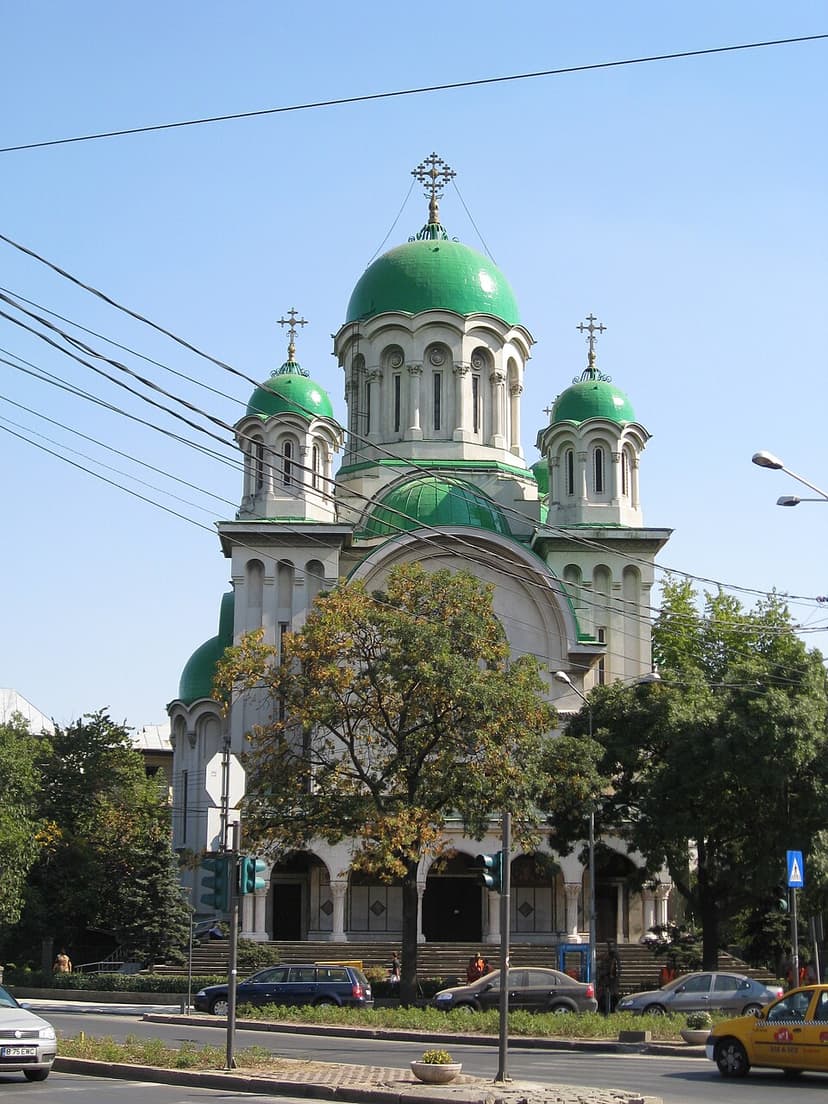
Cașin Monastery, a Romanian Orthodox church in Bucharest, was planned in 1935 and constructed between 1937 and 1938, with further work in the mid-20th century. It is dedicated to Archangels Michael and Gabriel and features a blend of Brâncovenesc and Byzantine architectural styles, notable for its extensive use of mosaics and marble.

English Benedictine Congregation
The English Benedictine Congregation (EBC) is a historic association of Catholic Benedictine monastic communities, technically the oldest of the nineteen congregations affiliated with the Benedictine Confederation. Founded in 1216 by the Holy See to unite English Benedictine abbeys, its roots extend to the 6th and 7th centuries. After its suppression during Henry VIII's Dissolution, the congregation was re-established in 1619 through the unification of exiled English Benedictine groups and a small community of monks who maintained continuity.
Eastminster Abbey
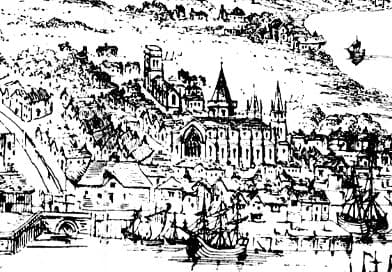
Eastminster Abbey, also known as New Abbey or St Mary Graces, was a Cistercian monastery established by King Edward III in 1350. Situated on Tower Hill in London, it was endowed by royal patrons and courtiers, with its primary function being the perpetual singing of masses. The abbey was dissolved in 1538, and its site later became home to the Royal Mint before its sale for diplomatic use.