
English Benedictine Congregation
The English Benedictine Congregation (EBC) is a historic association of Catholic Benedictine monastic communities, technically the oldest of the nineteen congregations affiliated with the Benedictine Confederation. Founded in 1216 by the Holy See to unite English Benedictine abbeys, its roots extend to the 6th and 7th centuries. After its suppression during Henry VIII's Dissolution, the congregation was re-established in 1619 through the unification of exiled English Benedictine groups and a small community of monks who maintained continuity.
Key Facts
- ›Erected by the Holy See in 1216 to unify ancient English Benedictine abbeys.
- ›Roots trace back to the 6th and 7th centuries with the arrival of Augustine of Canterbury.
- ›All houses were suppressed during Henry VIII's Dissolution (1534-1540).
- ›Re-established in 1619 by Pope Paul V through the unification of continental exile communities and a small remnant group.
- ›Claims continuity through a 1607 Deed of Aggregation and subsequent papal briefs.
- ›Currently has houses in the United Kingdom, United States, Peru, and Zimbabwe, with recent aggregations from Ireland, Australia, and Sweden.

- Claim of Continuity With Early English Benedictine Monasticism
- Re-Establishment Through Unification of Exiled Communities
- Association With Numerous Reformation Martyrs
Ebc
Saint Augustine of Canterbury, Saint Wilfrid, Saint Benedict Biscop, Saint Dunstan, Dom Sigebert Buckley, Pope Paul V, Pope Urban Viii, Saint John Roberts, Saint Ambrose Barlow, Saint Alban Roe, Blessed Mark Barkworth, Blessed George Gervase, Blessed Maurus Scott, Blessed Philip Powell, Blessed Thomas Pickering, Abbot Christopher Jamison
Erection By the Holy See, First General Chapter In Oxford, Suppression During Henry Viii's Dissolution, Reunification By Pope Paul V, Aggregation By Dom Sigebert Buckley, Ratification By Pope Paul V, Ratification By Pope Urban Viii, Sexual Abuse Scandal
About English Benedictine Congregation
The English Benedictine Congregation (EBC) stands as the oldest of the nineteen congregations affiliated with the Benedictine Confederation, representing a significant thread in the history of monasticism in the British Isles. Officially erected by the Holy See in 1216, its purpose was to unite the ancient English Benedictine abbeys under a common framework, with its first General Chapter convened in Oxford in 1218. The deeper origins of English Benedictine monasticism, however, are traced back to the 6th and 7th centuries, coinciding with the arrival of Augustine of Canterbury and the establishment of communities by figures such as Wilfrid and Benedict Biscop. These early foundations were instrumental in the conversion of the English people to Christianity and profoundly shaped the character of English Christianity.
The congregation's history took a dramatic turn with the Dissolution of the Monasteries under King Henry VIII between 1534 and 1540, during which all its houses were suppressed. The modern form of the English Benedictine Congregation emerged from a unification decreed by Pope Paul V in 1619. This act brought together two distinct groups: a collection of continental houses established by English exiles in the early 17th century and a small group of around eight monks who maintained a lineage from the last surviving monk of Westminster Abbey, Dom Sigebert Buckley.
Continuity and Re-establishment
The pre-dissolution English Benedictine communities were shaped by the 10th-century English Benedictine Reform and the principles of the Regularis Concordia. They possessed a claimed material continuity with the earliest Benedictine foundations and a moral continuity with influential figures like Bede, even when direct material links were broken by events such as Viking invasions. The complete cessation of this traditional monastic life occurred during the Henrician dissolution. English Benedictine priests and scholars faced choices ranging from assimilation into the reformed Church of England to exile in continental Europe or, for some, martyrdom.
The post-dissolution era saw a brief restoration of Westminster Abbey under Mary I in 1556, but this revival was short-lived, suppressed again under the Elizabethan Religious Settlement. During the reigns of Elizabeth I and James I, English monks with monastic vocations joined houses of the Cassinese Congregation across Europe. The formal re-establishment of the EBC was significantly bolstered by the 1607 Deed of Aggregation, a clandestine act by Dom Sigebert Buckley to ensure the continuation of the congregation. This deed, later ratified by papal briefs, along with the 1619 unification and subsequent papal bulls, forms the basis of the present congregation's claim to continuity, though its spiritual identity is also marked by the circumstances of persecution, missionary work, and the Tridentine reform movement.
Modern Presence and Challenges
Today, the English Benedictine Congregation comprises autonomous monastic communities of monks, nuns, and lay oblates. In 2020, the EBC had houses in the United Kingdom, the United States, Peru, and Zimbabwe. The congregation subsequently welcomed three communities of nuns from Ireland, Australia, and Sweden, expanding its reach and diversity. Despite its long history, the EBC has also faced significant challenges, including a notable sexual abuse scandal around the turn of the 21st century, which led to the laicization, conviction, and imprisonment of several monks.
Source: Wikipedia ↗
Frequently Asked Questions
When was the English Benedictine Congregation formally established?
The English Benedictine Congregation was formally erected by the Holy See in 1216. Its first General Chapter was held in Oxford in 1218.
What led to the suppression of the EBC's houses?
The congregation's houses were violently suppressed between 1534 and 1540 during Henry VIII's Dissolution of the Monasteries.
How was the English Benedictine Congregation re-established?
The congregation was re-established in 1619 by Pope Paul V through the unification of exiled English Benedictine groups and a small number of monks who maintained a link to the ancient congregation.
What is the historical significance of the 1607 Deed of Aggregation?
The 1607 Deed of Aggregation is considered crucial for the continuity of the English Benedictine Congregation, as it aggregated remaining monks to the near-extinct Chapter of Westminster, thereby preserving the congregation's lineage.
Where are the current houses of the English Benedictine Congregation located?
As of recent data, the EBC has houses in the United Kingdom, the United States, Peru, and Zimbabwe. In 2022, communities from Ireland, Australia, and Sweden were also accepted.
Are there any famous martyrs associated with the EBC?
Yes, several notable English Benedictines, including Saint John Roberts, Saint Ambrose Barlow, and Saint Alban Roe, are recognized as Reformation martyrs for their faith and missionary work.
Related Monasteries
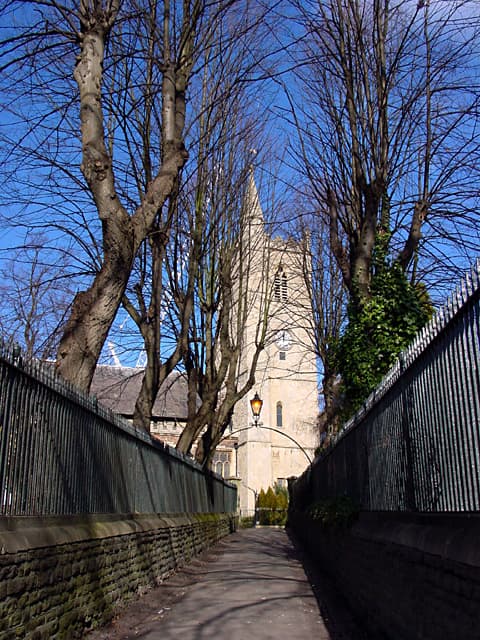
St James's Priory, Bristol
St James's Priory in Bristol was founded between 1124 and 1137 as a Benedictine priory by Robert, Earl of Gloucester. It served as Bristol's first religious house and established a planned suburb and a large cemetery. While most of the priory buildings were demolished after the Dissolution of the Monasteries in 1540, the nave of the church survived and continues to function as an active place of worship today, now serving the Catholic Diocese of Clifton.
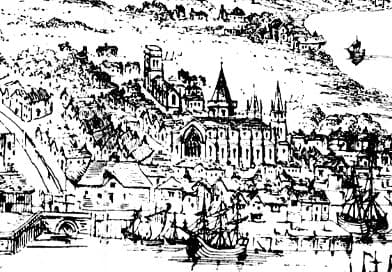
Eastminster Abbey
Eastminster Abbey, also known as New Abbey or St Mary Graces, was a Cistercian monastery established by King Edward III in 1350. Situated on Tower Hill in London, it was endowed by royal patrons and courtiers, with its primary function being the perpetual singing of masses. The abbey was dissolved in 1538, and its site later became home to the Royal Mint before its sale for diplomatic use.
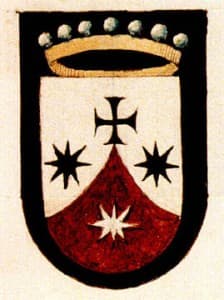
Cambridge White Friars
The Cambridge Whitefriars were a community of Carmelite friars who established themselves in Cambridge in the thirteenth century. Initially settling in Chesterton and then Newnham, they eventually moved to Milne Street in Cambridge in 1292, where they remained until the dissolution of the monasteries in 1538. Their property was then transferred to Queens' College, and most of the monastic buildings were demolished.