
Cambridge White Friars
The Cambridge Whitefriars were a community of Carmelite friars who established themselves in Cambridge in the thirteenth century. Initially settling in Chesterton and then Newnham, they eventually moved to Milne Street in Cambridge in 1292, where they remained until the dissolution of the monasteries in 1538. Their property was then transferred to Queens' College, and most of the monastic buildings were demolished.
Key Facts
- ›First settled outside Cambridge in Chesterton in the 13th century.
- ›Moved to a donated house in Newnham in 1249.
- ›Relocated to Milne Street within Cambridge in 1292 due to flooding issues.
- ›Dissolved under Henry VIII in 1538.
- ›Property was handed over to Queens' College, Cambridge.
- ›The north wall of the Fellows' Garden at Queens' College is the only surviving remnant of the church.

North Wall of the Fellows' Garden
Newnham Whitefriars
Michael Malherbe
- Dissolution of the Monasteries Under Henry Viii
About Cambridge White Friars
Cambridge Whitefriars
The Cambridge Whitefriars, also known as Newnham Whitefriars, were a mendicant religious community of Carmelite friars that was established in Cambridge during the thirteenth century. Their history in the city involved several relocations and ultimately ended with the dissolution of monasteries under King Henry VIII.
Early Settlements and Relocations
The Carmelite friars first received permission from King Henry III to establish a house in Chesterton, just outside Cambridge, in 1247. However, they did not settle there permanently. Instead, in 1249, they moved into a house in Newnham that had been donated to them by Michael Malherbe. This Newnham site, located in the parish of St-Peter-outside-the-gate in Trumpington, saw the construction of extensive monastic cells, a cloister, and a church on three acres of land.
Frequent flooding in Newnham posed significant challenges for the friars, particularly in attending lectures and obtaining necessary provisions. Consequently, in 1290, they obtained permission from King Edward I to relocate to a new site on Milne Street within the city of Cambridge itself. They occupied this location from 1292 until 1538.
Dissolution and Legacy
The Cambridge Whitefriars community ceased to exist in 1538 as a direct result of the dissolution of monasteries initiated by King Henry VIII. Their property and lands were subsequently handed over to Queens' College, Cambridge. The monastic buildings were largely demolished by the college, and the site is now occupied by Walnut Tree Court and the Queens' College chapel.
The only tangible surviving remnant of the Cambridge Whitefriars' presence is the well-preserved north wall of the Fellows' Garden at Queens' College, which originally served as the north wall of their Carmelite church. The exact locations of their earlier settlements in Chesterton and Newnham are no longer known.
Source: Wikipedia ↗
Frequently Asked Questions
When did the Cambridge Whitefriars first establish themselves?
The Cambridge Whitefriars, a community of Carmelite friars, first settled outside Cambridge in Chesterton in the thirteenth century. They received permission to build a house there in 1247.
Where was the Cambridge Whitefriars monastery located?
The friars first settled in Chesterton, then moved to a house in Newnham in 1249. In 1292, they relocated to land on Milne Street within Cambridge, where they resided until their dissolution.
What happened to the Cambridge Whitefriars monastery?
The monastery was dissolved under Henry VIII in 1538. Their property was subsequently handed over to Queens' College, Cambridge, and the monastic buildings were demolished.
Are there any surviving structures from the Cambridge Whitefriars monastery?
The only known surviving remnant of the Cambridge Whitefriars monastery is the well-preserved north wall of the Fellows' Garden at Queens' College, which once formed the north wall of the Carmelite church.
Why did the friars move from Newnham to Milne Street?
The friars moved from Newnham to Milne Street in 1292 because frequent flooding in Newnham made it difficult for them to attend lectures and acquire provisions. Edward I granted them permission to move to the new site.
Related Monasteries

Snelshall Priory
Snelshall Priory was a Benedictine monastery founded around 1200 in what is now Milton Keynes, Buckinghamshire. Initially established as a Premonstratensian cell, it was later re-founded by Benedictine monks. Despite accumulating land, the priory struggled financially throughout its existence and was suppressed in 1535, with its stones later used to build a nearby church.
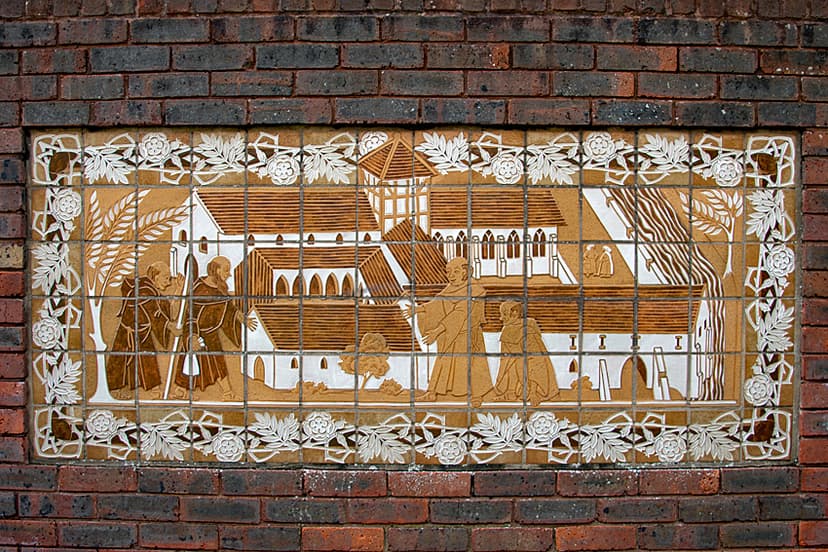
Southampton — Greyfriars
The Franciscan Friary of Southampton, also known as Greyfriars, was established around 1233 within the city walls. It was particularly renowned for its innovative water supply system, which initially served the friars and later the wider community of Southampton. The friary was dissolved in 1538, and while most of its structures have disappeared, remnants of its significant water system still exist.

Macosquin Abbey
Macosquin Abbey, formally known as Clarus Fons, was a Cistercian monastery located in County Londonderry, Northern Ireland. Founded in 1217 by monks from Morimond, France, it experienced a decline by 1539 and its last remains were removed in the 18th century. The site is now believed to be occupied by the Protestant Church of Saint Mary.