
Cașin Monastery
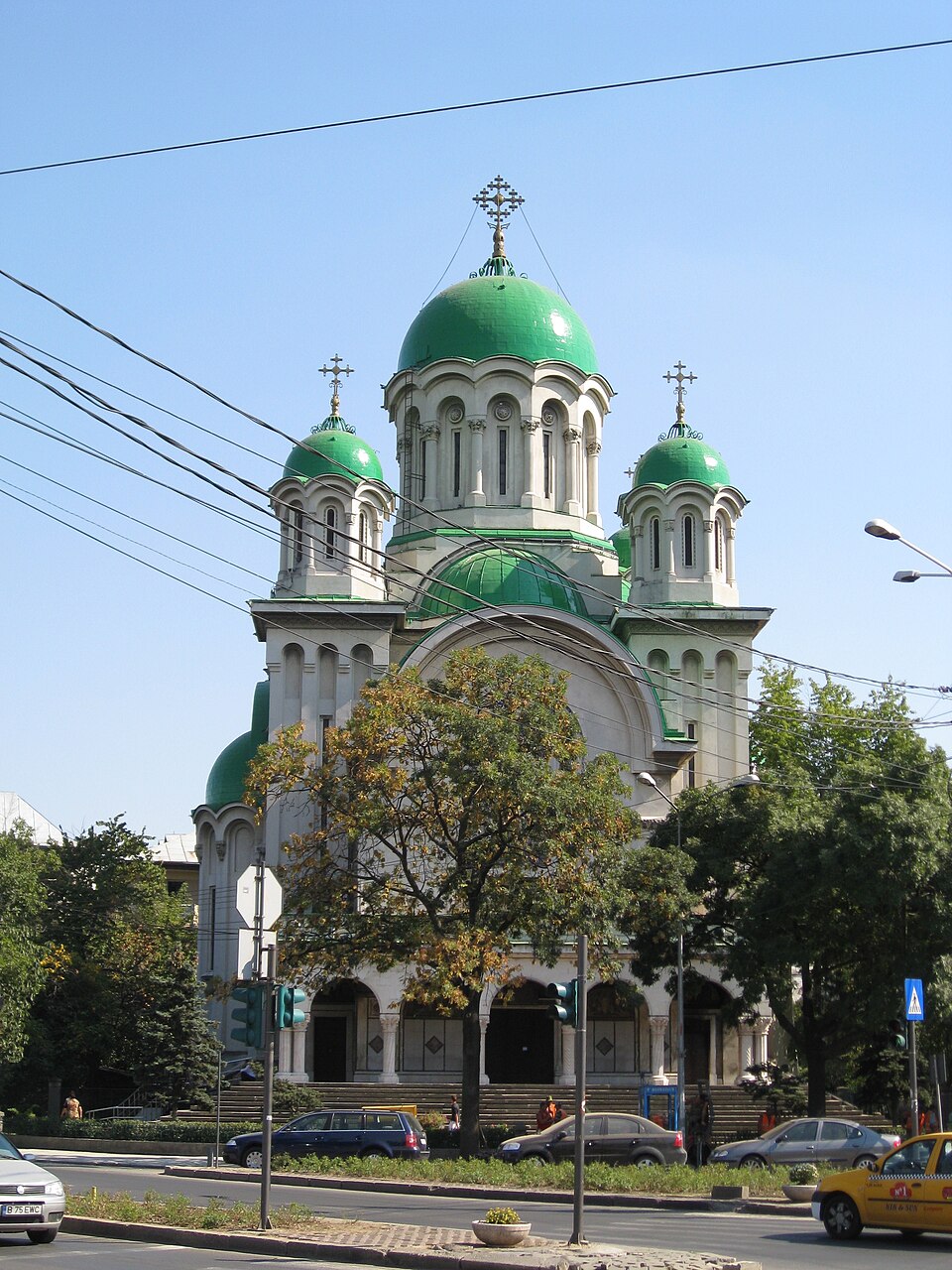
Cașin Monastery, a Romanian Orthodox church in Bucharest, was planned in 1935 and constructed between 1937 and 1938, with further work in the mid-20th century. It is dedicated to Archangels Michael and Gabriel and features a blend of Brâncovenesc and Byzantine architectural styles, notable for its extensive use of mosaics and marble.
Key Facts
- ›Construction began in August 1937 and was completed in March 1938, with later additions.
- ›Designed by Dimitrie Ionescu-Berechet, chief architect of the Romanian Patriarchate.
- ›Combines Brâncovenesc style elements with Byzantine architecture.
- ›Features extensive use of marble and Murano glass mosaics, including a unique mosaic iconostasis.
- ›Dedicated to Archangels Michael and Gabriel.
- ›Located in Bucharest, near Arcul de Triumf.
BrâNcovenesc, Byzantine
Mosaic Iconostasis, Murano Glass Mosaics, Marble Wall and Floor Plating, Central Dome With Christ Pantocrator Mosaic, Bronze Bas-Relief Doors
Biserica CașIn, MăNăStirea CașIn
Gheorghe Ionescu-SiseșTi, Vasile Militaru, I. BăLăNescu, Dumitru I. Manta, Ion Antonescu, Dimitrie Ionescu-Berechet, Ion Dimitriu-BâRlad, Constantin Baraschi, Mihai Wagner, Alexandru Averescu
- Cornerstone Laid In August 1937
- Structure Completed In March 1938
- Work Resumed In 1946–1959
- Repairs Conducted In 2002–2003
- Domes Repainted In 2008
- Bust of Marshal Alexandru Averescu Placed In Front of the Church In 2018
About Cașin Monastery
Cașin Monastery, officially known as Biserica Cașin, is a Romanian Orthodox church located in Bucharest, Romania. Situated near the Arcul de Triumf, it is dedicated to the Archangels Michael and Gabriel. The monastery's construction was initiated by a parish council in 1935, with significant financial contributions from various institutions and individuals, including General Ion Antonescu.
History and Architecture
The design for the church was won by Dimitrie Ionescu-Berechet, the chief architect of the Romanian Patriarchate. Construction commenced in August 1937, with the main structure completed by March 1938. Further work was carried out between 1946 and 1959. Cașin Monastery's architecture impressively blends elements of the Brâncovenesc style, notably its entrance columns, with Byzantine influences, evident in the mosaic decorations, the central Greek cross layout, and its tall, spacious interior.
Notable Features
The monastery boasts a rich interior, featuring a marble and alabaster iconostasis adorned with mosaic icons. From 1962 to 1971, the walls and floors were covered with 3-meter high white and rose marble plates. A notable artistic achievement is the extensive use of Murano glass mosaics throughout the sanctuary and along the walls, a pioneering application for Romania. The main dome is decorated with a mosaic of Christ Pantocrator, a common motif in Orthodox churches. The exterior is also distinguished by marble plating, mosaic icons, and bronze bas-relief doors depicting Archangels Michael and Gabriel, as well as Saints Peter and Paul. In front of the church stands a bust of Marshal Alexandru Averescu, placed in 2018.
Renovation and Naming
The church underwent repairs in 2002–2003, and its domes were repainted in 2008. The name 'Cașin' is derived from the Cașin Valley in Bacău County, a region steeped in a blend of historical events and local legends.
Source: Wikipedia ↗
Frequently Asked Questions
When was Cașin Monastery built?
Plans for Cașin Monastery were made in 1935, with the cornerstone laid in August 1937. The structure was completed in March 1938, though work continued between 1946 and 1959.
What architectural styles does Cașin Monastery incorporate?
The church combines the Brâncovenesc style, evident in its entrance columns, with Byzantine architecture, seen in its mosaics, Greek cross plan, and spacious interior.
What are the notable interior features of Cașin Monastery?
The interior is distinguished by a marble and alabaster iconostasis with mosaic icons, and walls and floors covered in white and rose marble plates. The arches and walls are entirely decorated in Murano glass mosaics, a first for Romania.
Who funded the construction of Cașin Monastery?
Funds were raised through significant donations from the Ministry of Agriculture and Domains, monthly subscriptions from families and institutions, and several donations from General Ion Antonescu.
What is the significance of the name 'Cașin'?
The church's name refers to the valley of Cașin in Bacău County, a location associated with both history and myth.
Related Monasteries
St James's Priory, Bristol
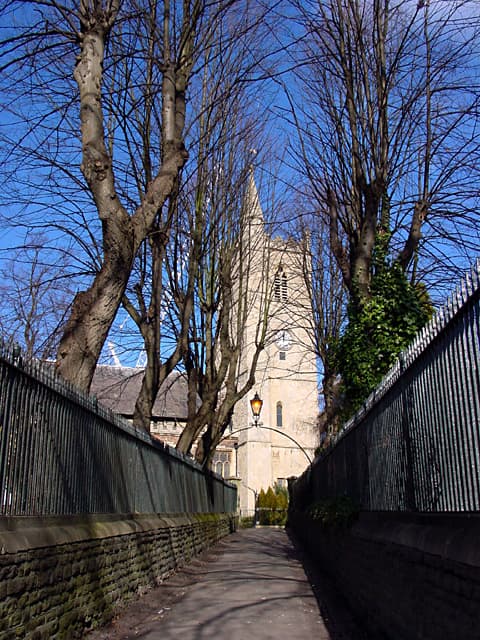
St James's Priory in Bristol was founded between 1124 and 1137 as a Benedictine priory by Robert, Earl of Gloucester. It served as Bristol's first religious house and established a planned suburb and a large cemetery. While most of the priory buildings were demolished after the Dissolution of the Monasteries in 1540, the nave of the church survived and continues to function as an active place of worship today, now serving the Catholic Diocese of Clifton.

Rohia Monastery
Rohia Monastery, officially Mănăstirea Sfânta Ana Rohia, is a Romanian Orthodox monastery dedicated to Saint Anne. Founded in the early 1920s by priest Nicolae Gherman in memory of his daughter, it is nestled on a hillside amidst a forest in Rohia, Maramureș County, Romania. The monastery gained prominence as the final residence of writer Nicolae Steinhardt, who lived and died there as a monk.

Antim Monastery
The Antim Monastery is a Romanian Orthodox church in Bucharest, built between 1713 and 1715 by Saint Anthim the Iberian. It served as a significant religious center and was later restored in the 1960s. The monastery complex includes a museum dedicated to Saint Anthim and has a complex history, including its involvement in the 1941 pogrom and its preservation during the communist era through relocation.