
Rohia Monastery
Rohia Monastery, officially Mănăstirea Sfânta Ana Rohia, is a Romanian Orthodox monastery dedicated to Saint Anne. Founded in the early 1920s by priest Nicolae Gherman in memory of his daughter, it is nestled on a hillside amidst a forest in Rohia, Maramureș County, Romania. The monastery gained prominence as the final residence of writer Nicolae Steinhardt, who lived and died there as a monk.
Key Facts
- ›Founded in 1923 by priest Nicolae Gherman.
- ›Dedicated to Saint Anne, with its construction initiated in memory of his daughter.
- ›Located in Rohia, Maramureș County, Romania, at an altitude of 500 meters.
- ›The monastery was blessed in 1926 by Bishop Nicolae Ivan.
- ›Became widely known as the place where writer Nicolae Steinhardt lived as a monk from 1980 to 1989.

- Location On A Hillside Amidst A Beech and Oak Grove
- the Monastery Where Nicolae Steinhardt Lived As A Monk
MăNăStirea SfâNta Ana Rohia
Nicolae Gherman, Ana Gherman, Nicolae Ivan, Nicolae Steinhardt
- Initiation of Construction In 1923
- Blessing of the Monastery In 1926
- Expansion After 1970 With the Completion of An Access Road and Introduction of Electricity
- Nicolae Steinhardt's Residency From 1980 To 1989
About Rohia Monastery
Rohia Monastery, officially known as Mănăstirea Sfânta Ana Rohia, is a significant Romanian Orthodox religious site located in Rohia, Maramureș County, in northwestern Romania. Nestled on a hillside at an elevation of approximately 500 meters, it is set within a picturesque natural environment of beech and oak trees. The monastery's origins trace back to the early 1920s, stemming from the personal initiative of priest Nicolae Gherman. He was moved to establish the monastery as a memorial to his young daughter, Ana, who passed away at the age of ten in 1922. Gherman began the construction the following year, with substantial assistance from numerous volunteers, leading to the completion of a small church and monks' residence within two years.
The monastery received its formal blessing in 1926 from Bishop Nicolae Ivan on the feast day of the Dormition of the Mother of God, to whom the establishment is dedicated. Initially, due to its remote and inaccessible location, Rohia Monastery functioned as a skete for many years. Its development and accessibility were significantly improved after 1970 with the construction of an access road and the introduction of electricity.
Rohia Monastery gained broader national and literary recognition as the final home of the renowned writer Nicolae Steinhardt. He chose to live as a monk at Rohia from 1980 until his death in 1989, a period that added a unique cultural and intellectual dimension to the monastery's history.
Source: Wikipedia ↗
Frequently Asked Questions
When was Rohia Monastery founded?
The initiative to found Rohia Monastery began in 1923, following the death of priest Nicolae Gherman's daughter, Ana. Construction of the first buildings was completed two years later, and the monastery was officially blessed in 1926.
Who founded Rohia Monastery?
Rohia Monastery was founded by priest Nicolae Gherman, who was inspired to create the monastery in memory of his 10-year-old daughter, Ana, who died in 1922.
What is Rohia Monastery known for?
Rohia Monastery is particularly noted as the place where the writer Nicolae Steinhardt lived as a monk from 1980 until his death in 1989. It is also one of the earlier monasteries established in the region after the union of Transylvania with Romania.
Where is Rohia Monastery located?
Rohia Monastery is situated in the village of Rohia, administered by Târgu Lăpuș town in Maramureș County, in the northwestern part of Romania. It is located on a hillside at an altitude of approximately 500 meters, surrounded by a beech and oak grove.
Related Monasteries
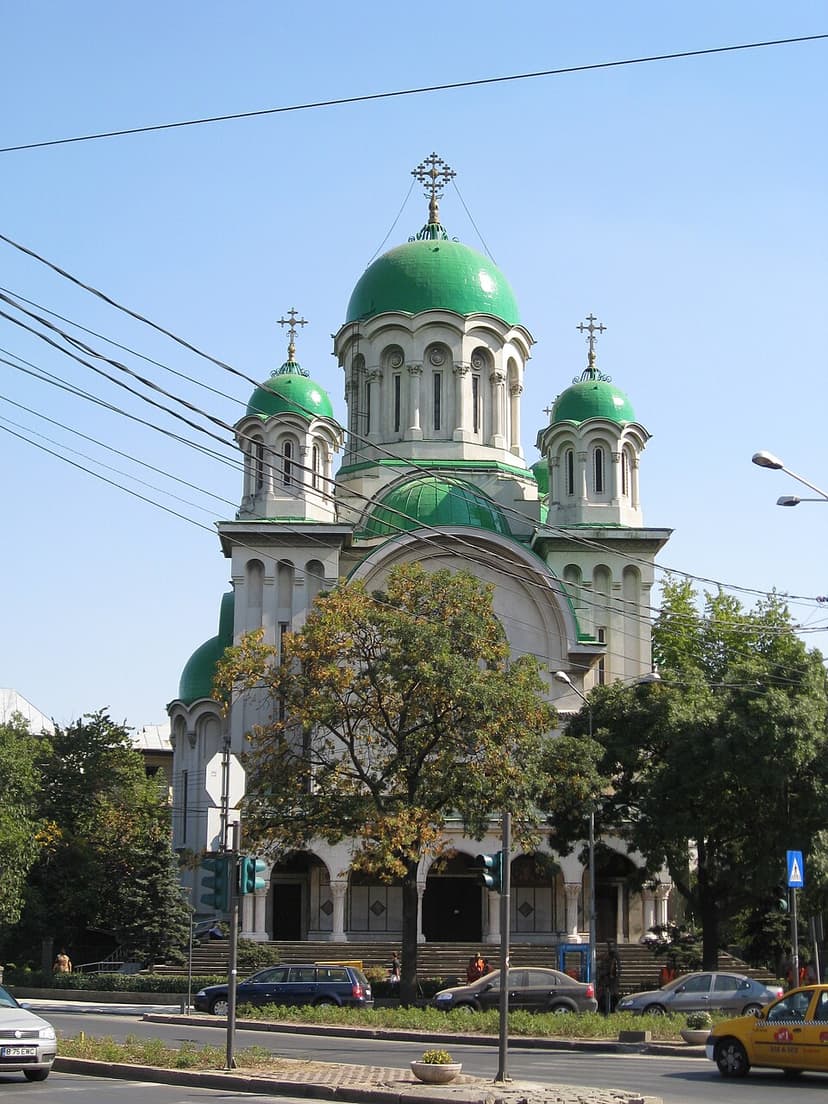
Cașin Monastery
Cașin Monastery, a Romanian Orthodox church in Bucharest, was planned in 1935 and constructed between 1937 and 1938, with further work in the mid-20th century. It is dedicated to Archangels Michael and Gabriel and features a blend of Brâncovenesc and Byzantine architectural styles, notable for its extensive use of mosaics and marble.

Antim Monastery
The Antim Monastery is a Romanian Orthodox church in Bucharest, built between 1713 and 1715 by Saint Anthim the Iberian. It served as a significant religious center and was later restored in the 1960s. The monastery complex includes a museum dedicated to Saint Anthim and has a complex history, including its involvement in the 1941 pogrom and its preservation during the communist era through relocation.

Bârnova Monastery
Bârnova Monastery is a Romanian Orthodox monastery located in Bârnova, within the Iași metropolitan area of Moldavia, Romania. It was established in 1628 by Miron Barnovschi-Movilă, a Moldavian Voivode, and is recognized on the National Register of Historic Monuments. The monastery's courtyard hosts the oldest tree in Iași County, a 675-year-old hybrid lime tree, predating the first mention of Iași as an urban settlement.