
South Queensferry Whitefriars
The Priory Church of St Mary of Mount Carmel, commonly known as the Priory Church or St Mary's Episcopal Church, is a historic Carmelite church in South Queensferry, Scotland. Founded in 1330, it was built for the Carmelite Order and later served as a parish church before falling into disrepair. Following extensive restoration in the late 19th century, it was reopened by the Scottish Episcopal Church and stands today as the only medieval Carmelite church still in use in the British Isles.
Key Facts
- ›Founded in 1330 for the Carmelite Order.
- ›The church building was constructed in the MID-15th century.
- ›Served as a parish church in the 16th and 17th centuries.
- ›Became the burial place for the Dundas family in 1633.
- ›Restored and reopened by the Scottish Episcopal Church in 1890.
- ›The only medieval Carmelite church still in use in the British Isles.
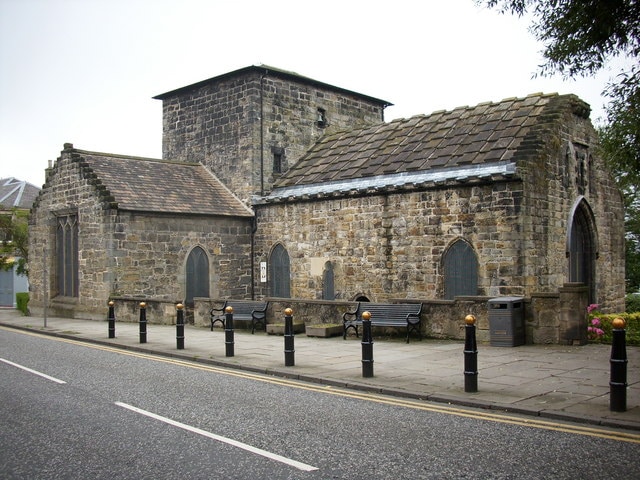
Gothic
Choir, Tower, South Transept, Category A Listed Building
Priory Church, St Mary's Episcopal Church
James Dundas of Dundas
- Scottish Reformation of 1560
- Restoration and Reopening By the Scottish Episcopal Church In 1890
About South Queensferry Whitefriars
The Priory Church of St Mary of Mount Carmel
The Priory Church of St Mary of Mount Carmel, commonly known as the Priory Church or St Mary's Episcopal Church, is a significant historical religious site located in South Queensferry, near Edinburgh, Scotland. Its origins trace back to the founding of the Carmelite Friary in 1330, with the construction of the church building itself commencing in the mid-15th century. The earliest recorded grant of land for its construction dates from 1457, provided by James Dundas of Dundas.
History and Transformation
Following the Scottish Reformation in 1560, the Carmelite monastery ceased to function as such and its property reverted to the Dundas family. The former Carmelite church was subsequently repurposed as the parish church. This arrangement continued until 1635 when a new parish church was built, and the congregation relocated. The Carmelite church itself became the burial place for the Dundas family in 1633. Over the subsequent centuries, the building experienced a period of disuse and deterioration, with its monastic structures being demolished and the nave removed in 1875.
Restoration and Modern Use
A comprehensive restoration scheme was undertaken in 1889 by architects Henry Seymour and John Kinross. The following year, in 1890, the building was reconsecrated for use by the Scottish Episcopal Church by James Montgomery, Dean of Edinburgh. Today, the Priory Church stands as a testament to its enduring history, being the sole medieval Carmelite church remaining in active use within the British Isles. It is recognized for its historical importance and is designated as a category A listed building. Further restoration and repair works were conducted in 2000 to preserve its structure. The present-day church comprises the choir, tower, and south transept of the original Carmelite church, with a small porch added to the west of the tower in 1937.
Source: Wikipedia ↗
Frequently Asked Questions
When was the Carmelite Friary at Queensferry founded?
The Carmelite Friary at Queensferry was founded in 1330. A grant of land for the purpose of building a monastery dates from 1457.
What happened to the Carmelite monastery after the Scottish Reformation?
Following the Scottish Reformation of 1560, the Carmelite monastery returned to the ownership of the Dundas family. The former Carmelite church was then used as the parish church.
When did the congregation move out of the Carmelite church?
The congregation moved out of the Carmelite church in 1635, when a new parish church was constructed. The Carmelite church became the burial place for the Dundas family in 1633.
What is the current status of the church building?
The building was restored and reopened in 1890 by the Scottish Episcopal Church. It is now the only medieval Carmelite church still in use in the British Isles and is a category A listed building.
What remains of the original monastic buildings?
Nothing remains of the other monastic buildings, which are thought to have been located to the north of the church. No remains were recovered during archaeological digs in the 1970s.
Related Monasteries
Oronsay Priory
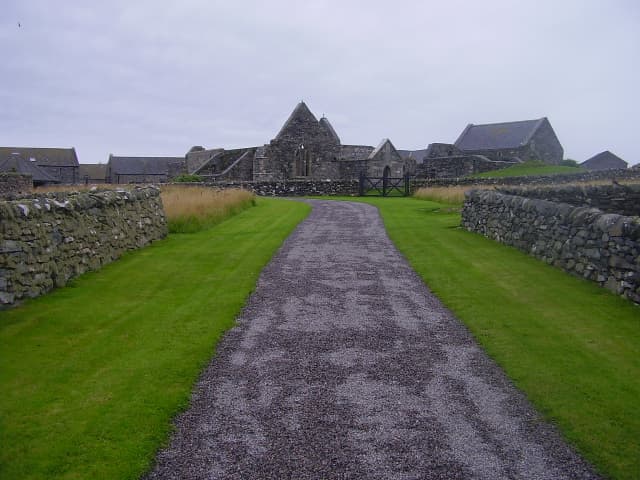
Oronsay Priory was a monastery of canons regular situated on the island of Oronsay in the Inner Hebrides, Scotland. Established in the 14th century under the patronage of John of Islay, Lord of the Isles, it was dedicated to St. Columba and may have been a continuation of an earlier foundation. Despite its remoteness and a general lack of detailed records, the priory operated until at least 1560, with significant restoration work occurring in the late 19th and early 20th centuries.

St Fillan's Priory
St Fillan's Priory was a small Augustinian priory located in Strath Fillan, Argyll. Founded around 1318 by Robert I, King of Scots, it was dedicated to the popular 14th-century saint, St. Fillan. The priory benefited from royal patronage, even after the Scottish Reformation, but by 1607 it had become a Campbell possession.
Edinburgh Greyfriars
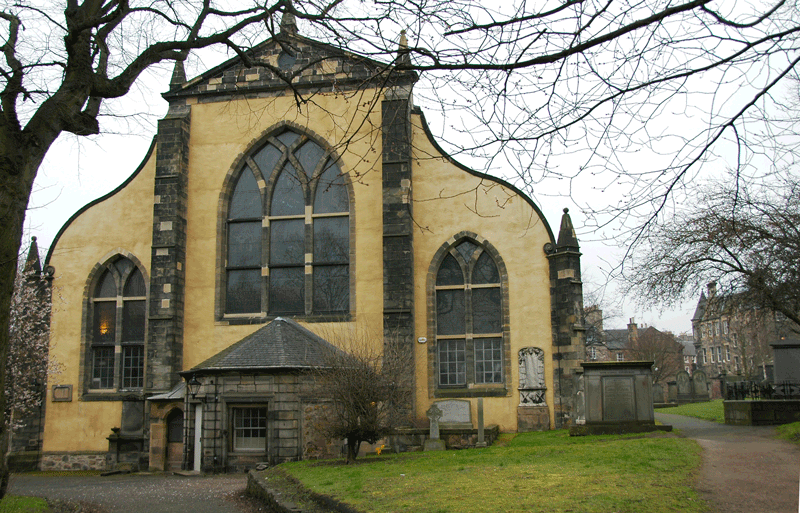
Greyfriars Kirk, located in Edinburgh's Old Town, originated from the 1598 founding of the south-west parish of Edinburgh, though its name derives from the 15th-century Franciscan friary that once occupied the site. Constructed between 1602 and 1620, the church has been a pivotal site for significant historical events, including the signing of the National Covenant in 1638 and occupation by Oliver Cromwell's troops. Over centuries, it has undergone multiple reconstructions and partitions to accommodate changing congregations, notably after a fire in 1845 and the union of Old and New Greyfriars in 1929.