
Snainton Preceptory
Christian·England·Partially extant, incorporated into modern structures·13th century
Snainton Preceptory, also known as Foulbridge Priory, was an establishment of the Knights Templar founded before 1226. Located south of Snainton village in North Yorkshire, England, it was situated on the River Derwent. The preceptory was suppressed between 1308 and 1312 and later transferred to the Knights Hospitaller in 1324. While its later history is unclear, some of its former buildings have been incorporated into a Grade I listed farmhouse and cottage.
Key Facts
- ›Founded by the Knights Templar at Foulbridge before 1226.
- ›Located on the River Derwent in North Yorkshire, England.
- ›Suppressed between 1308 and 1312.
- ›Transferred to the Knights Hospitaller in 1324.
- ›Some surviving buildings are now a Grade I listed farmhouse and cottage.
- ›Features a retained timber-framed aisled hall.
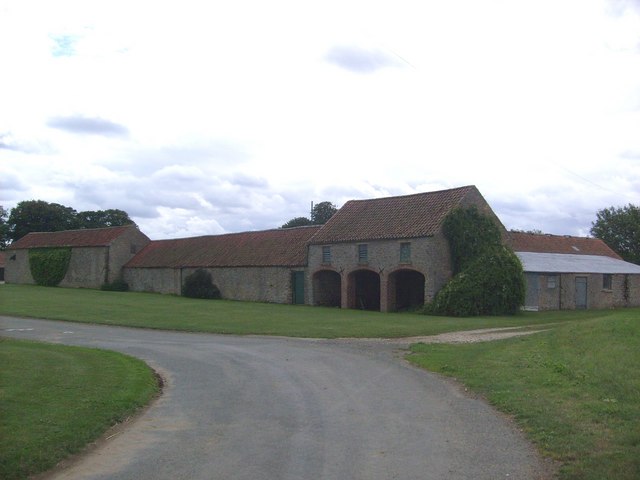
Timber-Framed, Brick
Timber Framed Aisled Hall, Grade I Listed Farmhouse and Cottage
Foulbridge Priory
Edward Ii
Suppression of the Preceptory, Transfer To the Knights Hospitaller
About Snainton Preceptory
Snainn Preceptory, also recognized by the name Foulbridge Priory, was a significant monastic establishment founded by the Knights Templar. Situated south of the village of Snainton in North Yorkshire, England, it occupied a location on the banks of the River Derwent. The preceptory's origins date back to before 1226, marking its establishment in the early 13th century.
Historical Context and Transition
The preceptory's active period under the Knights Templar was relatively short, as it was suppressed between 1308 and 1312. Its administrative and religious role subsequently transitioned when it was passed to the Knights Hospitaller in 1324, a transfer formally confirmed by King Edward II. The later history of Snainton Preceptory beyond this point is not clearly documented, with records indicating it was given to the Archbishop of York in 1556, but what transpired afterward remains uncertain.
Architectural Legacy
Despite the passage of time and the dissolution of its original order, elements of Snainton Preceptory's structures have endured. A portion of its buildings has been preserved and incorporated into a Grade I listed farmhouse and cottage. These surviving structures include a notable timber-framed aisled hall, retaining much of its original form. The later additions are constructed of brick and feature characteristic pantile roofs, coped gables, and shaped kneelers, reflecting architectural styles from a later period.
Source: Wikipedia ↗
Frequently Asked Questions
When was Snainton Preceptory founded?
Snainton Preceptory was founded before the year 1226 by the Knights Templar. The exact date of its establishment is not precisely recorded, but historical records place its founding in the early 13th century.
Who took over Snainton Preceptory after the Knights Templar?
Following its suppression, Snainton Preceptory was passed to the Knights Hospitaller. This transfer was confirmed in 1324 by Edward II.
What remains of Snainton Preceptory today?
Some of the original buildings of Snainton Preceptory have survived and have been incorporated into later structures. These include a timber-framed aisled hall, which forms part of a Grade I listed farmhouse and cottage.
Where was Snainton Preceptory located?
Snainton Preceptory was situated just south of the village of Snainton in North Yorkshire, England. It was located at Foulbridge, on the River Derwent.
Related Monasteries
Ashridge Priory
Ashridge Priory was a medieval college of Austin canons, established in 1283 by Edmund of Almain. It was known as the "Brothers of Penitence" or the "Boni Homines" and gained wealth through donations, particularly a phial of Christ's blood. After its dissolution, it served as a royal residence and later became a private estate before being demolished.

Beeston Regis Priory
Beeston Regis Priory was an Augustinian priory founded in 1216 by Lady Isabel de Cressey. Dissolved in 1538, its remains, particularly the priory church nave and transept, are a Grade I listed ruin. The priory's suppression is believed to have influenced the founding of Gresham's School, and its cloister garden is now part of Priory Farm.

Beverley Blackfriars
Beverley Blackfriars, also known as The Old Friary, originated as a Dominican priory established around 1240. Despite a devastating fire in 1449 and its dissolution in 1539, parts of the priory, particularly the guesthouse, survived. After centuries of varied private ownership and near demolition, significant preservation efforts led to its current status as a Grade II* listed building, housing a youth hostel since 1984.