
Selkirk Abbey
Kelso Abbey was a prominent ruined Scottish abbey founded in the 12th century by Tironensian monks. Situated overlooking the confluence of the Tweed and Teviot rivers, it was a powerful abbacy in the heart of the Scottish Borders. Despite enduring periods of English occupation and destruction, the monks worked to restore it, though it ultimately ceased to function by the mid-16th century due to turbulent events and the Scottish Reformation.
Key Facts
- ›Founded in 1128 by Tironensian monks from France.
- ›Originally intended to be established near Selkirk before moving to Roxburgh.
- ›Was considered one of the wealthiest and grandest abbeys in Scotland.
- ›Suffered significant damage during the English 'Rough Wooing' in the 1540s.
- ›The Scottish Reformation in 1560 led to its disestablishment.
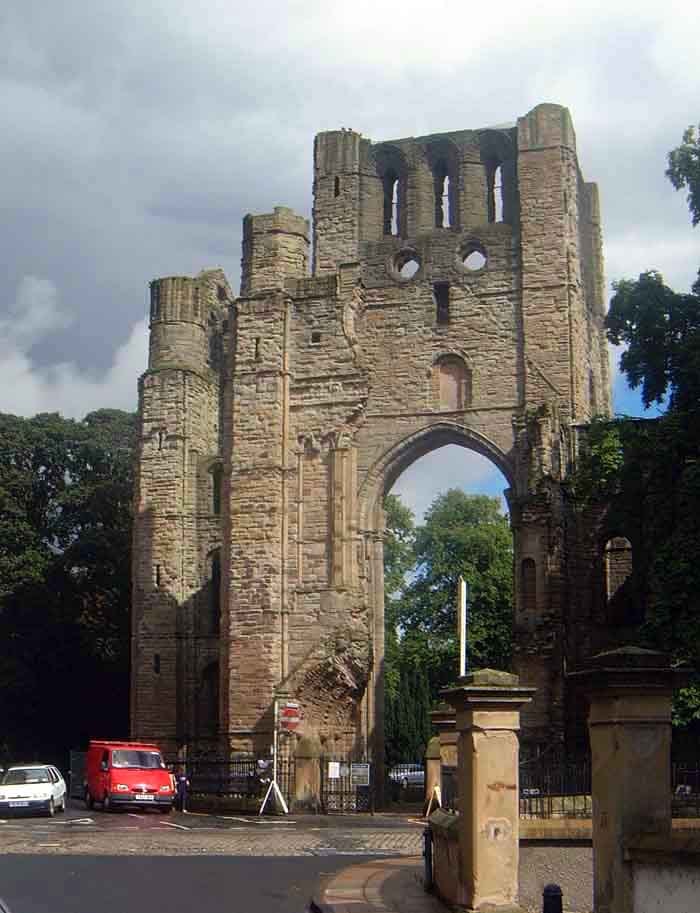
- ›Only the west tower crossing and part of the infirmary remain today.
Romanesque
West Tower Crossing, Infirmary Remains, Double-Cruciform Design, Borders Abbeys Way Walk Location
Alexander I, David I, Henry, Earl of Northumbria, William I, James Ii, James Iii, Henry Viii, Mary of Guise, Francis Stewart, 5th Earl of Bothwell, James Vi, Robert Ker of Cesford, Duke of Roxburghe, Reginald Fairlie
- Foundation of the Abbey
- Dedication of the Building
- Interment of Prince Henry
- Granting of the Mitre To Abbot John
- English Occupation During the Wars of Scottish Independence
- Death of James Ii Near the Abbey
- Coronation of James Iii At the Abbey
- English Attacks In the Early 16th Century
- Damage During the 'Rough Wooing'
- Scottish Reformation
- Declared Officially Derelict
- Granting of Estates As Holydean
- Occupation By A Parish Kirk
- Clearing of Ruins
- Construction of Memorial Cloister
- Closure To the Public
- Re-Opening After Repairs
About Selkirk Abbey
Kelso Abbey
Kelso Abbey, located in Kelso, Scotland, is a significant ruined monastic site with a history dating back to the 12th century. It was founded in 1128 by a community of Tironensian monks who had been brought to Scotland earlier in the century. The abbey was strategically situated overlooking the confluence of the Tweed and Teviot rivers, a location that was once the Royal Burgh of Roxburgh and intended to be a southern center for the Scottish kingdom. This position allowed Kelso to become the seat of a powerful abbacy within the Scottish Borders.
Historical Context and Development
The abbey's history was marked by periods of both prosperity and significant hardship. During the 14th century, Roxburgh became a focal point for English attacks, and Kelso Abbey navigated fluctuating control over the region, enduring destruction but ultimately preserving its Scottish identity. The abbey grew to be one of Scotland's wealthiest and grandest, playing a role in regional administration and even being the site for the hasty coronation of the infant King James III in 1460 after King James II was killed nearby.
Decline and Ruin
The abbey faced severe challenges in the 16th century. In the 1540s, it sustained major damage during English military campaigns known as the 'Rough Wooing.' The Scottish Reformation in 1560 led to the disestablishment of monastic orders, and the Tironensian community at Kelso was no longer officially recognized. Further attacks and damage resulted in the abbey being declared derelict in 1587. By the late 16th century, its estates were secularized, and parts of the ruins were later dismantled for local building materials.
Architectural Significance and Present Day
While much of the abbey is now in ruins, the surviving west tower and crossing are impressive, showcasing a robust Romanesque style indicative of a large and formidable structure. Evidence suggests a rare double-cruciform design. The ruins are cared for by Historic Environment Scotland and are accessible to the public, forming part of the Borders Abbeys Way walk. Following a temporary closure due to structural concerns, the abbey was re-opened in July 2026 after essential repairs.
Source: Wikipedia ↗
Frequently Asked Questions
When was Kelso Abbey founded?
Kelso Abbey was founded in 1128 by a community of monks of the Tironesian order. The community had first entered Scotland around 1113.
What is the architectural style of Kelso Abbey?
The surviving ruin of the west tower exhibits a strong Romanesque style, suggesting a formidable and fortress-like construction. The original building likely featured a double-cruciform design with towers at both west and east crossings.
What remains of Kelso Abbey today?
Today, only the west tower crossing and part of the infirmary are standing remains of the once large abbey. Significant portions were cleared away in 1805.
Why did Kelso Abbey cease to function?
Kelso Abbey effectively ceased to function by the mid-16th century due to a combination of factors. These included major damage from English attacks in the 1540s and the Scottish Reformation in 1560, which led to monastic disestablishment.
Is Kelso Abbey open to the public?
Kelso Abbey was closed to the public in 2022 due to concerns about decaying stonework. Following repairs by Historic Environment Scotland, it was re-opened in July 2026.
Related Monasteries
Arbroath Abbey
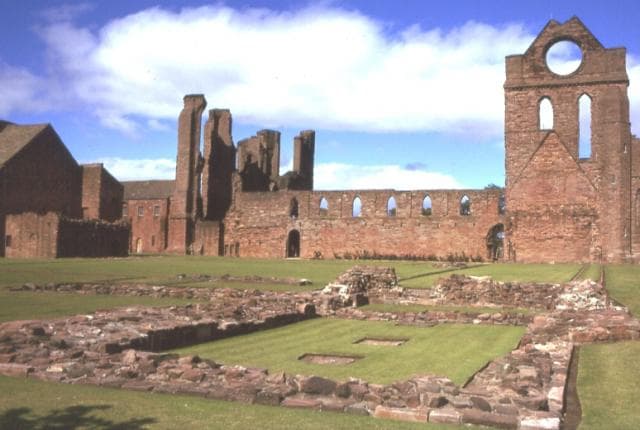
Arbroath Abbey, a ruined Cistercian monastery located in Arbroath, Scotland, was founded in 1178 by King William the Lion. It is renowned as the site where the Declaration of Scottish Independence was likely drafted in 1320. The Abbey, once the wealthiest in Scotland, is now managed by Historic Environment Scotland and is a popular tourist attraction, notable for its distinctive red sandstone ruins.

Dundrennan Abbey
Dundrennan Abbey was a Cistercian monastery established in 1142 in Dundrennan, Scotland. Known for its Romanesque architecture, the abbey reflects the austere Cistercian ideal and is noted for the preservation of its original forms due to its hard-weathering grey sandstone construction. Although extensively ruined, it holds historical significance as the site where Mary, Queen of Scots, spent her final night in Scotland in 1568 before fleeing.
Glenluce Abbey
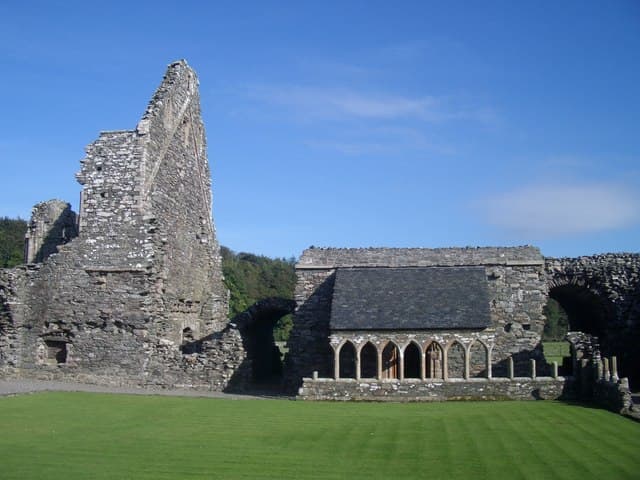
Glenluce Abbey was a Cistercian monastery founded around 1190 by Rolland, Lord of Galloway. After the Scottish Reformation in 1560, the abbey fell into disuse and its lands were controversially acquired by the Kennedy family. Today, the ruins of Glenluce Abbey are a scheduled monument, having undergone partial restoration.