
Saddell Abbey
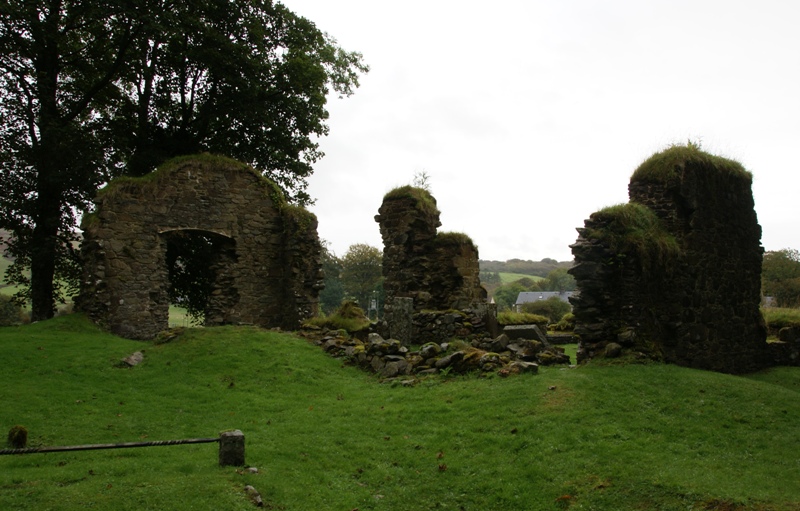
Saddell Abbey was a ruined Cistercian monastery established in 1160 by Somerled, Lord of Kintyre, and completed by his son Ragnall. Located on the east coast of Kintyre in Scotland, the abbey is known for its significant collection of life-sized stone carvings and burial slabs dating from the 14th to 16th centuries. Although largely dismantled by the 16th century, the site was recognized as a scheduled monument in 1975.
Key Facts
- ›Founded in 1160 by Somerled, Lord of Kintyre.
- ›Completed by Somerled's son, Ragnall, who is also considered its founder.
- ›Known for its collection of life-sized stone carvings and burial slabs from the 14th to 16th centuries.
- ›Established as a House of Cistercian Monks.
- ›Abandoned around 1470.
- ›Designated a scheduled monument by Historic Environment Scotland in 1975.
Cruciform
- Life-Sized Stone Carvings
- Burial Slabs
- Holy Well With Early 19th Century Stone Drinking Basin
Somerled, Ragnall
Somerled Killed In the Battle of Renfrew, Abbey Abandoned Around 1470
About Saddell Abbey
Saddell Abbey is a ruined Cistercian monastery situated on the east coast of Kintyre in western Scotland. Its establishment in 1160 by Somerled, Lord of Kintyre, marked the beginning of a monastic presence in the region, with its completion overseen by his son, Ragnall. The abbey, dedicated to the Virgin Mary, originally featured a church and adjoining buildings arranged around a cloister, laid out in a cruciform style.
History and Significance
The abbey's history is tied to the powerful Somerled and his descendants, the MacDonalds, Lords of the Isles, who remained patrons for many years. Despite its founding in the 12th century, Saddell Abbey was abandoned by the late 15th century, around 1470, following the forfeiture of the Lordship of the Isles. Much of the abbey's structure was dismantled in the 16th century for use elsewhere on the Saddell Castle estate. Today, the surviving remains consist of stone walls representing parts of the north transept, nave, refectory, and undercroft, constructed from random rubble. A notable feature of the site is a holy well with an early 19th-century stone drinking basin.
Artistic Legacy
Saddell Abbey is particularly renowned for its significant collection of life-sized stone carvings and burial slabs. These pieces, dating from the 14th to the 16th centuries, include effigies, grave slabs, and a cross. Some of these important artworks are displayed under a special shelter at the entrance to the abbey site, while others are located outside the ruined church walls. It is believed that the effigies were crafted on the island of Iona and transported to Saddell, with other carvings executed by local stonemasons.
Preservation
Recognizing its historical importance, Historic Environment Scotland designated Saddell Abbey as a scheduled monument in 1975, ensuring its preservation for future generations. The site continues to attract visitors interested in its monastic past and its unique collection of medieval stone art.
Source: Wikipedia ↗
Frequently Asked Questions
When was Saddell Abbey founded?
Saddell Abbey was established in 1160 by Somerled, Lord of Kintyre. His son, Ragnall, completed its construction a few years later.
Who founded Saddell Abbey?
The abbey was originally established by the Norse nobleman Somerled, Lord of Kintyre. However, his son Ragnall is also referred to as the abbey's founder as he completed its construction.
What is Saddell Abbey known for?
Saddell Abbey is widely recognized for its important collection of life-sized stone carvings and burial slabs, which were created between the 14th and 16th centuries. These include effigies, grave slabs, and a cross.
Where is Saddell Abbey located?
Saddell Abbey is situated eight miles north of Campbeltown, on the east coast of Kintyre in Scotland. It overlooks the confluence of Saddell Water and Allt nam Manach, also known as the Water of the Monks.
What is the current status of Saddell Abbey?
Saddell Abbey is now a ruined monastery. Most of its original buildings were dismantled by the 16th century, and the site was scheduled as a monument in 1975.
Related Monasteries
Arbroath Abbey
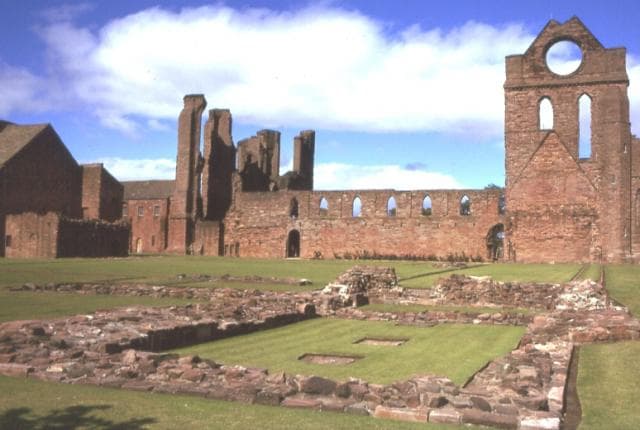
Arbroath Abbey, a ruined Cistercian monastery located in Arbroath, Scotland, was founded in 1178 by King William the Lion. It is renowned as the site where the Declaration of Scottish Independence was likely drafted in 1320. The Abbey, once the wealthiest in Scotland, is now managed by Historic Environment Scotland and is a popular tourist attraction, notable for its distinctive red sandstone ruins.

Dundrennan Abbey
Dundrennan Abbey was a Cistercian monastery established in 1142 in Dundrennan, Scotland. Known for its Romanesque architecture, the abbey reflects the austere Cistercian ideal and is noted for the preservation of its original forms due to its hard-weathering grey sandstone construction. Although extensively ruined, it holds historical significance as the site where Mary, Queen of Scots, spent her final night in Scotland in 1568 before fleeing.
Glenluce Abbey
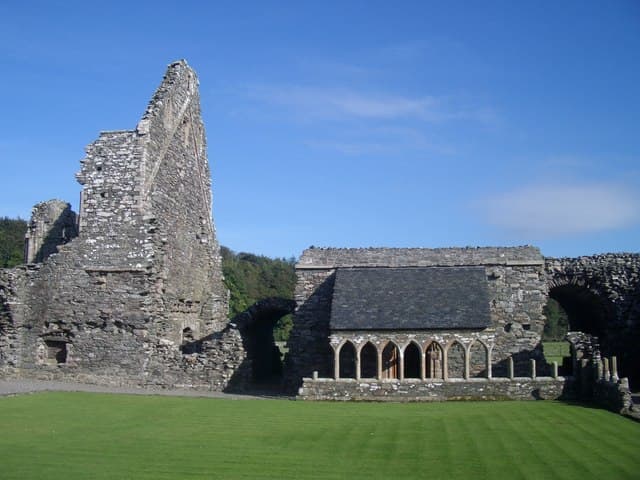
Glenluce Abbey was a Cistercian monastery founded around 1190 by Rolland, Lord of Galloway. After the Scottish Reformation in 1560, the abbey fell into disuse and its lands were controversially acquired by the Kennedy family. Today, the ruins of Glenluce Abbey are a scheduled monument, having undergone partial restoration.