
Ruse
Ruse is a significant Bulgarian city situated on the right bank of the Danube River, opposite Giurgiu, Romania. Known for its 19th and 20th-century Neo-Baroque and Neo-Rococo architecture, it is often referred to as "Little Vienna." The city has a rich history, evolving from ancient Roman settlements to a key administrative and cultural center during the Ottoman period and a hub of innovation during the Bulgarian National Revival and early modern Bulgaria. Its strategic location makes it Bulgaria's most important river port.
Key Facts
- ›Ruse is the sixth-largest city in Bulgaria and its most significant river port.
- ›The city is renowned for its 19th and 20th-century Neo-Baroque and Neo-Rococo architectural styles.
- ›It was an important administrative center during the Ottoman Empire, known as Rusçuk.
- ›Ruse boasts numerous 'firsts' in Bulgaria, including the first printing office and the first railway line.
- ›The city is a birthplace of Nobel laureate Elias Canetti and writer Michael Arlen.
- ›Its location on the Danube makes it a vital point for international trade and transportation.
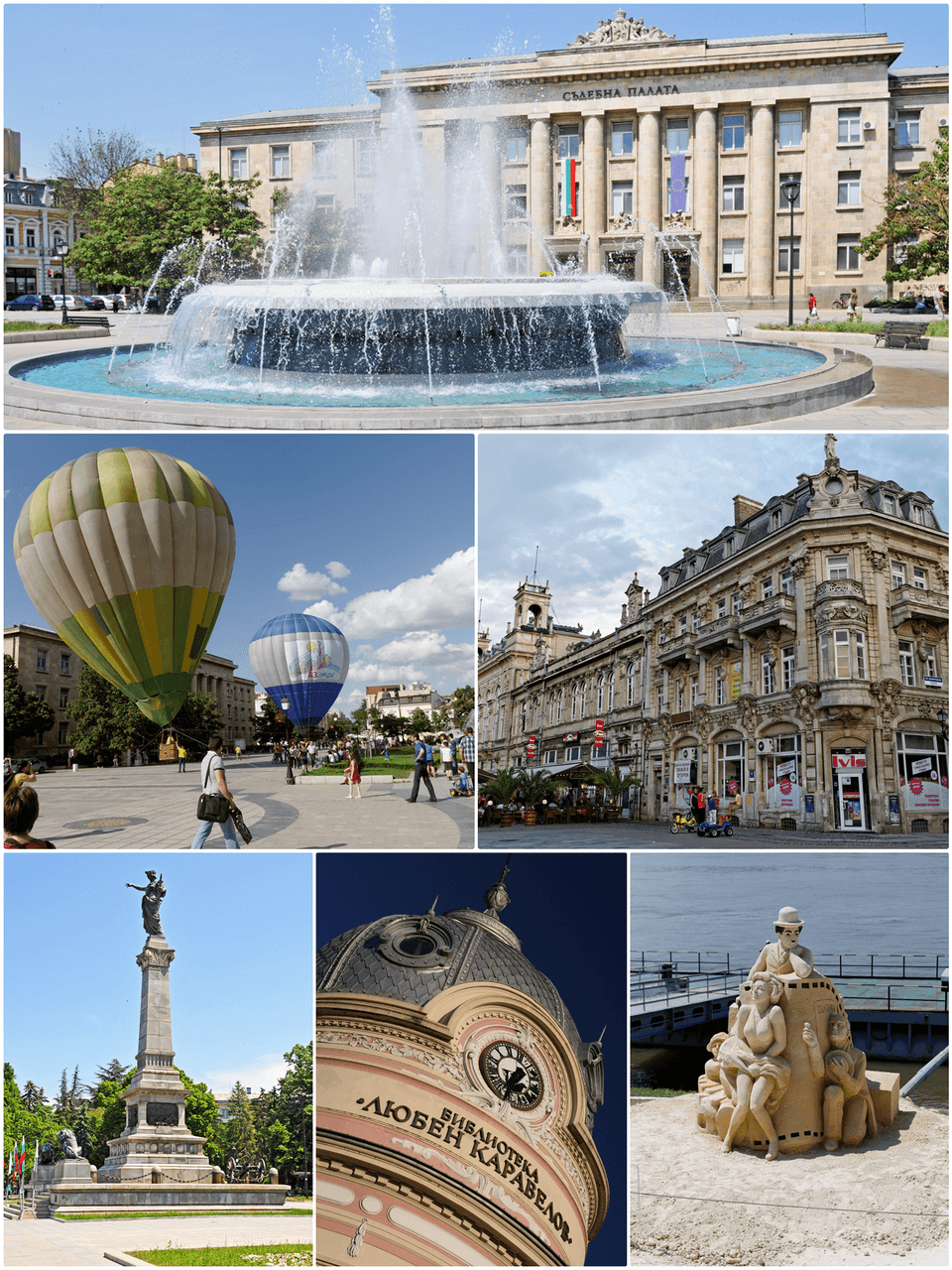
Neo-Baroque, Neo-Rococo
Danube Or Friendship Bridge, Neo-Baroque and Neo-Rococo Architecture, Roman Ruins of Sexaginta Prista
Rousse, Russe, RusçUk
Elias Canetti, Michael Arlen, Simeon Petrov
- 1595 Unsuccessful Liberation Attempt
- Development As An Administrative Center During Ottoman Rule
- Center of Bulgarian National Revival
- Construction of the Ruse-Giurgiu Bridge
- Environmental Pollution From Verachim Factory
- Formation of the Public Committee For Environmental Protection of Ruse
About Ruse
Ruse: Bulgaria's "Little Vienna" on the Danube
Ruse is a prominent city in northeastern Bulgaria, situated on the strategic right bank of the Danube River. It is recognized as Bulgaria's most significant river port and is an important hub for international trade and transportation. The city is famed for its distinctive 19th and 20th-century architecture, characterized by Neo-Baroque and Neo-Rococo styles, which have earned it the affectionate moniker "Little Vienna." This architectural heritage, combined with its dynamic history, makes Ruse a unique destination.
Historical Evolution
The area's history stretches back to Neolithic settlements, with a significant Roman military and naval center, Sexaginta Prista, established in the 1st century CE. During the Ottoman era, the settlement was rebuilt and known as Rusçuk, growing into a major fortress and administrative center of the Tuna Vilayet. The period of the Bulgarian National Revival saw Ruse emerge as a vital cultural and economic force, marked by the establishment of Bulgaria's first printing press and numerous other innovations. Following Bulgaria's liberation in 1878, Ruse continued its development as a modern European city, characterized by intensive construction and a cosmopolitan atmosphere.
Key Attributes and Modern Development
Ruse's geography places it opposite the Romanian city of Giurgiu, with the Danube Bridge serving as a crucial link between the two nations. Its economic profile is diverse, with strengths in light industry, manufacturing, and logistics. The city has also faced environmental challenges, notably the air pollution from a factory in Giurgiu during the 1980s, which spurred significant environmental activism and contributed to Bulgaria's transition towards democracy. In recent years, Ruse has focused on urban renewal, infrastructure development, and leveraging its position within the European Union to foster cross-border cooperation and economic growth.
Source: Wikipedia ↗
Frequently Asked Questions
What is Ruse known for architecturally?
Ruse is particularly known for its well-preserved buildings from the late 19th and early 20th centuries, characterized by Neo-Baroque and Neo-Rococo architectural styles. These ornate facades contribute to its nickname, 'Little Vienna,' and are a major draw for tourists.
What is the historical significance of Ruse?
Historically, Ruse evolved from an ancient Roman military and naval center called Sexaginta Prista. During Ottoman rule, it became an important administrative center known as Rusçuk. In modern Bulgarian history, it was a key cultural and economic hub, and a site of numerous innovations during the Bulgarian National Revival.
What is Ruse's geographical location?
Ruse is situated in the northeastern part of Bulgaria, directly on the right bank of the Danube River. It faces the Romanian city of Giurgiu across the river, with the Danube Bridge connecting the two. This location is approximately 67 km south of Bucharest, Romania's capital.
What major historical events took place in Ruse?
Ruse was the site of an unsuccessful liberation attempt against the Ottomans in 1595, leading to its destruction and subsequent rebuilding as Rusçuk. In the late 19th century, it was a center for the Bulgarian National Revival. The city also experienced significant environmental pollution in the 1980s from a factory in Giurgiu, which spurred the formation of Bulgaria's first informal environmental protection committee.
What is Ruse's connection to the Danube River?
Ruse's identity is deeply intertwined with the Danube River. It is Bulgaria's most significant river port, serving as a crucial point for international trade. The city's development has been shaped by its position on the river, with bridges connecting it to Romania and its role as a transportation hub.
Related Monasteries

Fröndenberg
Fröndenberg is a town in the Unna district of North Rhine-Westphalia, Germany, situated in the Ruhr valley. Its modern administrative structure was formed through a series of mergers of independent villages, culminating in its recognition as a city in 1952. The earliest recorded mention of its name dates back to a papal document in 1197.

Krems
Krems an der Donau is a historic city in Lower Austria, Austria, situated at the confluence of the Krems and Danube Rivers. First mentioned in 995, it boasts a history stretching back to prehistoric times, with the discovery of Austria's oldest known grave. The city is recognized for its significant cultural heritage, including its old town with medieval gates and numerous churches, and is also a notable center for wine production and apricot brandy (Marillenschnaps).

Rattenberg
Rattenberg is the smallest city in Austria, located in Tyrol on the Inn River, founded in the 14th century. Its notable characteristic is its location in a valley that receives no direct sunlight for much of the winter due to the proximity of Rat Mountain. Historically, it was built as a protected settlement and later fortified, and it is currently known for its glassmaking tradition.