
Fröndenberg
Fröndenberg is a town in the Unna district of North Rhine-Westphalia, Germany, situated in the Ruhr valley. Its modern administrative structure was formed through a series of mergers of independent villages, culminating in its recognition as a city in 1952. The earliest recorded mention of its name dates back to a papal document in 1197.
Key Facts
- ›The earliest recorded mention of the name 'Frundeberg' is from a papal document in 1197.
- ›Fröndenberg was formed as a larger village community in 1902 by merging the former villages of Stift, Westick, and Froendenberg.
- ›It officially obtained city status in 1952.
- ›The present-day administrative infrastructure was established in 1968 through a merger of several villages and towns.
- ›Fröndenberg is located in the Ruhr valley, near the Hönne river.

Frundeberg
David Blacha, Franz-Josef Bode, Ernst Wilhelm Hengstenberg, Arthur Jonath, Thomas Lehn, David Wilms
- Merger of Villages Stift, Westick, and Froendenberg Into FröNdenberg Village Community
- Obtained City Status
- Merger of Villages Altendorf, Ardey, Bausenhagen, Dellwig, Frohnhausen, FröMern, Langschede, Neimen, OstbüRen, Stentrop, Strickherdicke, Warmen, and FröNdenberg Into One Administrative Unit
- Village Bentrop Became Part of FröNdenberg District
About Fröndenberg
Fröndenberg is a town located in the Unna district of North Rhine-Westphalia, Germany. Nestled in the Ruhr valley, its origins as a unified administrative entity are relatively recent, though the earliest recorded mention of its name dates back to the late 12th century.
History and Development
The modern town of Fröndenberg grew from the reorganization and amalgamation of several independent villages. In 1902, the villages of Stift, Westick, and Froendenberg were merged to form a larger village community. Fröndenberg officially achieved city status in 1952. The administrative infrastructure that largely defines the town today was established in 1968, when a significant merger brought together the villages of Altendorf, Ardey, Bausenhagen, Dellwig, Frohnhausen, Frömern, Langschede, Neimen, Ostbüren, Stentrop, Strickherdicke, along with the towns of Warmen and Fröndenberg itself. This was further expanded in 1969 with the addition of the village Bentrop.
The earliest documented reference to the settlement's name, as 'Frundeberg,' appears in a papal document from 1197, issued by Pope Celestine III. This historical record marks the first known mention of the area that would evolve into the present-day town.
Geography
Geographically, Fröndenberg is situated in the Ruhr valley, a region known for its industrial and natural landscapes. It lies approximately 10 kilometers southeast of the district capital, Unna, and is located in proximity to the Hönne river. Its neighboring places include Unna, Wickede, Menden, Schwerte, and Holzwickede.
Notable Figures
Several notable individuals have connections to Fröndenberg. These include football midfielder David Blacha, Catholic pastor Franz-Josef Bode, Protestant theologian and churchman Ernst Wilhelm Hengstenberg, Olympic medalist Arthur Jonath, musician Thomas Lehn, and television host David Wilms. These figures represent diverse fields, from sports and religion to arts and media.
Source: Wikipedia ↗
Frequently Asked Questions
When was Fröndenberg first mentioned by name?
The earliest recorded mention of the name 'Frundeberg' is found in a papal document issued by Pope Celestine III in 1197. This document provides the first historical trace of the settlement that would eventually become Fröndenberg.
How did Fröndenberg become a town?
Fröndenberg's development into a town was a gradual process. It began in 1902 when several independent villages merged to form a larger community. It officially gained city status much later, in 1952, following further administrative reorganizations.
What is the geographical location of Fröndenberg?
Fröndenberg is situated in the Ruhr valley region of North Rhine-Westphalia, Germany. It is located approximately 10 kilometers southeast of the district capital, Unna, and lies near the Hönne river.
What is the history behind Fröndenberg's administrative structure?
The current administrative setup of Fröndenberg traces back to 1968. In that year, several villages and the town of Fröndenberg itself were merged into a single administrative unit. The village of Bentrop was added to this district in 1969.
Related Monasteries

Krems
Krems an der Donau is a historic city in Lower Austria, Austria, situated at the confluence of the Krems and Danube Rivers. First mentioned in 995, it boasts a history stretching back to prehistoric times, with the discovery of Austria's oldest known grave. The city is recognized for its significant cultural heritage, including its old town with medieval gates and numerous churches, and is also a notable center for wine production and apricot brandy (Marillenschnaps).

Rattenberg
Rattenberg is the smallest city in Austria, located in Tyrol on the Inn River, founded in the 14th century. Its notable characteristic is its location in a valley that receives no direct sunlight for much of the winter due to the proximity of Rat Mountain. Historically, it was built as a protected settlement and later fortified, and it is currently known for its glassmaking tradition.
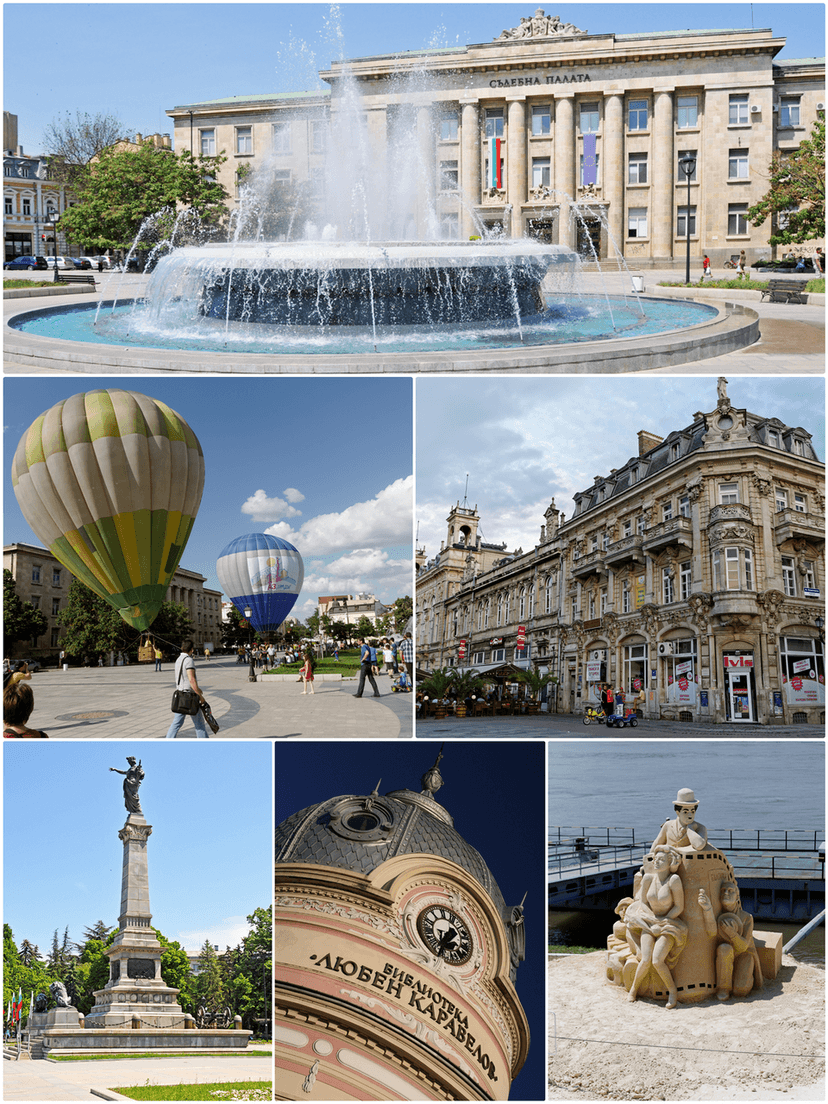
Ruse
Ruse is a significant Bulgarian city situated on the right bank of the Danube River, opposite Giurgiu, Romania. Known for its 19th and 20th-century Neo-Baroque and Neo-Rococo architecture, it is often referred to as "Little Vienna." The city has a rich history, evolving from ancient Roman settlements to a key administrative and cultural center during the Ottoman period and a hub of innovation during the Bulgarian National Revival and early modern Bulgaria. Its strategic location makes it Bulgaria's most important river port.