
Reževići Monastery
Serbian Orthodox·Montenegro·Active (implied by historical context and preservation)
Reževići Monastery is a medieval Serbian Orthodox monastery located in Montenegro, known for its two churches and associated legends of royal patronage. The "Church of the Dormition of the Mother of God" is traditionally attributed to King Stefan Nemanjić, while the "Church of the Archdeacon Stefan" is said to have been built by Emperor Stephen Uroš IV Dušan. The monastery served as a significant gathering place for the Paštrovići tribe and has endured periods of plundering throughout its history.
Key Facts
- ›Features two churches: the "Church of the Dormition of the Mother of God" and the "Church of the Archdeacon Stefan".
- ›Legends attribute the founding of the "Church of the Dormition" to King Stefan Nemanjić in the 1220s.
- ›The "Church of the Archdeacon Stefan" was reportedly built by Emperor Stephen Uroš IV Dušan in 1351.
- ›Historically served as a meeting place for the PaštrovićI tribe.
- ›Suffered plundering by pirates in the MID-15th century and by Mahmud Pasha Bushatli in 1785.
- ›Preserves frescoes from the early 17th century and some from the 18th century.
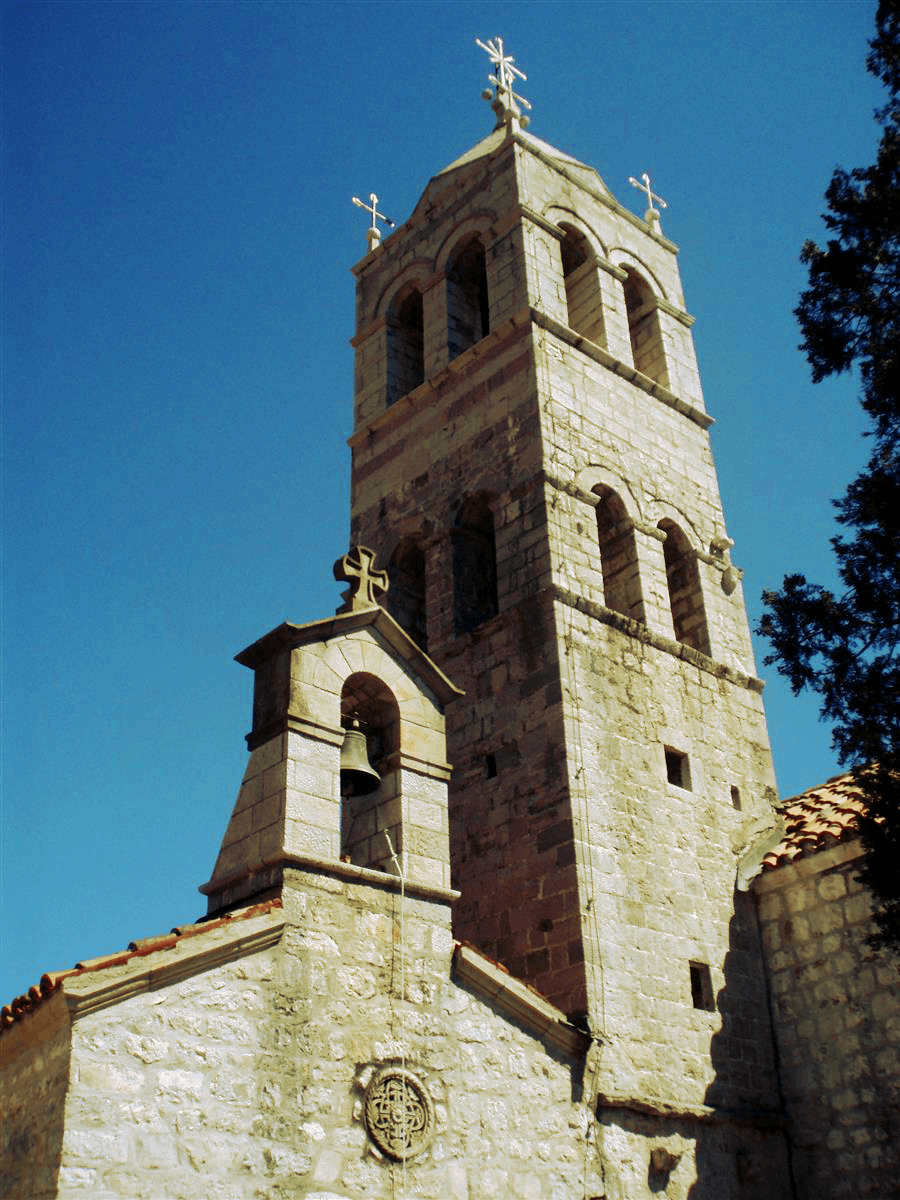
- Church of the Dormition of the Mother of God
- Church of the Archdeacon Stefan
- Preserved Frescoes From the 17th and 18th Centuries
- Site of Historical Tribal Assemblies
Manastir RežEvićI
King Stefan Nemanjić, Emperor Stephen Uroš Iv DušAn of Serbia, Raymond Iv, Count of Toulouse, Doge Dandolo, Stefan šTiljanović, Strahinja of Budimlje, Aleksije Lazović
- Alleged Construction of the Church of the Dormition of the Mother of God By King Stefan Nemanjić .
- Construction of the Church of the Archdeacon Stefan By Emperor Stephen Uroš Iv DušAn .
- Plundered and Razed By Pirates of Ulcinj .
- Plundered By Mahmud Pasha Bushatli .
About Reževići Monastery
The Reževići Monastery is a significant medieval Serbian Orthodox monastic complex situated in the village of Katun Reževići, nestled between the towns of Budva and Petrovac in modern-day Montenegro. Its historical importance is interwoven with local legends that attribute the construction of its two churches to prominent figures of the Nemanjić dynasty.
Legends and Foundations
According to popular lore, the "Church of the Dormition of the Mother of God" was established in the 1220s by King Stefan Nemanjić, the first king of Serbia. Another legend suggests that during his travels, he paused at a guesthouse near the site and later commissioned the church. Adjacent to this, the "Church of the Archdeacon Stefan" is believed to have been built in 1351 by Emperor Stephen Uroš IV Dušan of Serbia.
Tribal Hub and Historical Trials
Beyond its religious significance, Reževići Monastery served as a vital gathering place for the Paštrovići tribe. Members would convene there to deliberate on important matters and elect their chieftain, with Stefan Štiljanović noted as the last leader chosen at such an assembly.
Despite its historical role, the monastery has endured periods of devastation. It was plundered and severely damaged by the pirates of Ulcinj in the mid-15th century. Later, in 1785, Mahmud Pasha Bushatli raided the monastery, seizing its library and treasury.
Artistic Legacy
Remnants of the monastery's artistic heritage remain, including frescoes from the early 17th century and some from the 18th century, possibly the work of the renowned painter Strahinja of Budimlje. Further artistic contributions were made in 1833 by painter Aleksije Lazović, who worked on icons for the "Dormition of the Mother of God" church.
Source: Wikipedia ↗
Frequently Asked Questions
What is the significance of the Reževići Monastery?
Reževići Monastery is significant as a medieval Serbian Orthodox site with legendary royal connections. It also served as a crucial assembly point for the Paštrovići tribe to make important decisions and elect their leaders.
Who is credited with founding the churches at Reževići Monastery?
Local legends credit King Stefan Nemanjić with building the "Church of the Dormition of the Mother of God" in the 1220s, and Emperor Stephen Uroš IV Dušan with constructing the "Church of the Archdeacon Stefan" in 1351.
Has the monastery faced any historical hardships?
Yes, Reževići Monastery has been plundered multiple times. Pirates from Ulcinj raided it in the mid-15th century, and Mahmud Pasha Bushatli plundered its library and treasury in 1785.
Are there any notable artistic remains at the monastery?
The monastery preserves frescoes dating from the beginning of the 17th century, as well as some remains of 18th-century frescoes. Painter Aleksije Lazović also worked on icons for the "Dormition of the Mother of God" church in 1833.
What is the origin of the monastery's name?
The name "Reževići" is derived from the Reževići clan, which was one of the clans belonging to the Paštrovići tribe.
Related Monasteries

Cetinje Monastery
Cetinje Monastery is a significant Serbian Orthodox monastery located in Cetinje, Montenegro, serving as the seat of the Metropolitanate of Montenegro and the Littoral. Founded around 1484 by Prince Ivan Crnojević, it was initially the cathedral monastery of the Eparchy of Zeta. Although devastated multiple times, notably in 1692, it was rebuilt and has remained a vital center of spiritual, cultural, and political life throughout Montenegro's history.
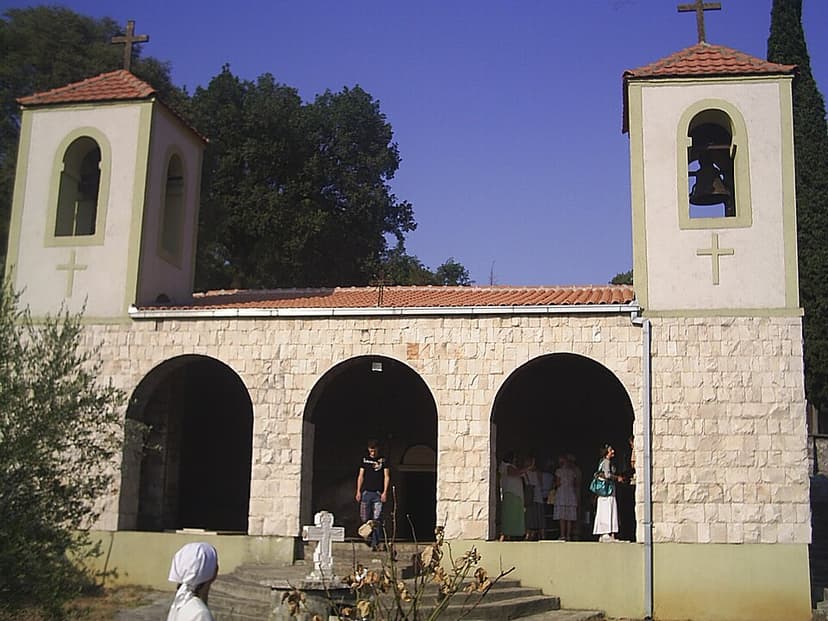
Dajbabe Monastery
The Dajbabe Monastery is a Serbian Orthodox monastery located in a cave on Dajbabe Hill near Podgorica, Montenegro. Founded in 1897 and dedicated to the Assumption of the Theotokos, it initially utilized the cave as a sanctuary before plans for expansion. A notable feature is its reliquary containing the relics of St. Simeon Dajbabe.

Dobrilovina Monastery
Dobrilovina Monastery is a Serbian Orthodox monastery situated in Donja Dobrilovina, Mojkovac, northern Montenegro, located at the entrance to the Tara River Canyon. While the village of Dobrihnina was first mentioned in 1253, the oldest preserved record of the monastery dates to 1592, with its current church dedicated to Saint George completed in 1609. The monastery has a history marked by destruction, rebuilding, and a significant role in the region's spiritual and national awakening.