
Dajbabe Monastery
The Dajbabe Monastery is a Serbian Orthodox monastery located in a cave on Dajbabe Hill near Podgorica, Montenegro. Founded in 1897 and dedicated to the Assumption of the Theotokos, it initially utilized the cave as a sanctuary before plans for expansion. A notable feature is its reliquary containing the relics of St. Simeon Dajbabe.
Key Facts
- ›Founded in 1897.
- ›Dedicated to the Assumption of the Theotokos.
- ›Located in a cave on Dajbabe Hill, Podgorica, Montenegro.
- ›Possesses a reliquary with the relics of St. Simeon Dajbabe.
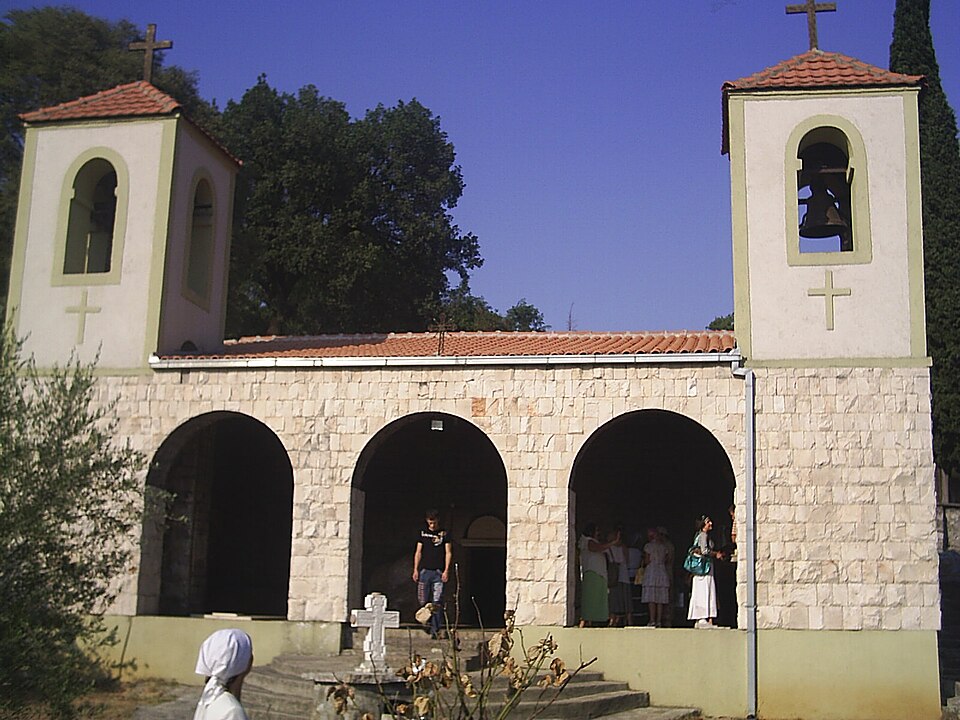
- ›The visible church structure is situated outside the cave with a distinct entrance porch and belfries.
- Cave Sanctuary
- Reliquary With Relics of St. Simeon Dajbabe
- Church Structure Outside the Cave With Belfries
Manastir Dajbabe
St. Simeon Dajbabe
About Dajbabe Monastery
The Dajbabe Monastery is a Serbian Orthodox monastic complex situated in the vicinity of Podgorica, Montenegro. Its distinctive location is within a cave on Dajbabe Hill, an elevation that overlooks the Zeta valley. The monastery was established in 1897 and is consecrated to the Assumption of the Theotokos.
History and Features
In its initial phase, the monastery primarily utilized the natural cave space as its sanctuary. Plans were in place from the outset to expand the site and incorporate additional chapels. The visible part of the church, designed to be more publicly accessible, stands outside the cave. This structure features a prominent entrance porch and is distinguished by the presence of two belfries.
A significant relic associated with the Dajbabe Monastery is its reliquary, which houses the relics of St. Simeon Dajbabe. This sacred artifact contributes to the monastery's spiritual importance and draws veneration.
Source: Wikipedia ↗
Frequently Asked Questions
When was the Dajbabe Monastery founded?
The Dajbabe Monastery was founded in 1897. Its establishment marked the beginning of its use as a spiritual site.
What is the religious tradition of Dajbabe Monastery?
The Dajbabe Monastery is a Serbian Orthodox monastery. It adheres to the traditions and practices of the Orthodox Church.
Where is the Dajbabe Monastery located?
The Dajbabe Monastery is situated in Podgorica, Montenegro, specifically in a cave on Dajbabe Hill overlooking the Zeta valley.
What is the Dajbabe Monastery dedicated to?
The monastery is dedicated to the Assumption of the Theotokos. This is a significant feast day in the Orthodox Christian calendar.
Are there any relics housed at Dajbabe Monastery?
Yes, the Dajbabe Monastery possesses a reliquary that contains the relics of St. Simeon Dajbabe. This makes it a site of pilgrimage for veneration.
Related Monasteries

Cetinje Monastery
Cetinje Monastery is a significant Serbian Orthodox monastery located in Cetinje, Montenegro, serving as the seat of the Metropolitanate of Montenegro and the Littoral. Founded around 1484 by Prince Ivan Crnojević, it was initially the cathedral monastery of the Eparchy of Zeta. Although devastated multiple times, notably in 1692, it was rebuilt and has remained a vital center of spiritual, cultural, and political life throughout Montenegro's history.

Dobrilovina Monastery
Dobrilovina Monastery is a Serbian Orthodox monastery situated in Donja Dobrilovina, Mojkovac, northern Montenegro, located at the entrance to the Tara River Canyon. While the village of Dobrihnina was first mentioned in 1253, the oldest preserved record of the monastery dates to 1592, with its current church dedicated to Saint George completed in 1609. The monastery has a history marked by destruction, rebuilding, and a significant role in the region's spiritual and national awakening.

Dovolja Monastery
The Dovolja Monastery is a Serbian Orthodox monastery situated on the right bank of the Tara River near Pljevlja, Montenegro. Believed to have been founded by King Stefan Milutin at the end of the 13th century, it was first documented in 1513 and is dedicated to the Assumption of the Holy Mother of God. The monastery is ecclesiastically administered by the Eparchy of Mileševa, and at some point after 1699, the relics of Archbishop Arsenije I were transferred from Dovolja to Dobrilovina Monastery.