
Ramsey Abbey
Ramsey Abbey was a prominent Benedictine monastery in Ramsey, Huntingdonshire, England, founded around 969 AD and dissolved in 1539. It was a significant center of Benedictine reform and later an international hub for Hebrew scholarship. Though most of its structures were demolished after dissolution, surviving elements and artifacts highlight its historical importance and architectural legacy.
Key Facts
- ›Founded in 969 AD by Oswald, Bishop of Worcester, as part of the English Benedictine reform.
- ›Dissolved in 1539 during the Dissolution of the Monasteries.
- ›Became an international center of Hebrew scholarship in the late Middle Ages.
- ›Ramsey Abbey Gatehouse is now in the care of the National Trust.
- ›The Church of St Thomas à Becket in Ramsey was originally part of the abbey complex.
- ›The Ramsey Psalter, an Anglo-Saxon illuminated psalter, is associated with the abbey.

Romanesque, Gothic
Ramsey Abbey Gatehouse, Church of St Thomas à Becket, Ramsey Psalter, Surviving Medieval Precinct Wall
Oswald of Worcester, æThelwine, Ealdorman of East Anglia, Abbo of Fleury, Eadnoth the Younger, Aelfwine, Herbert De Losinga, Reginald, Walter, Hugh De Sulgrave, William De Godmanchester, Simon De Eye, St Felix of Burgundy, Ivo of Ramsey, Sir Richard Williams, Sir Henry Williams, Coulson Fellowes, William Henry Fellowes, Edward Fellowes, John Ailwyn Fellowes, the Hon. Henry Rogers Broughton, the Hon. Diana Broughton
- Foundation In 969 Ad
- Visit of Abbo of Fleury
- Geoffrey De Mandeville Expelled Monks and Used Abbey As Fortress
- Dissolution of the Monasteries
- Sale of Abbey Lands To Sir Richard Williams
About Ramsey Abbey
Ramsey Abbey was a significant Benedictine monastic institution located in Ramsey, Huntingdonshire, which is now part of Cambridgeshire, England. Its history began around AD 969, making it a product of the 10th-century English Benedictine reform movement. The abbey was founded by Oswald, Bishop of Worcester, on land granted by Æthelwine, Ealdorman of East Anglia, who had previously established a small wooden chapel there. Ramsey Abbey played a notable role in monastic life and scholarship for several centuries before its dissolution in 1539 as part of the Dissolution of the Monasteries.
Historical Context and Development
The foundation of Ramsey Abbey was part of a broader effort to revitalize monasticism in England during the 10th century, alongside refoundations at Ely and Peterborough. The abbey quickly acquired land and resources, including estates at Bodsey and Houghton Mill. The presence of the Frankish scholar Abbo of Fleury, who visited between 985 and 997 at Oswald's invitation, underscores the abbey's intellectual connections. Abbo produced significant works during his stay, contributing to the abbey's scholarly reputation. The renowned Ramsey Psalter, an Anglo-Saxon illuminated manuscript, is also associated with the abbey, possibly commissioned for its use or for Oswald himself.
Originally a stone-built church was constructed over five years starting in 969, featuring two prominent towers. This structure was later replaced by a grander church built by a Norman abbot in the 12th century. Throughout its history, the abbey faced challenges, including a period in 1143 when Geoffrey de Mandeville expelled the monks and used the abbey as a fortress, causing considerable damage. It also endured centuries of disputes with the bishops of Ely over land manors. Despite these conflicts, Ramsey Abbey prospered, becoming an international center for Hebrew scholarship in the late Middle Ages. By the time of its dissolution, the abbey housed 34 monks and was considered one of the richest foundations in the kingdom, with its abbot holding a mitred status and a seat in the House of Lords.
Post-Dissolution and Legacy
Following the Dissolution, the abbey's extensive lands and buildings were largely dismantled. In 1540, the Crown sold the abbey lands to Sir Richard Williams (alias Cromwell), who utilized much of the abbey's stone for building projects. Significant portions of the abbey, including a main gatehouse, were repurposed for other structures, such as Hinchingbrooke House, and stone was transported to Cambridge for the construction of colleges like Gonville and Caius, King's, and Trinity. Even the local parish church of St Thomas à Becket in Ramsey utilized abbey stone for its tower in the late 17th century.
Later, a house was built on the site of the abbey church around 1600 by Sir Henry Williams (alias Cromwell), incorporating parts of the 13th-century Lady Chapel as its basement. This house, Ramsey Abbey House, passed through several prominent families, including the Fellowes, who enlarged it in the early 19th century. The Abbey Gatehouse, a surviving structure, is now in the care of the National Trust. The Church of St Thomas à Becket, Ramsey, originally built as either the hospitium or infirmary of the abbey around 1180-1190, was converted into a parish church in the early 13th century. Surviving artifacts, such as silver items found in Whittlesey Mere, are believed to have originated from the abbey, further testament to its historical significance.
Source: Wikipedia ↗
Frequently Asked Questions
When was Ramsey Abbey founded?
Ramsey Abbey was founded in approximately 969 AD. The foundation was initiated by Oswald, Bishop of Worcester, on land previously used for a wooden chapel by Æthelwine, Ealdorman of East Anglia.
What happened to Ramsey Abbey after its dissolution?
After its dissolution in 1539, the Abbey's lands were sold, and many of its buildings were demolished to provide stone for local construction and for colleges in Cambridge. Some parts, like the gatehouse, were dismantled and re-erected elsewhere.
Are there any surviving structures from Ramsey Abbey?
Yes, several structures from Ramsey Abbey survive. These include the Abbey Gatehouse, which is managed by the National Trust, and the Church of St Thomas à Becket, Ramsey, which was originally part of the abbey. Ramsey Abbey House also exists, though it has been rebuilt and adapted over centuries.
What was the significance of Ramsey Abbey?
Ramsey Abbey was significant as a key site in the 10th-century English Benedictine reform and later flourished as an international center for Hebrew scholarship in the Middle Ages. It held a high position among monastic foundations, with its abbot ranking third in parliamentary precedence.
What notable artifacts are associated with Ramsey Abbey?
The Ramsey Psalter, an important Anglo-Saxon illuminated psalter from the late 10th century, is believed to have been intended for use at Ramsey Abbey or by its founder, Oswald of Worcester. Other artifacts, such as silver items including a thurible, were found in Whittlesey Mere and are thought to have originated from the Abbey.
Related Monasteries
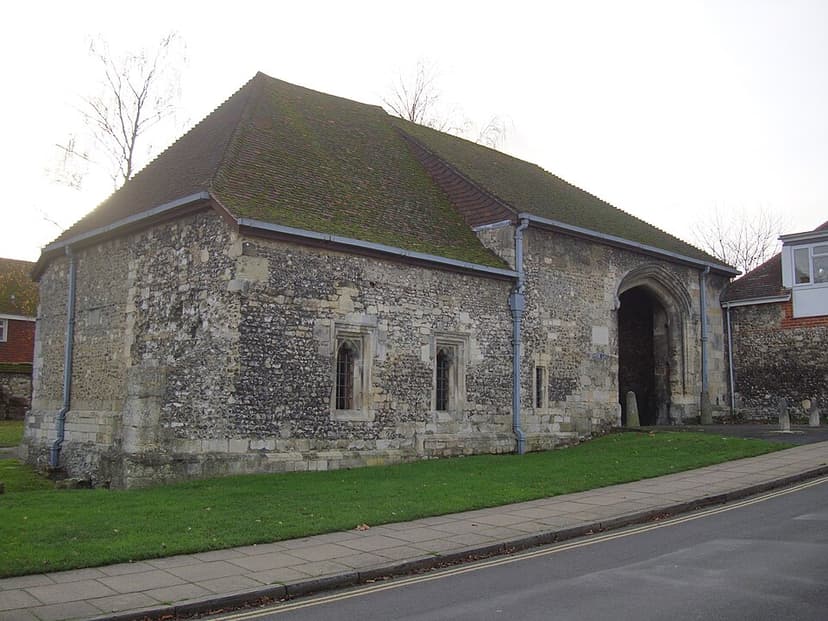
Hyde Abbey
Hyde Abbey was a significant medieval Benedictine monastery located just outside the walls of Winchester, England. Founded around 903 as New Minster, it was later relocated to Hyde Mead in 1110. The abbey gained prominence as the burial site for King Alfred the Great and other royal figures, making it a popular pilgrimage destination. Despite its importance, Hyde Abbey was dissolved and demolished in 1538 under Henry VIII, with its remains and treasures largely lost or scattered.

Reading Nunnery
Reading Nunnery was an Anglo-Saxon nunnery located in Berkshire, England, established in 979. While the nunnery itself no longer exists, its historical site is now occupied by St Mary's Church. Little is recorded about its specific significance or daily life beyond its foundation.

Tavistock Abbey
Tavistock Abbey was a prominent Benedictine monastery in Tavistock, Devon, established in the late 10th century. It became one of the wealthiest abbeys in western England, holding extensive lands in Devon and Cornwall. Surrendered in 1539 during the Dissolution of the Monasteries, only fragments of its former glory, such as the refectory and two gateways, remain today.