
Tavistock Abbey
Tavistock Abbey was a prominent Benedictine monastery in Tavistock, Devon, established in the late 10th century. It became one of the wealthiest abbeys in western England, holding extensive lands in Devon and Cornwall. Surrendered in 1539 during the Dissolution of the Monasteries, only fragments of its former glory, such as the refectory and two gateways, remain today.
Key Facts
- ›Founded in 974 by Ordwulf, son of Ealdorman Ordgar of Devon.
- ›Endowed with extensive lands across Devon, Dorset, and Cornwall.
- ›Surrendered in 1539 during the Dissolution of the Monasteries.
- ›The abbey church was destroyed by Danish raiders in 997 and subsequently rebuilt.
- ›The Russell family, later Dukes of Bedford, acquired the abbey and its lands after the Dissolution.
- ›Managed by the Tavistock Heritage Trust and open to the public.

Refectory, Two Gateways, Porch
Abbey of Saint Mary and Saint Rumon
Ordgar, Ordwulf, King æThelred the Unready, Pope Celestine Iii, Abbot Lyfing, Abbot Ealdred, William the Conqueror, John Dynynton, Richard Banham, John Peryn, King Henry Viii, John Russell, 1st Baron Russell, St Rumon
- Destruction By Danish Raiders In 997
- Surrender During the Dissolution of the Monasteries In 1539
About Tavistock Abbey
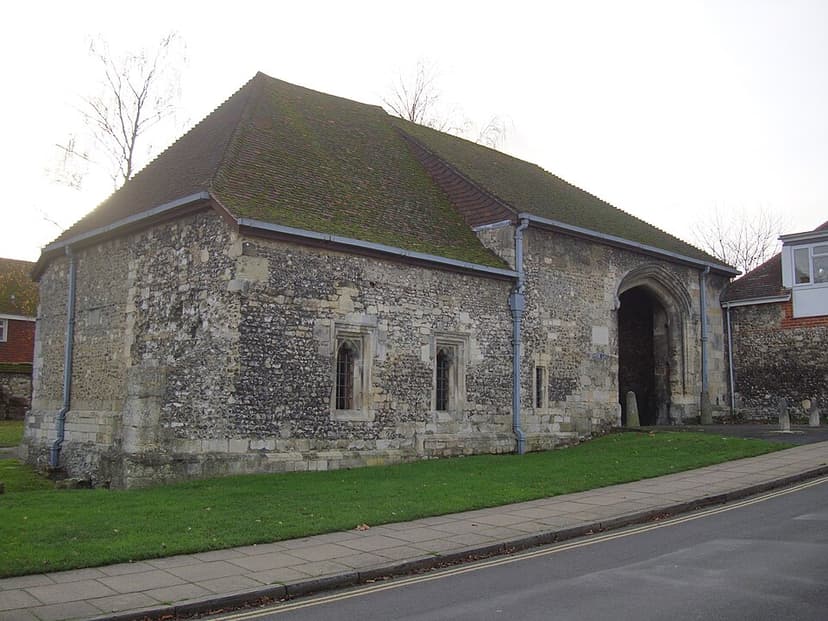
Tavistock Abbey, also known as the Abbey of Saint Mary and Saint Rumon, stands as a ruined Benedictine monastery located in Tavistock, Devon. Its modern history is marked by its surrender in 1539 during the significant event known as the Dissolution of the Monasteries. Today, the abbey's physical presence is limited to surviving structures such as its refectory, two gateways, and a porch.
History and Foundation
The abbey's origins are rooted in the late 10th century. While older historical accounts suggested a founding by Ordgar, Ealdorman of Devon, in 961, the current scholarly consensus attributes its establishment to his son, Ordwulf, in 974. King Æthelred the Unready, Ordwulf's nephew, confirmed the foundation with a charter in 981. The abbey was endowed with substantial landholdings across Devon, Dorset, and Cornwall, quickly establishing itself as one of the most affluent monastic institutions in western England. The abbey church, dedicated to Our Lady and St Rumon, suffered destruction by Danish raiders in 997 but was subsequently rebuilt. Further significant rebuilding phases occurred in 1285 and between 1457 and 1458.
Notable Abbots and Dissolution
Several abbots of Tavistock achieved notable positions, with Abbot Lyfing and his successor Abbot Ealdred both becoming Bishops of Worcester; Ealdred is historically noted for crowning King William the Conqueror. Later abbots, such as John Dynynton and Richard Banham, were granted significant privileges, including the right to use pontificalia and a seat in Parliament. The final chapter of Tavistock Abbey's monastic life came on March 3, 1539, when the last abbot, John Peryn, along with twenty monks, surrendered the abbey to King Henry VIII. This event marked the end of its religious function. The abbey was the second wealthiest in Devon at the time of the Dissolution, with an estimated annual income of £902. Its lands and property were subsequently granted to John Russell, 1st Baron Russell, whose family maintained a strong connection to the area.
Legacy and Modern Day
Following the Dissolution, the abbey and its extensive lands passed into the ownership of the Russell family, who later became the Dukes of Bedford. They played a role in the development of the town. The abbey ruins are now managed by the Tavistock Heritage Trust and are accessible to the public, free of charge, with ongoing restoration efforts supported by grants from Historic England. The site serves as a reminder of the abbey's historical significance and its former prominence in the region.
Source: Wikipedia ↗
Frequently Asked Questions
When was Tavistock Abbey founded?
The modern consensus is that Tavistock Abbey was founded in 974 by Ordwulf, the son of Ealdorman Ordgar of Devon. A charter of confirmation was granted in 981 by King Æthelred the Unready.
What happened to Tavistock Abbey?
Tavistock Abbey was surrendered in 1539 during the Dissolution of the Monasteries. The abbey church was destroyed by Danish raiders in 997 and rebuilt multiple times thereafter. Following the dissolution, the abbey and its lands were granted to John Russell, 1st Baron Russell.
What remains of Tavistock Abbey today?
Today, only remnants of the original Tavistock Abbey survive. These include the refectory, two gateways, and a porch. The abbey church itself was destroyed.
How wealthy was Tavistock Abbey?
Tavistock Abbey was one of the richest abbeys in the west of England. At the time of its surrender in 1539, it was the second wealthiest abbey in Devon, with an estimated annual income of £902.
Is Tavistock Abbey still an active monastery?
No, Tavistock Abbey is not an active monastery. It was dissolved in 1539, and the remaining structures are now managed by the Tavistock Heritage Trust and are open to the public.
Related Monasteries

Brogne Abbey
Brogne Abbey, also known as the Abbey of Saint-Gerard of Brogne, was a Benedictine monastery founded in the early 10th century by Gerard of Brogne. Situated in Wallonia, Belgium, it became a significant religious site, particularly known for housing important relics, including a fragment of the True Cross. The abbey was suppressed in 1796 and its former buildings now serve various community and cultural purposes.

Gembloux Abbey
Gembloux Abbey was a significant Benedictine monastery founded around 945 by Saint Guibert near Gembloux, Belgium. It flourished as a center of learning and scholarship, particularly during the time of the chronicler Sigebert of Gembloux. Despite periods of decline and destruction by fire and conflict, its buildings have been preserved and now house the Gembloux Agro-Bio Tech campus of the University of Liège since 1860.
Hyde Abbey
Hyde Abbey was a significant medieval Benedictine monastery located just outside the walls of Winchester, England. Founded around 903 as New Minster, it was later relocated to Hyde Mead in 1110. The abbey gained prominence as the burial site for King Alfred the Great and other royal figures, making it a popular pilgrimage destination. Despite its importance, Hyde Abbey was dissolved and demolished in 1538 under Henry VIII, with its remains and treasures largely lost or scattered.