
Quarr Abbey
Quarr Abbey is a Benedictine monastery on the Isle of Wight, England, known for its significant twentieth-century religious architecture. Originally a twelfth-century Cistercian abbey, the site was dissolved and later re-established by Benedictine monks exiled from France. The current monastic buildings, completed in 1912, are recognized for their unique architectural style and have undergone conservation efforts to preserve their heritage.
Key Facts
- ›Founded as a Cistercian abbey in 1132 by Baldwin de Redvers.
- ›The name 'Quarr' derives from a local stone quarry.
- ›The original abbey was dissolved in 1536, with its stone used for fortifications.
- ›The modern Benedictine abbey was established by monks exiled from Solesmes Abbey in France.
- ›The current monastic buildings, completed in 1912, are considered important early 20th-century religious structures.
- ›The community maintains regular monastic life, an attached farm, and offers internships for young men.
French, Byzantine, Moorish
Twentieth-Century Religious Architecture, Gardens, Visitor Centre, Book Shop, Guest House Facilities
Abbey of Our Lady of Quarr, Abbey of Our Lady and St John, Abbaye Notre-Dame De Quarr
Baldwin De Redvers, 1st Earl of Devon, Cecily of York, Abbot Paul Delatte, Dom Paul Bellot, Sir Nikolaus Pevsner
Founding of Cistercian Abbey, Dissolution of the Monasteries, Exile of Solesmes Monks From France, Completion of Modern Abbey Church, Community Returned To France, Became Independent Abbey
About Quarr Abbey
Quarr Abbey, formally known as the Abbey of Our Lady of Quarr and in French as Abbaye Notre-Dame de Quarr, is a Benedictine monastery situated between the villages of Binstead and Fishbourne on the Isle of Wight in southern England. The name "Quarr" originates from a local stone quarry, the stone from which was used in the construction of important medieval buildings, including parts of the Tower of London.
History and Architecture
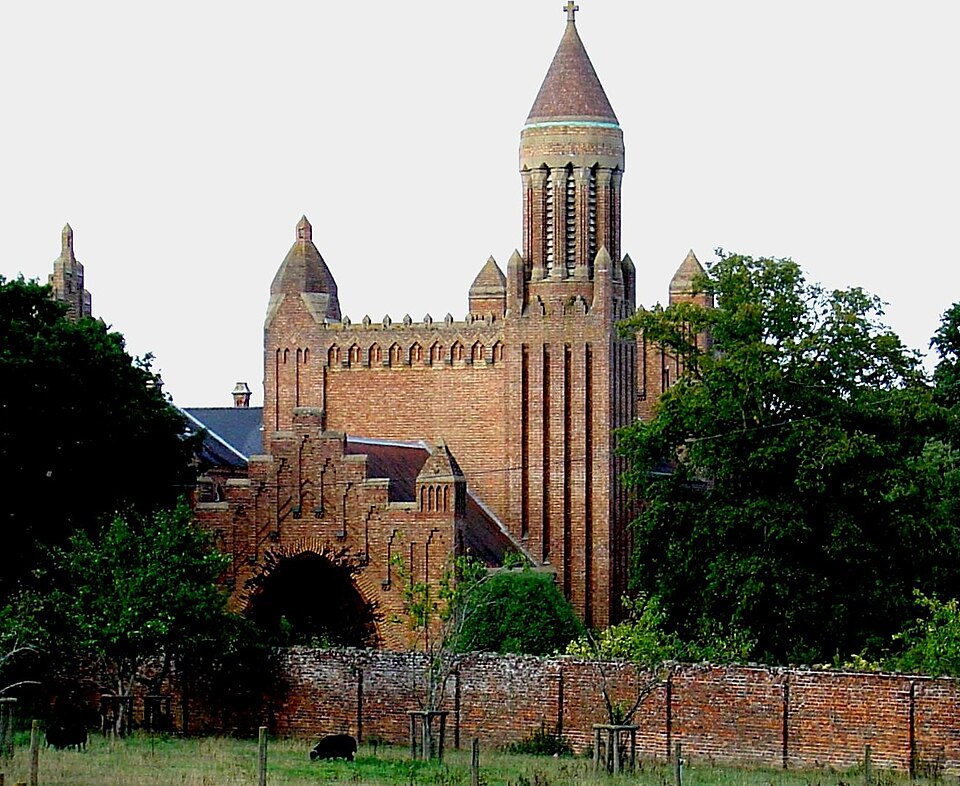
The site was first established as a Cistercian monastery in 1132 by Baldwin de Redvers, 1st Earl of Devon. The original abbey flourished but was dissolved in 1536, with its structures largely demolished and its stone repurposed. The current monastic buildings, a significant example of twentieth-century religious architecture in the United Kingdom, were completed in 1912. These structures, designed by Dom Paul Bellot, are noted for their distinctive style, blending French, Byzantine, and Moorish elements, and are constructed from Belgian brick.
Modern Benedictine Community
The present Benedictine community at Quarr Abbey traces its origins to monks exiled from Solesmes Abbey in France due to anti-clerical laws in the early 20th century. They initially resided at Appuldurcombe House before acquiring the site of the former medieval abbey. Since 1937, Quarr has been an independent abbey, recruiting English monks and continuing the tradition of Benedictine life, which involves a structured routine of prayer, work, and community life. The monastery is known for its attention to Gregorian chant and has gained a reputation for its spiritual value and technical expertise in this area. A community of fewer than a dozen monks continues to maintain the monastery's regular life and its attached farm, and the abbey offers internships for young men and hosts retreats.
Public Access and Heritage
Quarr Abbey welcomes visitors to its gardens, tea shop, visitor centre, and book shop. The abbey also provides guest house facilities for retreats, welcoming individuals regardless of their religious denomination, with stays offered on a donation basis. The monastic buildings and church are Grade I listed. In recent years, Quarr Abbey has been identified as one of the world's most endangered historic sites, leading to conservation efforts funded by grants to repair and preserve the abbey remains and existing structures, alongside educational initiatives.
Source: Wikipedia ↗
Frequently Asked Questions
What is the history of Quarr Abbey?
Quarr Abbey began as a Cistercian monastery in 1132. After its dissolution in 1536, it was re-established in the early 20th century by Benedictine monks exiled from France. The current monastic buildings were completed in 1912 on the site of the medieval abbey.
What is the architectural style of Quarr Abbey?
The modern monastic buildings combine French, Byzantine, and Moorish architectural elements. They are constructed from Belgian brick and are noted for their tall pointed towers.
Is Quarr Abbey still an active monastery?
Yes, Quarr Abbey maintains a regular monastic life with a community of fewer than a dozen Benedictine monks. They are dedicated to prayer, work, and community life according to the Rule of Saint Benedict.
Can visitors visit Quarr Abbey?
Visitors are welcome at Quarr Abbey. The site includes gardens, a tea shop, a visitor centre, and a book shop. Guests can also stay in the monastery's guest house facilities for retreats.
Who is buried at Quarr Abbey?
The founder of the original Cistercian abbey, Baldwin de Redvers, 1st Earl of Devon, is buried on the site. Also interred there are Cecily of York, daughter of King Edward IV, and other important historical figures.
What is the significance of Quarr Abbey?
Quarr Abbey is significant for its historically important twentieth-century religious architecture and its continuation of Benedictine monastic traditions. The site has also been recognized for its heritage and received grants for conservation.
Related Monasteries

Aylesford Priory
Aylesford Priory, also known as "The Friars," was established in 1242 by the Carmelite order upon their arrival in England from Mount Carmel. Sponsored by crusader Richard de Grey, the priory served as a significant religious center and the site of the first General Chapter of the order outside the Holy Land. After being confiscated during the English Reformation and later repurposed, it was reacquired by the Carmelites in 1949 and restored, becoming a pilgrimage destination of national importance, particularly for the shrine of St. Simon Stock.

Buckfast Abbey
Buckfast Abbey is an active Benedictine monastery located in Buckfast, Devon, England. Originally founded as a Benedictine monastery in 1018, it later became a Savignac and then a Cistercian abbey in 1134. After its dissolution in 1539 and subsequent demolition, French Benedictines refounded the monastery in 1882, and it was formally reinstated as an abbey in 1902. The current abbey church was constructed between 1907 and 1938, and the abbey joined the English Benedictine Congregation in 1960.

Gorton Monastery
Gorton Monastery, officially the Church and Friary of St Francis, is a significant example of Gothic Revival architecture in Manchester, England. Designed by Edward Welby Pugin, it was built between 1866 and 1872. After ceasing religious use in 1989 and falling into dereliction, a comprehensive restoration program revitalized the site, reopening in 2007 as a secular events venue and community space.