
Aylesford Priory
Aylesford Priory, also known as "The Friars," was established in 1242 by the Carmelite order upon their arrival in England from Mount Carmel. Sponsored by crusader Richard de Grey, the priory served as a significant religious center and the site of the first General Chapter of the order outside the Holy Land. After being confiscated during the English Reformation and later repurposed, it was reacquired by the Carmelites in 1949 and restored, becoming a pilgrimage destination of national importance, particularly for the shrine of St. Simon Stock.
Key Facts
- ›Founded in 1242 by the Carmelite order, sponsored by Richard de Grey.
- ›Hosted the first General Chapter of the Carmelite order outside the Holy Land.
- ›Confiscated during the English Reformation in 1538 and later restored to the Carmelites in 1949.
- ›Contains a significant shrine with relics of St. Simon Stock, making it a national pilgrimage destination.
- ›Features a wide array of contemporary religious artwork, including sculptures, paintings, and stained glass.
- ›Includes the Aylesford Pottery, founded in 1953 by David Leach.

Medieval, Gothic
Shrine of St. Simon Stock, Contemporary Art Collection, Aylesford Pottery, Restored Barns, Rosary Way, Peace Garden
the Friars
Richard De Grey, St. Simon Stock, Fr. Malachy Lynch, Philip Lindsey Clark, Michael Clark, Adam Kossowski, Moira Forsyth, Dom Charles Norris, Adrian Gilbert Scott, David Leach
- Founding In 1242
- First General Chapter of the Order Outside the Holy Land Held Here
- Confiscation During the English Reformation
- Reacquisition By the Carmelites
- Rededication of the Completed Shrine
About Aylesford Priory
Aylesford Priory: A Carmelite Foundation in Kent
Aylesford Priory, often referred to as "The Friars," stands as a significant religious site in Kent, England, with a history stretching back to its founding in 1242. The Carmelite order established their presence here upon arriving from Mount Carmel in the Holy Land, with the support of the crusader Richard de Grey, who provided land on his manor.
Historical Significance
The priory played a pivotal role in the early development of the Carmelite order in Britain. It hosted the first General Chapter of the order held outside of the Holy Land, a crucial event that transitioned the Carmelites from a hermit lifestyle to that of mendicant friars. The priory's history was dramatically altered by the English Reformation, leading to its confiscation in 1538. For centuries, the buildings were repurposed, serving various secular functions before a fire in 1930 necessitated restoration.
Restoration and Revival
In 1949, Aylesford Priory was repurchased by the Carmelite order, marking a return to its original purpose. Extensive refurbishment and restoration work followed, leading to the rediscovery of 15th-century remnants and the eventual Grade I listing of the manor house and other structures. A significant undertaking during this period was the construction of the Shrine, dedicated in 1965, which houses relics of St. Simon Stock and has cemented the priory's status as a pilgrimage destination of national importance.
Artistic Heritage
Beyond its religious and historical significance, Aylesford Priory is also recognized for its rich collection of contemporary religious art. The site features numerous sculptures, paintings, stained glass windows, and ceramics by notable artists such as Philip Lindsey Clark, Michael Clark, Adam Kossowski, Moira Forsyth, and Dom Charles Norris. The priory precinct also hosts Aylesford Pottery, established in 1953, which continues to be a center for ceramic craft in the region.
Source: Wikipedia ↗
Frequently Asked Questions
When was Aylesford Priory founded?
Aylesford Priory was founded in 1242 when members of the Carmelite order arrived in England. They were sponsored by the crusader Richard de Grey, who granted them a parcel of land on his manor in Aylesford, Kent.
What is the significance of Aylesford Priory?
Aylesford Priory holds national significance as a pilgrimage destination, especially for its shrine containing relics of St. Simon Stock. It also hosted the first General Chapter of the Carmelite order outside of the Holy Land, which was instrumental in changing their lifestyle from hermits to mendicant friars.
What historical events impacted Aylesford Priory?
The priory was significantly impacted by the English Reformation, leading to the Carmelites being forced out in 1538. After centuries of varied use, it was reacquired by the Carmelites in 1949 and underwent extensive restoration, including the construction of a new Shrine.
What kind of art can be found at Aylesford Priory?
The Friars features a diverse collection of modern religious artwork, including sculptures by artists like Michael Clark and Adam Kossowski, stained glass windows by Moira Forsyth and Dom Charles Norris, and ceramics. The pottery also produces contemporary artistic pieces.
Is Aylesford Priory still an active religious site?
Yes, Aylesford Priory was reacquired by the Carmelite order in 1949 and has since been used for its original purpose as a place of worship. It continues to be a pilgrimage destination and houses an active Carmelite community.
Related Monasteries

Dale (Stanley Park) Abbey
Dale Abbey, also known as the Abbey of Stanley Park, was a Premonstratensian monastery located near Ilkeston in Derbyshire. Its origins are steeped in legend, with accounts of hermits and visions, but it was officially constituted as an abbey in 1204. Despite periods of varying discipline and reputation, it played a role in English Premonstratensian houses before its dissolution in 1538.
Pluscarden Abbey
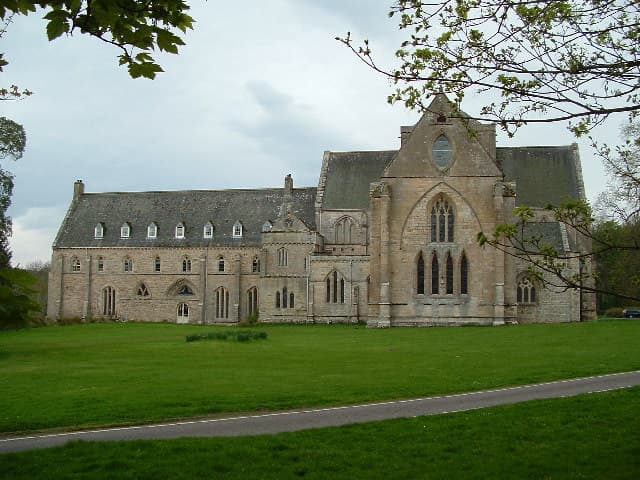
Pluscarden Abbey is a Catholic Benedictine monastery located in Moray, Scotland, originally founded in 1230 for the Valliscaulian Order by Alexander II. It transitioned to Benedictine rule in 1454 and experienced decline during the Scottish Reformation, falling into ruin. Restoration efforts began in the late 19th century, with significant work undertaken from 1948 onwards by monks from Prinknash Abbey, leading to its re-establishment as an independent Benedictine house and later an abbey.
Szczyrzyc Abbey
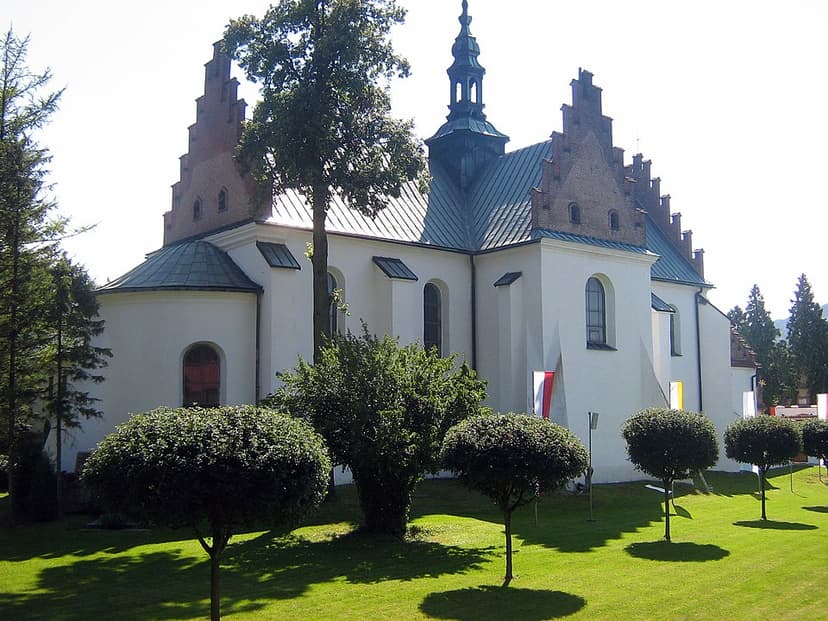
Szczyrzyc Abbey is a functioning Cistercian monastery located in Szczyrzyc, Poland, established in 1234. It holds significance as one of the Polish Shrines to the Virgin Mary and also houses the Museum of the Cistercian Abbey, showcasing its religious and historical heritage.