
Buckfast Abbey
Buckfast Abbey is an active Benedictine monastery located in Buckfast, Devon, England. Originally founded as a Benedictine monastery in 1018, it later became a Savignac and then a Cistercian abbey in 1134. After its dissolution in 1539 and subsequent demolition, French Benedictines refounded the monastery in 1882, and it was formally reinstated as an abbey in 1902. The current abbey church was constructed between 1907 and 1938, and the abbey joined the English Benedictine Congregation in 1960.
Key Facts
- ›First founded as a Benedictine monastery in 1018.
- ›Became a Savignac, then Cistercian, abbey in 1134.
- ›Dissolved in 1539 and largely demolished.
- ›Refounded by French Benedictines in 1882 and reinstated as an abbey in 1902.
- ›Current abbey church constructed between 1907 and 1938.
- ›Known for its Buckfast Tonic Wine and the development of the Buckfast bee.

Gothic, Norman Transitional, Early English
Buckfast Abbey Church, Buckfast Bee, Buckfast Tonic Wine, Grange Restaurant, Gardens, Medieval Gates, Abbot's Tower, Pipe Organ By Fratelli Ruffati, Ring of Twelve Bells
Aethelweard, King Cnut, King Stephen, Gabriel Donne, Samuel Berry, Dr. James Gale, Brother Adam, Boniface Natter, Anscar Vonier, Frederick Arthur Walters, Dom Charles Norris, Matthew Searles
Dissolution of the Monasteries, Refounding By French Benedictines, Reinstatement As An Abbey, Consecration of the Abbey Church, Millennium Bell Ringing Festival
About Buckfast Abbey
Buckfast Abbey: A Benedictine Foundation in Devon
Buckfast Abbey stands as an active Benedictine monastery situated in Buckfast, near Buckfastleigh, in Devon, England. Its history is marked by periods of flourishing and decline, beginning with its initial foundation as a Benedictine monastery in 1018. This early foundation was followed by a Savignac, and subsequently a Cistercian, abbey established in 1134 on the site of the current monastic buildings. The abbey faced dissolution in 1539, which led to its significant demolition.
History and Reconstruction
The site of Buckfast Abbey first became home to a monastery in 1018. The initial Benedictine foundation is believed to have been established by either Aethelweard, the Earldorman of Devon, or King Cnut. This early monastery was described as small and not particularly prosperous, with its exact location being uncertain, potentially near what is now Holy Trinity church.
In 1134, a new abbey was established in its current location through a grant from King Stephen to the Abbot of Savigny. This second abbey housed Savignac monks until 1147, when the Savignac congregation merged with the Cistercian order, transforming Buckfast into a Cistercian monastery. During its medieval history, Buckfast Abbey grew wealthy through fishing and wool trading, becoming one of the wealthiest abbeys in the south-west of England by the 14th century. Despite setbacks such as the Black Death, it experienced periods of resurgence, with significant rebuilding occurring in the mid-15th century. However, by the 16th century, the abbey was in decline, with only ten monks in residence at the time of its dissolution in 1539.
After the dissolution, the abbey structures were largely demolished, and the site was used as a stone quarry. In the early 19th century, a mansion house and wool mill were constructed on the grounds. The site eventually came into the possession of Dr. James Gale, who sought to return it to its original religious purpose. In 1882, French Benedictine monks purchased the property and began refounding the monastery. Most of the 19th-century house was remodelled and incorporated into new claustral ranges. The current abbey church, constructed mostly on the footprint of the former Cistercian abbey, was built between 1906 and 1938, designed by architect Frederick Arthur Walters in Norman Transitional and Early English styles. Buckfast was formally reinstated as an abbey in 1902, and it officially joined the English Benedictine Congregation in 1960.
The Abbey Today
Buckfast Abbey continues to function as an active Benedictine monastery, housing 13 monks as of 2020. The abbey grounds include a conference and seminar centre, a restaurant known as The Grange, and gardens. The monastery is self-supporting, with a farm, a shop selling monastic products, a bookshop, and a gift shop. Notable products associated with the abbey include Buckfast Tonic Wine and the Buckfast bee, developed by Brother Adam, a renowned apiarist. The abbey also engages in musical activities, with an Abbey Choir and Abbey Choristers, and features a significant Fratelli Ruffati pipe organ installed in 2017. The abbey receives many visitors and offers various tours and lodging facilities.
Source: Wikipedia ↗
Frequently Asked Questions
When was Buckfast Abbey first founded?
The first abbey at Buckfast was founded as a Benedictine monastery in 1018. This initial monastery was described as small and unprosperous, and its exact location remains uncertain.
What happened to Buckfast Abbey after its dissolution?
Following its dissolution in 1539, the abbey site was granted to individuals who stripped the buildings, reducing them to ruins. The site was subsequently used as a stone quarry, and later, a mansion house and wool mill were constructed on the grounds.
When was Buckfast Abbey refounded?
Buckfast Abbey was refounded by French Benedictine monks in 1882, who purchased the site. The monastery was formally reinstated as an abbey in 1902.
What is Buckfast Abbey known for producing?
The abbey is known for its Buckfast Tonic Wine, a fortified wine that monks began making in the 1890s. It is also famous for the Buckfast bee, developed by Brother Adam at the abbey's apiary.
Is Buckfast Abbey still an active monastery?
Yes, Buckfast Abbey remains an active Benedictine monastery. As of 2020, it housed 13 monks, and it continues to receive visitors and offer various tours and facilities.
Related Monasteries
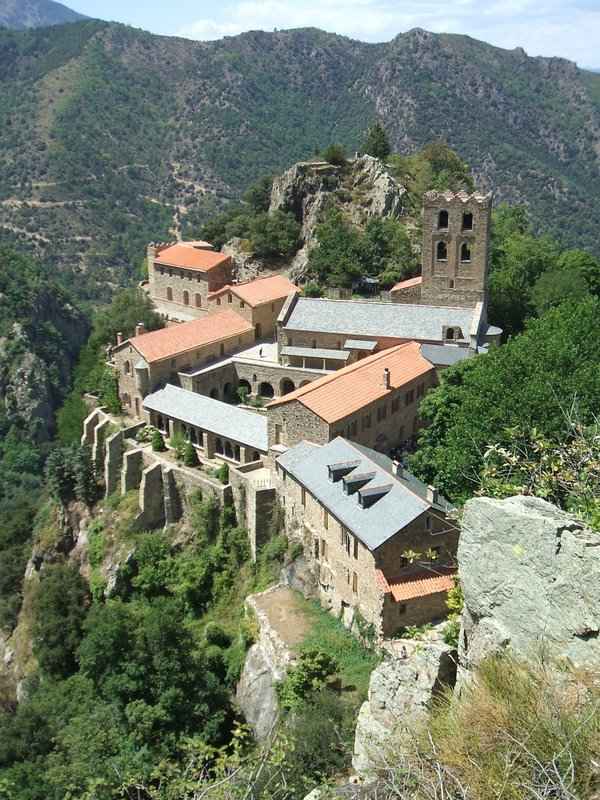
Le Canigou Abbey
The Abbey of Saint-Martin-du-Canigou, also known as Sant Martí del Canigó, is a historic Benedictine monastery situated in the Pyrenees of Northern Catalonia, France. Founded in 1009 by Guifred II, Count of Cerdanya, as an act of atonement, it served as a significant religious center for centuries. Despite suffering damage from an earthquake and undergoing secularization and abandonment, the abbey was extensively restored in the early 20th century and is now home to the Catholic Community of the Beatitudes.

Carthusian
The Carthusians, or Order of Carthusians, are an enclosed contemplative religious order within the Catholic Church, founded by Bruno of Cologne in 1084. Their unique life integrates eremitical (solitary) and cenobitic (communal) monasticism, guided by their own Statutes and a motto emphasizing the steadfastness of the Cross amidst worldly change. The order is known for its distinctive Carthusian Rite and a profound emphasis on silence and solitude, with monks living in individual cells and engaging in manual labor and prayer.
Carthusians
The Carthusians, also known as the Order of Carthusians, are an enclosed religious order of the Catholic Church founded by Bruno of Cologne in 1084. Their life uniquely combines eremitical and cenobitic monasticism, governed by their own Statutes, and they are known for their distinctive Carthusian Rite and the motto "Stat crux dum volvitur orbis". Despite historical persecutions, the order continues to maintain a life of solitude and silence, with 23 charterhouses existing today.