
Pskovo-Pechorsky Monastery
The Pskovo-Pechorsky Dormition Monastery is a Russian Orthodox male monastery located in Pechory, Pskov Oblast, Russia, near the Estonian border. Founded in the mid-15th century, it is notable for being one of the few Russian monasteries that has continuously operated throughout its history, including during the Soviet era and World War II. It has served as a significant spiritual center, particularly for the Seto people, and historically as a vital western defense outpost for Russia.
Key Facts
- ›Founded in the MID-15th century by hermits settling in local caves.
- ›The first cave church, dedicated to the Dormition of the Theotokos, was built in 1473.
- ›It has never been closed throughout its existence, even during Soviet rule and WWII.
- ›Historically served as an important military outpost defending Russia's western borders.
- ›The monastery was part of Estonia between 1920 and 1944.
- ›Currently houses a monastic community of over 90 members.

18th Century Facade
Cave Churches, Fortifications
Pskov-Pechory Monastery, the Pskovo-Pechersky Dormition Monastery, Pskov-Caves Monastery, Petseri Klooster
Archimandrite John, Sampson Sievers, Archimandrite Tikhon
Siege By Stefan Batory's Army, Repelled Attacks By Polish and Swedish Armies, Part of Estonia
About Pskovo-Pechorsky Monastery
Pskovo-Pechorsky Dormition Monastery
The Pskovo-Pechorsky Dormition Monastery, also known as Pskov-Caves Monastery, is a significant Russian Orthodox male monastery situated in Pechory, Pskov Oblast, Russia, close to the Estonian border. Its founding dates back to the mid-15th century when the first hermits established themselves in the local cave system. The monastery is renowned for its unbroken operational history, a rare distinction among Russian religious institutions, having remained active throughout the tumultuous periods of World War II and the Soviet era. It has historically served as a crucial spiritual hub, notably for the Seto people, and as a vital defensive outpost on Russia's western frontier.
History and Significance
The monastery's origins are rooted in the mid-15th century with the settlement of hermits in natural caves. The first cave church, dedicated to the Dormition of the Theotokos, was constructed in 1473, with its present-day facade added in the 18th century. Following destruction by Livonian feudals, it was rebuilt in 1519, leading to the development of a settlement that would grow into the town of Pechory. By the mid-16th century, the monastery and its surrounding settlement were fortified with walls and towers, which were later rebuilt in 1701. These fortifications proved critical, as the monastery successfully withstood sieges during the Livonian War (1581–1582) and repelled attacks from Polish and Swedish forces between 1611 and 1616. Its strategic military importance waned after the Great Northern War (1700–1721).
Modern Era and Community
From 1920 to 1944, the Pskovo-Pechorsky Monastery fell under Estonian jurisdiction, a period that contributed to its preservation from closure. It continued to function as one of the few active male monasteries in the USSR. During the Soviet era, the mystic Sampson Sievers was among those who lived and served there. Since the dissolution of the Soviet Union, the monastery has experienced a resurgence and flourishing community. It currently hosts over 90 monks who adhere to the traditions of asceticism and eldership, exemplified by figures such as Archimandrite John (Krestiankin). The monastery's life and spiritual teachings have also gained wider recognition through publications like Archimandrite Tikhon (Shevkunov)'s "Everyday Saints and Other Stories," which achieved significant international success.
Notable Features and Recognition
The monastery's unique architectural feature is its integration with a network of caves, which form the earliest part of its sacred spaces. The fortifications, including walls and towers, represent a significant historical military aspect. While not officially designated as a UNESCO World Heritage Site, its historical and spiritual importance is widely recognized. The monastery continues to be an active center of monastic life and pilgrimage, drawing visitors and adherents from various backgrounds.
Source: Wikipedia ↗
Frequently Asked Questions
When was the Pskovo-Pechorsky Monastery founded?
The monastery was founded in the mid-15th century. The first cave church was established in 1473, with its modern facade built in the 18th century.
Has the Pskovo-Pechorsky Monastery ever been closed?
No, Pskovo-Pechorsky Monastery is one of the few Russian monasteries that has never been closed at any point in its existence. This includes periods of World War II and the Soviet regime.
What is the historical significance of the Pskovo-Pechorsky Monastery?
Historically, the monastery served as an important outpost for defending the western border of Russia. It successfully withstood several sieges by various armies.
Is the Pskovo-Pechorsky Monastery still active?
Yes, the monastery is still active. Currently, the monastic community numbers over 90 monks who continue the tradition of asceticism and eldership.
What is the connection between the Pskovo-Pechorsky Monastery and the Seto people?
The Pskovo-Pechorsky Monastery has been an important spiritual center for the Seto people, an indigenous Finnic ethnic group.
Related Monasteries
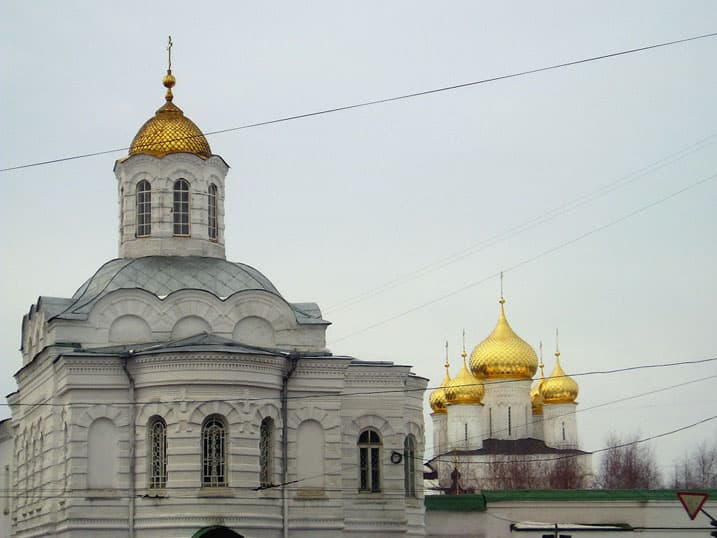
Bogoyavlensky Monastery (Kostroma)
Bogoyavlensky Convent, located in Kostroma, is a prominent Russian Orthodox convent renowned for housing the ancient Feodorovskaya Icon of the Mother of God. Originally founded as a monastery in the 15th century, it underwent significant construction and stylistic changes throughout its history, including a major rebuilding in the Russian Revival style in the late 19th century, after which it became a convent. Despite abolishment after the October Revolution, it was revived in the 1990s.

Krypetsky Monastery
Krypetsky Monastery is a Russian Orthodox monastery located near Pskov, founded in 1485 by Saint Savva Krypetsky. Initially established in a difficult marshland, it received support from the Pskov veche and later saw expansion and improvements. Despite periods of disrepair and closure by the Bolsheviks in 1918, the monastery was revived and restituted to the Russian Orthodox Church in 1991.

Makaryev Monastery
The Zheltovodsky Makaryev Convent, historically a men's monastery, is a significant Russian Orthodox site known for its legendary foundation by Saint Macarius in the early 15th century. It played a crucial role in the economy due to the famous Makaryev Fair held outside its walls for over two centuries. After facing destruction, relocation of the fair, and dissolution, it was resurrected as a women's convent in the late 19th century and continues to operate today.