
Bogoyavlensky Monastery (Kostroma)
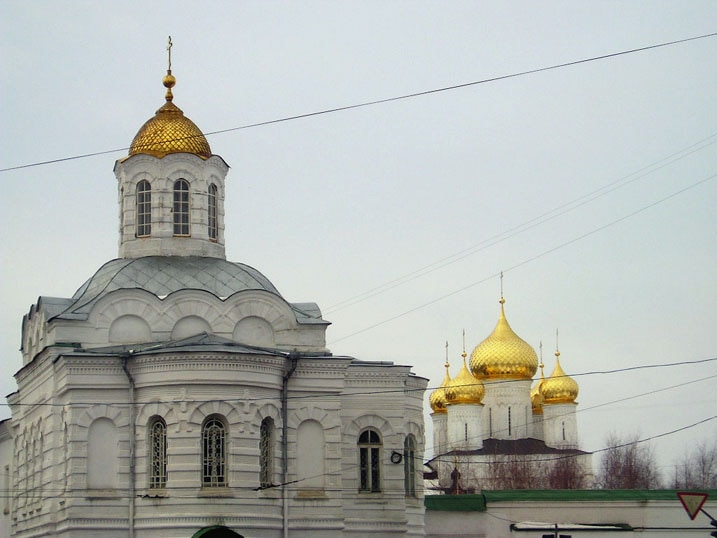
Bogoyavlensky Convent, located in Kostroma, is a prominent Russian Orthodox convent renowned for housing the ancient Feodorovskaya Icon of the Mother of God. Originally founded as a monastery in the 15th century, it underwent significant construction and stylistic changes throughout its history, including a major rebuilding in the Russian Revival style in the late 19th century, after which it became a convent. Despite abolishment after the October Revolution, it was revived in the 1990s.
Key Facts
- ›Founded in the 15th century by Nikita, a disciple of St Sergius of Radonezh.
- ›The katholikon, a five-domed church of Byzantine design, was built under Ivan the Terrible starting in 1559.
- ›The monastery was besieged and captured during the Time of Troubles, resulting in the deaths of 11 monks.
- ›Transformed into a convent in 1863.
- ›Abolished after the October Revolution and re-established in the 1990s.
- ›Known as the site of the Feodorovskaya Icon of the Mother of God.
Byzantine, Russian Revival
Feodorovskaya Icon of the Mother of God, Katholikon
Bogoyavlensky Convent, Bogoyavlensko-Anastasiin Monastery
Nikita, St Sergius of Radonezh, Ivan the Terrible, Vladimir of Staritsa, Hegumen Isaiah, Aleksander JóZef Lisowski
- Founded In the 15th Century
- Construction of Katholikon Under Ivan the Terrible
- Execution of Hegumen Isaiah and Brethren
- Besieged and Taken During the Time of Troubles
- Transformed Into A Convent
- Abolished After the October Revolution
- Revived In the 1990s
- Fire In the Katholikon
About Bogoyavlensky Monastery (Kostroma)
Bogoyavlensky Convent (Kostroma)
Bogoyavlensky Convent, also known as Bogoyavlensko-Anastasiin Monastery, is a significant Russian Orthodox convent located in the city of Kostroma. It holds particular importance as the repository of the ancient Feodorovskaya Icon of the Mother of God, a revered religious artifact.
Founding and Early History
The establishment of Bogoyavlensky Monastery dates back to the 15th century, founded by Nikita, who was both a disciple and a relative of the venerated St Sergius of Radonezh. The monastery's primary church, the katholikon, is a striking five-domed structure of traditional Byzantine design. Its construction commenced in 1559 under the reign of Ivan the Terrible, with significant contributions from donors such as Vladimir of Staritsa, a cousin of the Tsar. The initiative for the cathedral's construction is credited to Hegumen Isaiah. However, this period was marked by political intrigue; Tsar Ivan the Terrible accused Hegumen Isaiah and some of the monks of supporting his rival, Vladimir of Staritsa, leading to their execution in 1570.
Turbulent Times and Architectural Transformation
During the tumultuous Time of Troubles, the monastery endured a siege and was captured by the forces of Aleksander Józef Lisowski. This violent episode resulted in the loss of 11 monks. A monastic house dating from the 17th century still stands as a reminder of this era. Later, in the late 19th century, the monastery underwent a substantial reconstruction, adopting the Russian Revival style for many of its buildings. A pivotal change occurred in 1863 when the monastery was officially transformed into a convent.
Modern Era and Revival
Following the October Revolution, the convent was abolished, and its religious activities ceased for many years. The community and its spiritual life were not revived until the 1990s. Tragically, the remains of wall paintings within the katholikon were lost due to a recent fire. Despite these challenges, Bogoyavlensky Convent remains one of the most populous Russian Orthodox convents, continuing its spiritual mission.
Source: Wikipedia ↗
Frequently Asked Questions
When was Bogoyavlensky Monastery founded?
Bogoyavlensky Monastery was founded in the 15th century. Its establishment is attributed to Nikita, who was a disciple and relative of St Sergius of Radonezh.
What is Bogoyavlensky Monastery famous for?
The monastery is particularly known as the location of the ancient Feodorovskaya Icon of the Mother of God. It is also one of the most populous Russian Orthodox convents.
What happened to the monastery during the Time of Troubles?
During the Time of Troubles, the monastery was besieged and taken by Aleksander Józef Lisowski's forces. This attack tragically resulted in the deaths of 11 monks.
When did Bogoyavlensky Monastery become a convent?
The monastery was transformed into a convent in 1863. Prior to this, it operated as a monastery.
What is the current status of Bogoyavlensky Convent?
After being abolished following the October Revolution, the convent was revived in the 1990s. It continues to function as an active Russian Orthodox convent.
Related Monasteries

Krypetsky Monastery
Krypetsky Monastery is a Russian Orthodox monastery located near Pskov, founded in 1485 by Saint Savva Krypetsky. Initially established in a difficult marshland, it received support from the Pskov veche and later saw expansion and improvements. Despite periods of disrepair and closure by the Bolsheviks in 1918, the monastery was revived and restituted to the Russian Orthodox Church in 1991.

Makaryev Monastery
The Zheltovodsky Makaryev Convent, historically a men's monastery, is a significant Russian Orthodox site known for its legendary foundation by Saint Macarius in the early 15th century. It played a crucial role in the economy due to the famous Makaryev Fair held outside its walls for over two centuries. After facing destruction, relocation of the fair, and dissolution, it was resurrected as a women's convent in the late 19th century and continues to operate today.
Pavlo-Obnorsky Monastery
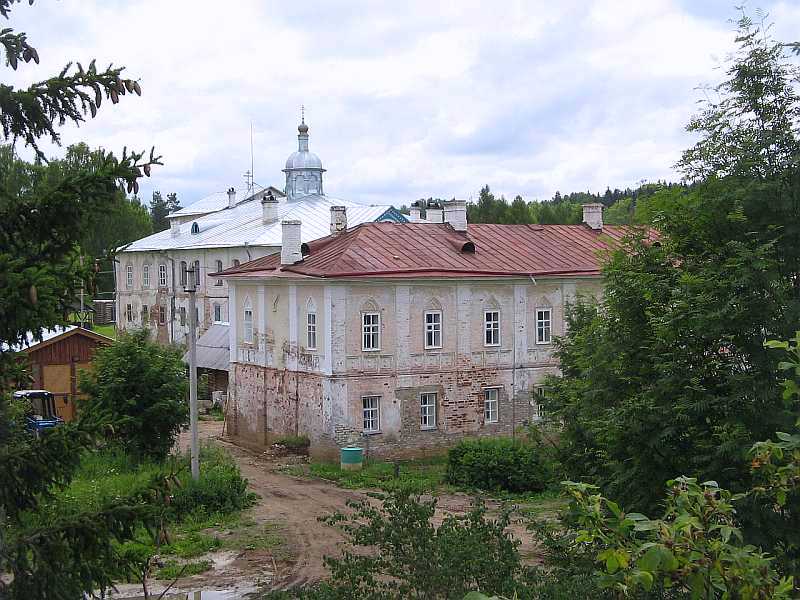
The Pavlo-Obnorsky Monastery is a Russian Orthodox monastery founded in 1414 by Pavel of Obnora. Situated on the Nurma River in Vologda Oblast, Russia, it gained considerable influence in the 17th century. After being abolished in 1924 and repurposed, it was reestablished in 1994 and regained its independence in 2003, becoming an active monastic community once more.