
Krypetsky Monastery
Krypetsky Monastery is a Russian Orthodox monastery located near Pskov, founded in 1485 by Saint Savva Krypetsky. Initially established in a difficult marshland, it received support from the Pskov veche and later saw expansion and improvements. Despite periods of disrepair and closure by the Bolsheviks in 1918, the monastery was revived and restituted to the Russian Orthodox Church in 1991.
Key Facts
- ›Founded in 1485 by Serbian monk St. Savva Krypetsky.
- ›Located 23 km from Pskov.
- ›Original timber cathedral rebuilt in stone in 1547 still stands.
- ›Disbanded by Bolsheviks in 1918 and restituted to the Russian Orthodox Church in 1991.
- ›Associated with notable monks like St. Nilus and figures like Afanasy Ordin-Nashchokin.

Stone Cathedral Rebuilt In 1547, Neoclassical Belltower
крыпецкий иоанно-богословский монастырь
St. Savva Krypetsky, Basil, St. Nilus, Afanasy Ordin-Nashchokin, Evgeny Bolkhovitinov
Founded By St. Savva Krypetsky, Received Land Grant From Pskov Veche, Timber Cathedral Rebuilt In Stone, Disbanded By Bolsheviks, Brief Revival During Wwii, Restituted To Russian Orthodox Church
About Krypetsky Monastery
Krypetsky Monastery is a historical Russian Orthodox monastery located approximately 23 kilometers from the city of Pskov. Its establishment in 1485 by Saint Savva Krypetsky, a Serbian monk from Mount Athos, marked the beginning of a significant spiritual center in the region.
Founding and Early Years
The monastery was founded in what was then a challenging marshland, but it soon gained support. The Pskov veche granted a substantial plot of land to the monks two years after its founding, and a road was constructed to facilitate pilgrim access. Saint Savva, the founder, died in 1495 and was initially buried in the monastery's timber cathedral. This cathedral was later rebuilt in stone in 1547 and remains a part of the monastery complex today.
Notable Figures and Later History
Over the centuries, Krypetsky Monastery was home to several influential figures. Among them was Basil, who documented the life of Saint Savva in the 1540s. Saint Nilus, another notable monk, later founded the Nilov Monastery. The former chancellor Afanasy Ordin-Nashchokin played a role in expanding and improving the monastery's grounds. Despite falling into disrepair in the 18th century, it was revitalized by Bishop Evgeny Bolkhovitinov.
20th Century and Revival
The monastery faced significant disruption in the 20th century. In 1918, the Bolsheviks disbanded the monastery, plundering its valuables and damaging its Neoclassical belltower. The abbey experienced a brief revival during the German occupation in World War II. Finally, in 1991, Krypetsky Monastery was restituted to the Russian Orthodox Church, allowing it to resume its monastic life and spiritual mission.
Source: Wikipedia ↗
Frequently Asked Questions
When was Krypetsky Monastery founded?
Krypetsky Monastery was founded in 1485 by St. Savva Krypetsky. He was a Serbian monk who came from Mount Athos.
Who founded Krypetsky Monastery?
The monastery was founded by Saint Savva Krypetsky, a Serbian monk who originated from Mount Athos. He established the monastery in what was then described as an impracticable mire.
What happened to Krypetsky Monastery during the Soviet era?
In 1918, the monastery was disbanded by the Bolsheviks, who plundered its sacristy and disfigured its belltower. The abbey was briefly revived during the German occupation in World War II.
When was the monastery returned to the Russian Orthodox Church?
Krypetsky Monastery was finally restituted to the Russian Orthodox Church in 1991. This marked its revival after periods of disuse and closure.
Are there any famous figures associated with Krypetsky Monastery?
Yes, notable monks include Basil, who wrote about St. Savva's life, and St. Nilus, founder of the Nilov Monastery. Afanasy Ordin-Nashchokin also significantly expanded and improved the monastery.
Related Monasteries
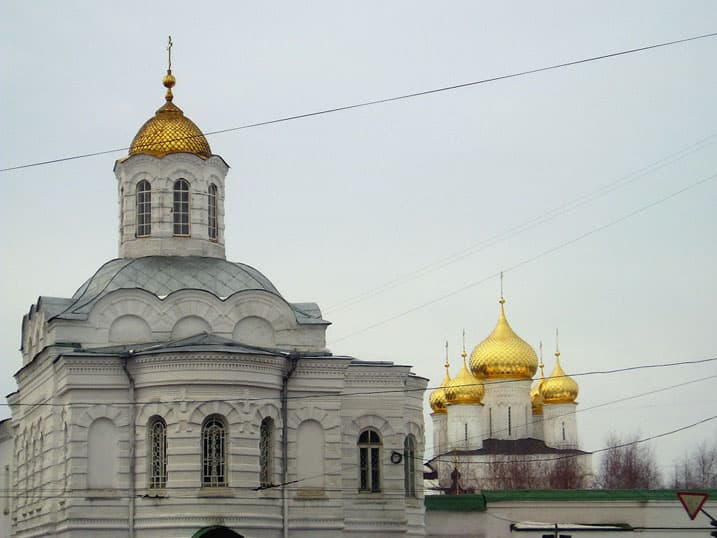
Bogoyavlensky Monastery (Kostroma)
Bogoyavlensky Convent, located in Kostroma, is a prominent Russian Orthodox convent renowned for housing the ancient Feodorovskaya Icon of the Mother of God. Originally founded as a monastery in the 15th century, it underwent significant construction and stylistic changes throughout its history, including a major rebuilding in the Russian Revival style in the late 19th century, after which it became a convent. Despite abolishment after the October Revolution, it was revived in the 1990s.

Makaryev Monastery
The Zheltovodsky Makaryev Convent, historically a men's monastery, is a significant Russian Orthodox site known for its legendary foundation by Saint Macarius in the early 15th century. It played a crucial role in the economy due to the famous Makaryev Fair held outside its walls for over two centuries. After facing destruction, relocation of the fair, and dissolution, it was resurrected as a women's convent in the late 19th century and continues to operate today.
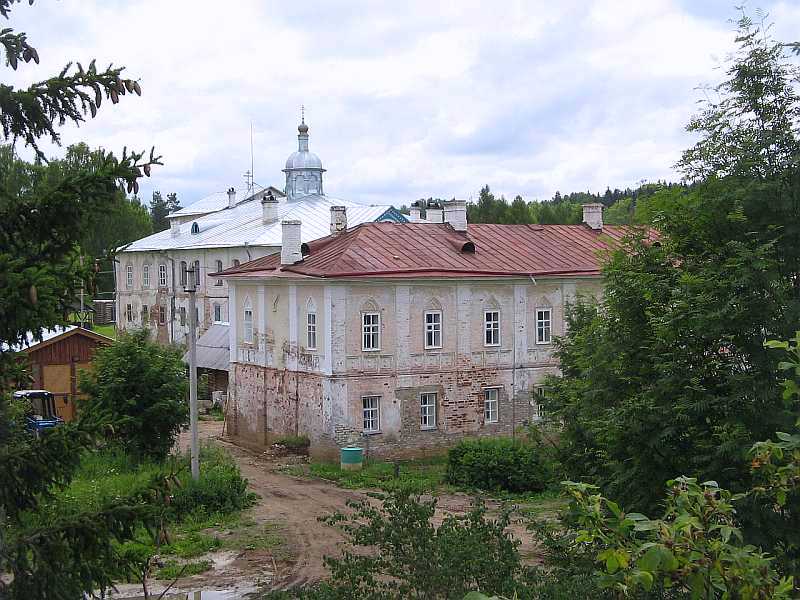
Pavlo-Obnorsky Monastery
The Pavlo-Obnorsky Monastery is a Russian Orthodox monastery founded in 1414 by Pavel of Obnora. Situated on the Nurma River in Vologda Oblast, Russia, it gained considerable influence in the 17th century. After being abolished in 1924 and repurposed, it was reestablished in 1994 and regained its independence in 2003, becoming an active monastic community once more.