
Priory of Saint-Michel de Grandmont
The Priory of Saint-Michel de Grandmont is a well-preserved former monastery of the Order of Grandmont, established in 1128 in Hérault, France. Situated in a remote oak forest, it was once part of a network of over 160 Grandmontine monasteries. The priory is known for its austere monastic life and has survived significant historical periods, now maintained by a local association and open to the public.
Key Facts
- ›Established in 1128, it is one of the best-preserved monasteries of the 160 Grandmontine foundations.
- ›The priory is located in a wild area within an oak forest, approximately 10 km from Lodève.
- ›The Order of Grandmont was known for its strict and austere practices, including perpetual silence and no hierarchy.
- ›The building survived the French Revolution intact and later served as a home and agricultural estate.
- ›It was classified as a historic monument in 1980 and opened to the public.
- ›It is the only surviving building from the Order of Grandmont.

Romanesque
Romanesque Cloister, Chapter House, Cellar, Church
Prieuré Saint-Michel De Grandmont
éTienne of Thiers
Establishment of the Order of Grandmont, Dissolution of the Grandmontine Order, French Revolution
About Priory of Saint-Michel de Grandmont
The Priory of Saint-Michel de Grandmont is a historically significant former monastery of the Order of Grandmont, located in Saint-Privat in the Hérault department of France. Established in 1128, it is celebrated as one of the best-preserved of the 160 monasteries founded by the Grandmontine Order. The priory occupies a remote site within an oak forest, approximately ten kilometers from the town of Lodève.
History and Monastic Life
The origins of the Grandmontine Order are linked to Étienne of Thiers, whose followers moved to the Grandmont plateau, establishing the mother abbey. Saint-Michel de Grandmont became one of over 160 smaller houses inhabited by hermits. The Order was renowned for its exceptionally austere practices: monks lived in perpetual silence, wore no shoes, abstained from meat, practiced regular fasting, and engaged in silent prayer while working. They also held the unique distinction of being the first order permitted to beg for food. By 1772, the Order had declined significantly and was eventually dissolved, with the priory being absorbed into the Diocese of Lodève. Two monks remained until their deaths in 1785.
Preservation and Public Access
Remarkably, the priory building survived the French Revolution undamaged. It later passed through private ownership, serving as a home and agricultural estate, with notable restoration and development for wine production during the ownership of the Vitalis family. In 1957, the Bec family acquired the priory. In 1980, it was officially designated a historic monument and opened its doors to the public. Today, the Priory of Saint-Michel de Grandmont is maintained by a non-profit association, "Les Amis du Prieure Saint Michel de Grandmont."
Architecture
The Priory of Saint-Michel de Grandmont is distinguished as the sole surviving building from the Order of Grandmont. The complex features a church, a Romanesque cloister surmounted by a pinnacle, and includes a chapter house and a cellar. These structures represent the architectural footprint of this once-widespread monastic order.
Source: Wikipedia ↗
Frequently Asked Questions
When was the Priory of Saint-Michel de Grandmont established?
The Priory of Saint-Michel de Grandmont was established in 1128. It was part of the Order of Grandmont, which had a significant network of monasteries at its peak.
What is notable about the Order of Grandmont's monastic life?
The Order of Grandmont was considered one of the strictest and most austere orders of the Middle Ages. Monks lived in perpetual silence, walked barefoot, ate no meat, and engaged in silent prayer while working.
What historical events did the Priory of Saint-Michel de Grandmont survive?
The priory building survived the French Revolution without damage. After the dissolution of the Grandmontine Order, it was absorbed into the Diocese of Lodève and later became a private residence before its preservation.
What are the main architectural features of the priory?
The Priory of Saint-Michel de Grandmont includes a church, a Romanesque cloister topped with a pinnacle, and a chapter house and cellar. It is noted as the only surviving building from the Order of Grandmont.
Who maintains the Priory of Saint-Michel de Grandmont today?
The priory is currently maintained by "Les Amis du Prieure Saint Michel de Grandmont," a non-profit association. It was opened to the public in 1980 after being classified as a historic monument.
Related Monasteries

Le Thoronet Abbey
Le Thoronet Abbey is a former Cistercian monastery constructed in the late 12th and early 13th centuries, renowned as one of the best examples of the Cistercian order's architectural spirit. Located in the Var Department of Provence, France, it is one of the "Three Sisters of Provence" along with Sénanque and Silvacane abbeys. Restored as a museum, its austere design emphasizes volume, light, and fine masonry, with the church's acoustics even dictating the pace of monastic chant.

Chaalis Abbey
Chaalis Abbey was a Cistercian monastery founded in 1136 north of Paris. Although largely ruined due to mismanagement, it retains a chapel with significant frescos by Primaticcio. The abbey was later sold and demolished during the French Revolution, but its former site now houses the Musée Jacquemart-André, showcasing a rich art collection bequeathed by Nélie Jacquemart-André.
Loc-Dieu Abbey
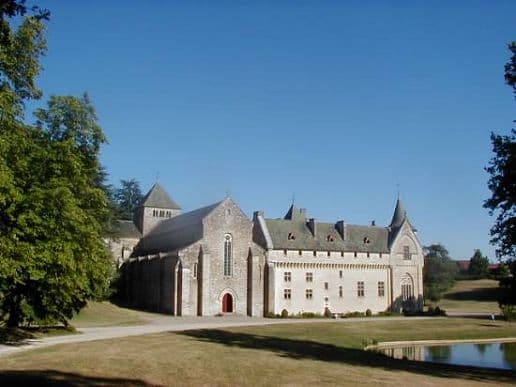
Loc-Dieu Abbey is a Cistercian monastery established in 1123 near Martiel, Aveyron, France. Originally named "devil's place" due to local dolmens, it was renamed "place of God" by its founding monks. The abbey has a history of destruction and rebuilding, notably being burnt by the English in 1409 and fortified in 1470. Despite being suppressed during the French Revolution, its buildings were restored, and it famously served as a hiding place for artworks from the Louvre during World War II.