
Prières Abbey
Christian·France·rehabilitation centre·13th century
Prières Abbey, also known in Latin as Abbatia de Precibus, was a former Cistercian monastery founded in 1251 in Billiers, Brittany, France. Endowed by Duke John I of Brittany as penance, it became a daughter house of Buzay Abbey. Dissolved during the French Revolution and largely demolished, its remaining structures now house a rehabilitation center, though parts of the former church and 18th-century buildings are still extant.
Key Facts
- ›Founded in 1251 by Duke John I of Brittany.
- ›A daughter house of Buzay Abbey.
- ›Dissolved in 1791 during the French Revolution.
- ›Most buildings were demolished after passing into private hands in 1801.
- ›Remaining structures include a 1791 chapel with ducal tombs and 18th-century guest lodgings.

18th-Century
Tombs of Duke John I and Isabella of Castile, 18th-Century Guest Lodgings, Precinct Wall of 1699
Abbaye De PrièRes, Notre-Dame De PrièRes, Abbatia De Precibus
John I, Duke of Brittany, Isabella of Castile
Founded In 1251, Dissolved In 1791, Demolished After 1801
About Prières Abbey
Prières Abbey, known in Latin as Abbatia de Precibus and in French as Abbaye de Prières or Notre-Dame de Prières, is a former Cistercian monastery located in the commune of Billiers, within the department of Morbihan in Brittany, France. Situated approximately 28 kilometers southeast of Vannes, it lies near the coast and the estuary of the River Vilaine.
History and Significance
The abbey's foundation in 1251 was a significant act by Duke John I of Brittany. He endowed the monastery lavishly as a form of penance for earlier actions, specifically the destruction of the Priory of Saint-Pabu and the appropriation of its lands during the construction of the Château de Suscinio. Prières Abbey became a daughter house of Buzay Abbey, with its initial community of monks originating from Clairvaux. The abbey also received endowments of temporal wealth, including the important saltpans of the Guérande peninsula.
The monastery underwent rebuilding in the 17th century. However, its monastic life came to an abrupt end in 1791 during the upheaval of the French Revolution, leading to its dissolution. Following this, the premises were repurposed for use as barracks. The site transitioned into private ownership in 1801, a period after which a significant portion of the abbey's buildings were demolished.
Architectural Remnants and Current Use
While much of the monastic complex has been lost to time, certain structures from Prières Abbey endure. The church, which was rebuilt in the early 18th century under the architect Olivier Delourme, now consists of only its tower and a section of the former transept. This surviving part has been converted into a chapel that serves as the resting place for the tombs of Duke John I, who died in 1286, and Isabella of Castile, the second wife of Duke John III of Brittany, who passed away in 1328. Additionally, the 18th-century guest lodgings, some service buildings, and the precinct wall constructed in 1699 are still extant. Today, the remaining parts of the former abbey complex are utilized by a rehabilitation centre.
Source: Wikipedia ↗
Frequently Asked Questions
When was Prières Abbey founded?
Prières Abbey was founded in the year 1251. It was established by Duke John I of Brittany, who endowed it richly.
Why was Prières Abbey founded?
The abbey was founded by Duke John I of Brittany as an act of penance. He sought to atone for destroying the Priory of Saint-Pabu and annexing its lands for the construction of the Château de Suscinio.
What happened to Prières Abbey during the French Revolution?
During the French Revolution, Prières Abbey was dissolved in 1791. Following its dissolution, the premises were used as barracks.
What remains of the original Prières Abbey structures?
Of the church, rebuilt in the early 18th century, only the tower and part of the former transept remain, converted into a chapel. Also still standing are the 18th-century guest lodgings, some service buildings, and the precinct wall from 1699.
Are the tombs of Duke John I and Isabella of Castile at Prières Abbey?
Yes, the chapel at Prières Abbey contains the remains of the tombs of Duke John I and Isabella of Castile, the second wife of Duke John III of Brittany. These tombs are housed within the former transept of the church.
Related Monasteries

Abbaye-aux-Bois
The Abbaye-aux-Bois, originally founded in 1202 as Notre-Dame-aux-Bois in Ognolles, was a Bernardine (Cistercian) convent that relocated to Paris in 1654. Renowned for educating daughters of aristocratic families and later hosting a significant literary salon, its buildings underwent numerous transformations after being expropriated in 1792. The abbey was ultimately destroyed in 1907 to facilitate urban expansion, with its site later occupied by a theater.
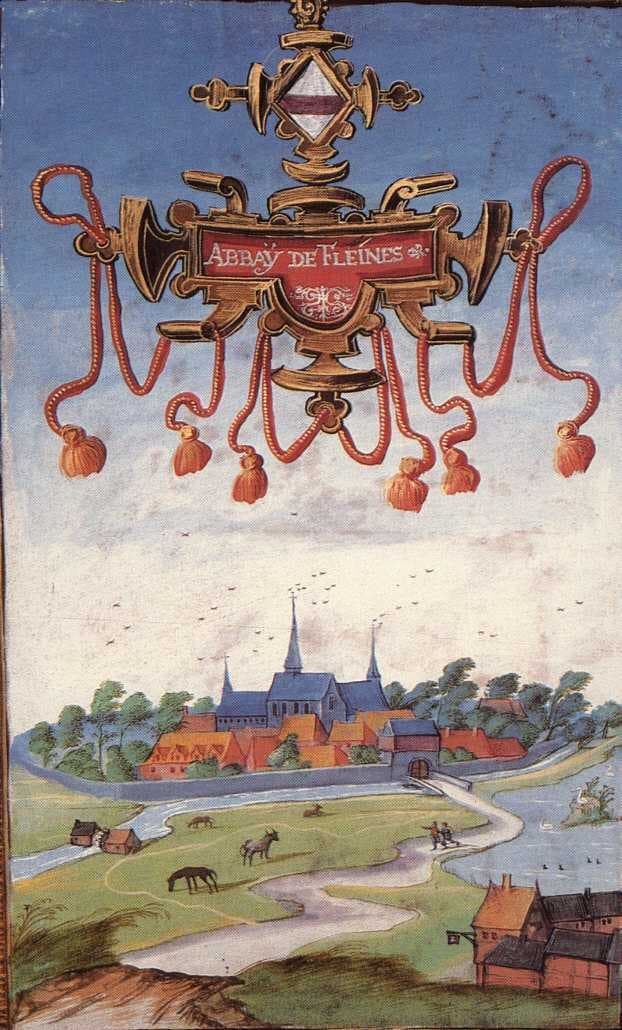
Flines Abbey
Flines Abbey was a Cistercian nunnery founded around 1234 by Countess Margaret of Flanders. It served as a significant burial site for the Counts of Flanders, including Margaret herself and her son Guy. The abbey experienced periods of destruction and extensive rebuilding, particularly in the 14th and subsequent centuries, before its dissolution during the French Revolution.

Fontenelles Abbey
Fontenelles Abbey was an Augustinian monastery founded in 1210 by local landowners in Vendée, France. Originally Benedictine, it transitioned to Augustinian in the early 13th century and was dedicated in 1248. The abbey suffered significant damage during the Hundred Years' War and the Wars of Religion, leading to its eventual suppression during the French Revolution and subsequent abandonment and agricultural use. Today, the site remains private property with the truncated church as its most intact structure.