
Port-Royal-des-Champs
Cistercian·France·Museum and ruins·13th century
Port-Royal-des-Champs was a Cistercian abbey that gained significant cultural and theological influence in the 17th century, particularly through its association with Jansenism and the prominent Arnauld family. It established renowned schools and became a center for intellectual and religious reform, attracting figures like Blaise Pascal. Despite its influence, it faced persecution and was eventually suppressed by papal bull, with most of its buildings razed.
Key Facts
- ›Established in 1204 as a Cistercian abbey.
- ›Reformed in 1609 under Abbess Mother Marie Angelique Arnauld.
- ›Founded the influential 'Petites écoles de Port-Royal' offering high-quality education.
- ›Became a major center for Jansenist theology in France.
- ›Published the significant logic textbook 'La logique, ou L'art de penser' (the Port-Royal Logic).
- ›Suppressed by papal bull in the early 18th century, with most buildings demolished.
Petites éColes De Port-Royal, MuséE De Port-Royal, Ruins of the Abbey, 17th-Century Museum Building
Port-Royal Des Champs
- Mother Marie Angelique Arnauld
- Jean Du Vergier De Hauranne, Abbé De Saint-Cyran
- Jansenius
- Antoine Arnauld
- Pierre Nicole
- Blaise Pascal
- Jacqueline Pascal
- Jean Racine
- Simon Arnauld De Pomponne
- Duke of Luynes
- Duke of Liancourt
- Charles Augustin Sainte-Beuve
- Reform of Discipline In 1609
- Move of Most Nuns To Port-Royal De Paris In 1625
- Establishment of the Petites éColes
- Association With Jansenism Under Abbé De Saint-Cyran
- Publication of 'La Logique, Ou L'Art De Penser' In 1662
- Pascal's Defense In the Jansenist Controversies
- Closure of Elementary Schools By Papal Bull In 1660
- Forbidden To Accept Novices In 1661
- Abolished By Papal Bull In 1708
- Nuns Forcibly Removed In 1709
- Most Buildings Razed In 1711
About Port-Royal-des-Champs
Port-Royal-des-Champs was a historically significant Cistercian abbey located in Magny-les-Hameaux, southwest of Paris. Established in 1204, its influence grew substantially after a reform in 1609 led by Abbess Mother Marie Angelique Arnauld, whose family became prominent patrons and directed its subsequent history.
History and Influence
The abbey became renowned for its educational institutions, the Petites écoles de Port-Royal, which offered a high standard of learning and attracted notable students like the playwright Jean Racine. In 1634, Jean du Vergier de Hauranne, Abbé de Saint-Cyran, became its spiritual director, cementing Port-Royal's deep association with Jansenism, a theological movement within French Catholicism. This period saw the development of important intellectual works, including "La logique, ou l'art de penser" (The Port-Royal Logic), co-authored by Antoine Arnauld and Pierre Nicole, which explored logic and Cartesian philosophy. The intellectual rigor and Jansenist piety attracted prominent cultural figures, such as the mathematician and physicist Blaise Pascal, who publicly defended the schools against Jesuit attacks in his "Lettres provinciales." The Arnauld family also held significant positions within the court of Louis XIV.
Persecution and Demise
The association with Jansenism, viewed by some as heretical, led to increasing pressure from the Jesuits and the monarchy. Seeking peace in the church, Louis XIV ordered the closure of the elementary schools through a papal bull in 1660, following the formulary controversy. In 1661, the monastery was prohibited from accepting new novices, signaling its impending dissolution. The abbey was formally abolished by a bull from Pope Clement XI in 1708, with the remaining nuns forcibly removed in 1709 and most of the buildings razed in 1711. A history by Charles Augustin Sainte-Beuve in the 19th century further documented its legacy.
Legacy Today
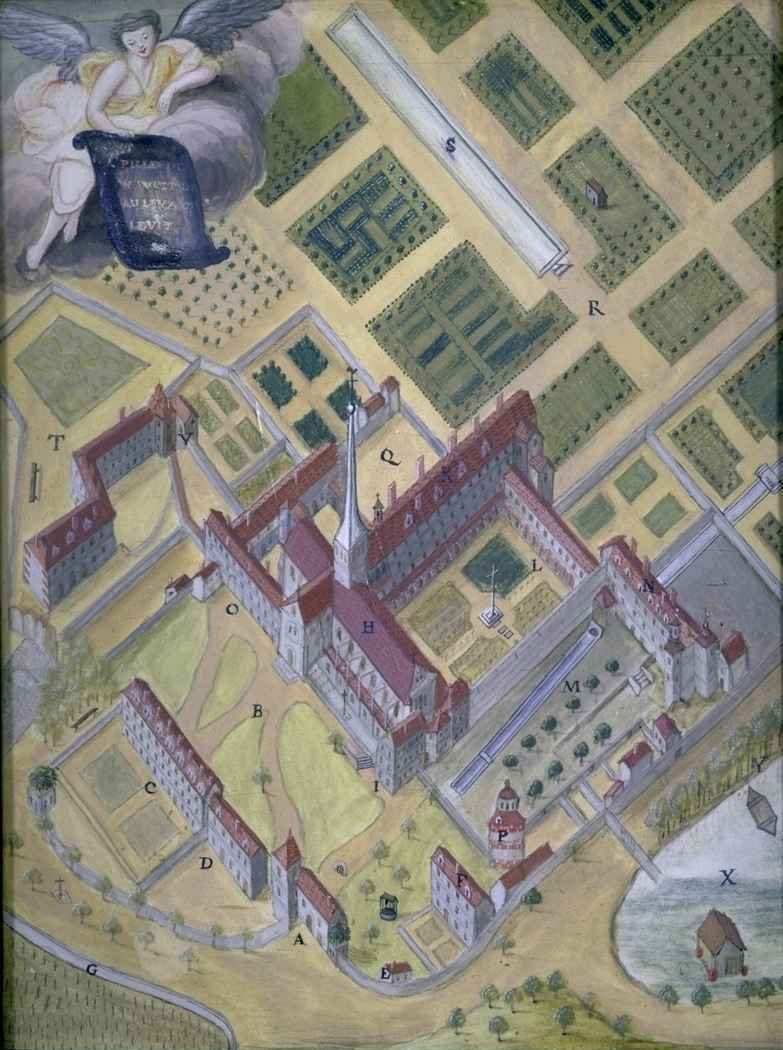
Today, the remains of Port-Royal-des-Champs are preserved as part of the Musée de Port-Royal estate in Magny-les-Hameaux. The grounds include ruins of the abbey and its outbuildings, alongside a 17th-century building that houses a museum exhibiting 17th and 18th-century paintings and engravings. The original chapel, containing Mère Angélique's tomb, and some other structures still stand on the site, which now hosts Port-Royal Hospital.
Source: Wikipedia ↗
Frequently Asked Questions
When was Port-Royal-des-Champs founded?
The abbey of Port-Royal-des-Champs was established in the year 1204. Its historical significance grew considerably in the 17th century following a reform led by its abbess.
What was the religious tradition of Port-Royal-des-Champs?
Port-Royal-des-Champs was an abbey of Cistercian nuns. It became closely associated with Jansenism, a theological movement within Roman Catholicism.
What were the 'Petites écoles de Port-Royal'?
These were schools founded at the original site of Port-Royal-des-Champs that became famous for the high quality of education they provided. Playwright Jean Racine was among its notable students.
Why was Port-Royal-des-Champs suppressed?
The schools were regarded as heretical due to attacks on Jansenism by the Jesuits. The elementary schools were closed in 1660, and the abbey itself was abolished by papal bull in 1708, leading to the removal of nuns and demolition of buildings.
What remains of Port-Royal-des-Champs today?
Remains of the monastery can be seen at Magny-les-Hameaux in the Chevreuse valley, operated as the Musée de Port-Royal. The estate includes ruins and a 17th-century building housing a museum with 17th and 18th-century art. The original chapel and some buildings still exist on the grounds of what is now Port-Royal Hospital.
Related Monasteries

La Clarté-Dieu
The Abbey of La Clarté-Dieu was a Cistercian monastery founded in 1239 in Saint-Paterne-Racan, France. Conceived by Peter des Roches, Bishop of Winchester, it was established as part of a pair with Netley Abbey in England. Despite suffering damage during the Hundred Years' War and facing financial strain, it survived until the French Revolution, after which it was secularized and partially used as a farm. Today, much of the medieval and post-medieval structures remain in excellent condition and are preserved as a monument historique, open to the public.

Maubuisson Abbey
Maubuisson Abbey, also known as Notre-Dame-la-Royale, is a former Cistercian nunnery founded in 1236 by Blanche of Castile, Queen of France. It served as a royal residence and necropolis, and despite periods of decline and conflict, it played an important role in the local economy. Today, the surviving buildings are listed as a monument historique and the site houses a Centre of Contemporary Arts.

Royaumont Abbey
Royaumont Abbey is a former Cistercian abbey located near Asnières-sur-Oise, France, built between 1228 and 1235 with the support of Louis IX. Dissolved during the French Revolution, it later became a voluntary hospital during World War I and is now a cultural center and tourist attraction managed by the Royaumont Foundation.