
La Clarté-Dieu
Cistercian·France·Monument historique, open to the public·13th century
The Abbey of La Clarté-Dieu was a Cistercian monastery founded in 1239 in Saint-Paterne-Racan, France. Conceived by Peter des Roches, Bishop of Winchester, it was established as part of a pair with Netley Abbey in England. Despite suffering damage during the Hundred Years' War and facing financial strain, it survived until the French Revolution, after which it was secularized and partially used as a farm. Today, much of the medieval and post-medieval structures remain in excellent condition and are preserved as a monument historique, open to the public.
Key Facts
- ›Founded in 1239 by the executors of Peter des Roches, Bishop of Winchester.
- ›Established as a Cistercian monastery.
- ›Part of a pair of monasteries, the other being Netley Abbey in England.
- ›Suffered significant damage during the Hundred Years' War.
- ›Closed and sold during the French Revolution.
- ›Preserved as a monument historique and open to the public.

Medieval, Post-Medieval
Remains of Medieval Abbey, Fine Post-Medieval Additions, Preserved As A Monument Historique
Peter Des Roches
Hundred Years' War Damage, French Revolution Closure and Sale
About La Clarté-Dieu
The Abbey of La Clarté-Dieu was a significant Cistercian monastery situated in Saint-Paterne-Racan, France. Its establishment in 1239 was initiated by the executors of Peter des Roches, the Bishop of Winchester, who had envisioned founding a pair of monasteries, with the other being Netley Abbey in England. Although the bishop died before completing his project, his endowments facilitated the abbey's foundation, and the first monks arrived in 1240.
Life and Historical Context
The abbey's history was marked by considerable challenges. During the Hundred Years' War, La Clarté-Dieu sustained severe damage, and the subsequent costs of rebuilding placed immense strain on the monastery's finances. Despite these adversities, the community persevered until the French Revolution. In the revolutionary period, the abbey, like many others in France, was closed and its assets were sold. Subsequently, the site was largely repurposed as a farm, leading to the dilapidation of some of its structures.
Preservation and Public Access
Notwithstanding the post-revolutionary decline, a substantial portion of the medieval abbey's architecture, along with notable post-medieval additions, has survived in excellent condition. La Clarté-Dieu is now recognized and preserved as a monument historique, a designation highlighting its importance to French heritage. The site is accessible to the public, allowing visitors to explore its historical remains.
Source: Wikipedia ↗
Frequently Asked Questions
When was the Abbey of La Clarté-Dieu founded?
The Abbey of La Clarté-Dieu was founded in 1239. The idea for its establishment originated with Peter des Roches, Bishop of Winchester, who began collecting endowments for it prior to his death in 1238.
What religious order was associated with La Clarté-Dieu?
La Clarté-Dieu was a Cistercian monastery. The Cistercian order is known for its strict adherence to the Rule of Saint Benedict.
What happened to La Clarté-Dieu after the French Revolution?
Following the French Revolution, the abbey was closed and its properties sold. For a long period, it was used as a farm, and some of its buildings fell into ruin. However, much of the medieval and post-medieval architecture has been preserved.
Is La Clarté-Dieu open to visitors?
Yes, La Clarté-Dieu is open to the public. It is preserved as a monument historique, indicating its cultural and historical significance.
What significant historical events affected La Clarté-Dieu?
The abbey was severely damaged during the Hundred Years' War, which placed a heavy financial burden on the community. Its existence concluded with its closure and sale during the French Revolution.
Related Monasteries

Maubuisson Abbey
Maubuisson Abbey, also known as Notre-Dame-la-Royale, is a former Cistercian nunnery founded in 1236 by Blanche of Castile, Queen of France. It served as a royal residence and necropolis, and despite periods of decline and conflict, it played an important role in the local economy. Today, the surviving buildings are listed as a monument historique and the site houses a Centre of Contemporary Arts.
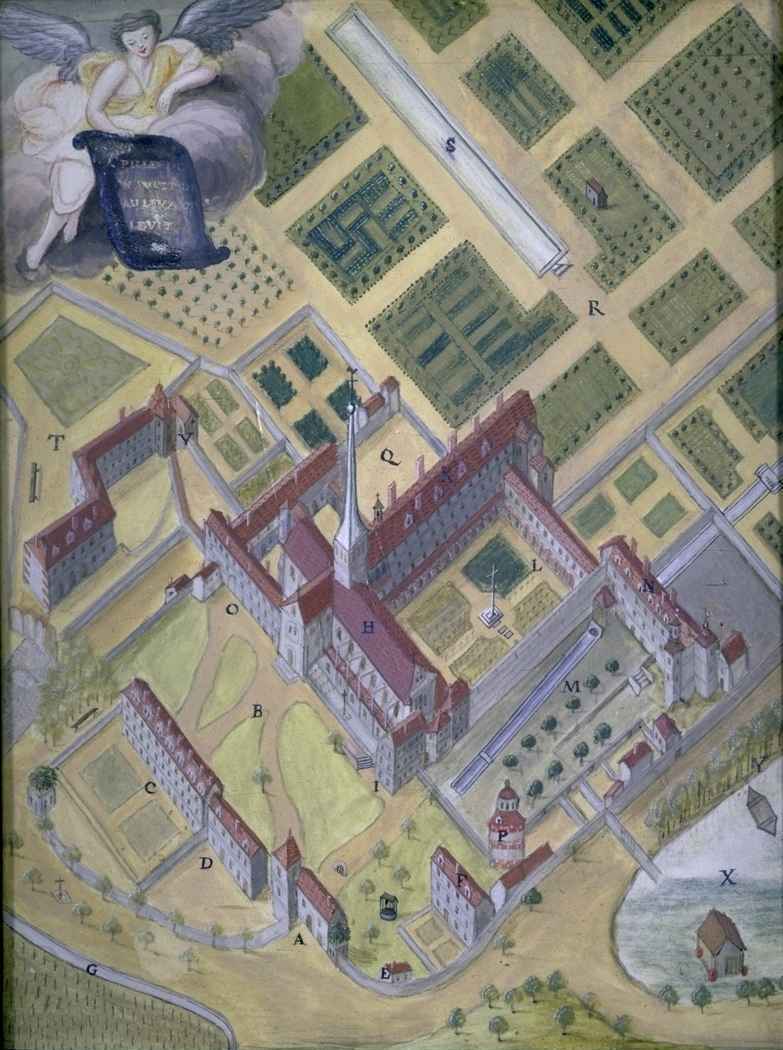
Port-Royal-des-Champs
Port-Royal-des-Champs was a Cistercian abbey that gained significant cultural and theological influence in the 17th century, particularly through its association with Jansenism and the prominent Arnauld family. It established renowned schools and became a center for intellectual and religious reform, attracting figures like Blaise Pascal. Despite its influence, it faced persecution and was eventually suppressed by papal bull, with most of its buildings razed.

Royaumont Abbey
Royaumont Abbey is a former Cistercian abbey located near Asnières-sur-Oise, France, built between 1228 and 1235 with the support of Louis IX. Dissolved during the French Revolution, it later became a voluntary hospital during World War I and is now a cultural center and tourist attraction managed by the Royaumont Foundation.