
Pill Priory
Pill Priory was a Tironian Benedictine monastery founded in the late 12th century near Milford Haven in Pembrokeshire, South West Wales. Established as a daughter house of St Dogmaels Abbey by the Roche family, it was dedicated to the Blessed Virgin Mary and St Budoc. Dissolved in 1536, its remains are now privately owned and include a notable chancel arch and south transept, designated as scheduled monuments.
Key Facts
- ›Founded in the late 12th century near Milford Haven, Pembrokeshire.
- ›A daughter house of St Dogmaels Abbey, part of the Tironensian order.
- ›Established by the Roche family, descendants of Godebert de Fleming.
- ›Dedicated to the Blessed Virgin Mary and St Budoc.
- ›Dissolved in 1536 during the suppression of monastic houses.
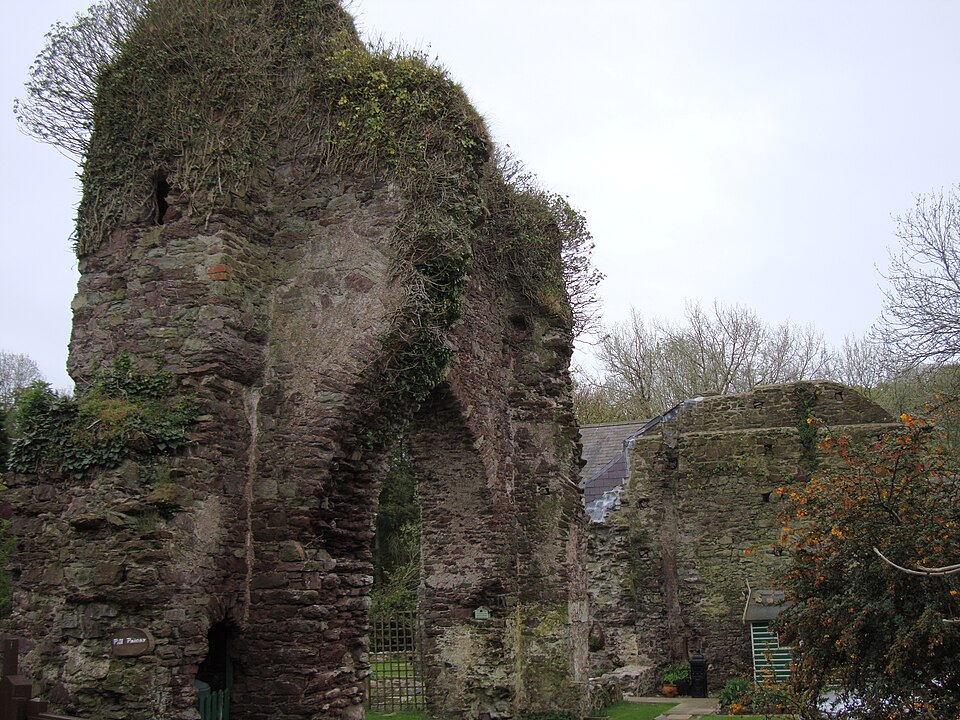
- ›Remains include a striking chancel arch and south transept, now privately owned.
Medieval
Chancel Arch, South Transept Remains, Pill Priory Cottage
Adam De La Roche, Godebert De Fleming, Roger Barlow, Thomas Barlow
Founding By the Roche Family, Dissolution In 1536
About Pill Priory
Pill Priory was a Tironian Benedictine monastic house established in the late 12th century near Milford Haven, in Pembrokeshire, South West Wales. As a daughter house of St Dogmaels Abbey, it belonged to the Tironensian order, known for its reformed Benedictine practices. The priory was founded by the influential Roche family, with Adam de la Roche cited as the founder. Historical estimates for its founding date range between the 1160s and the 1190s.
The priory was jointly dedicated to the Blessed Virgin Mary and Saint Budoc, with a former chapel of St Budoc located nearby. Documentary evidence suggests the monastic community at Pill was consistently small, with records from the 1530s indicating only four or five monks. In 1536, Pill Priory, along with its mother house St Dogmaels Abbey, was dissolved as part of the suppression of monastic houses valued at less than £200.
Following its dissolution, the priory site and its lands were granted to local landowners. Today, the entire site remains in private ownership. The most striking preserved elements of Pill Priory are the free-standing remains of the chancel arch and the south transept, which are now incorporated into a garden landscape. The surviving structures, including the Pill Priory Cottage which contains parts of the conventual buildings, are constructed from local Old Red Sandstone and Carboniferous Limestone. The chancel arch and south transept are recognized for their historical significance and are designated as scheduled monuments by Cadw, the Welsh Government's historic environment service.
Source: Wikipedia ↗
Frequently Asked Questions
When was Pill Priory founded?
Pill Priory was founded in the late 12th century. While precise dating is debated, estimates range from the 1160s–1170s to the 1180s–1190s.
Who founded Pill Priory?
The priory was founded by the Roche family of the Barony and Roch Castle. Adam de la Roche, a descendant of Godebert de Fleming, is credited as the founder.
What religious order was Pill Priory part of?
Pill Priory was a Tironian house, belonging to the Tironensian order of reformed Benedictine monks. It was a daughter house of St Dogmaels Abbey, which itself was a Tironensian priory.
What happened to Pill Priory?
Pill Priory was dissolved in 1536 during the suppression of monastic houses. Its annual value was recorded as £67 15s. 3d. gross.
What remains of Pill Priory today?
The site remains in private hands, with notable surviving features including the free-standing chancel arch and the remains of the south transept, which form a garden feature. The Pill Priory Cottage living quarters incorporate elements from the conventual buildings.
Are the remains of Pill Priory protected?
Yes, the chancel arch and south transept are designated as scheduled monuments by Cadw. The living quarters of Pill Priory Cottage are listed as Grade II*.
Related Monasteries

Basingwerk Abbey
Basingwerk Abbey, located near Holywell in Flintshire, Wales, was a ruined Cistercian monastery founded in 1132. It played a strategic role in medieval Welsh history and maintained extensive lands, notably in Derbyshire. Following its dissolution in 1536, the abbey's assets were dispersed, and its buildings fell into ruin, though parts were later repurposed. Today, the site is managed by Cadw and is a Grade I listed ruin within Greenfield Valley Heritage Park.

Llanthony Priory
Llanthony Priory is a ruined Augustinian priory located in the secluded Vale of Ewyas, south-east Wales. Founded around 1100, it became the first priory of Canons Regular in Wales and was a significant medieval building. Despite periods of rebuilding and later attempts at domestic conversion, it ultimately fell into ruin after the Dissolution of the Monasteries.

St Dogmaels Abbey
St Dogmaels Abbey, originally founded in 1115 by the Fitzmartin family, was a medieval Benedictine monastery established by the Order of Tiron. Situated on the banks of the River Teifi in Pembrokeshire, Wales, it experienced periods of destruction and rebuilding before its dissolution in 1536. Today, it stands as a Grade I listed ruin, with significant portions of its structures preserved, attracting visitors and hosting events.