
Pesio Charterhouse
The Certosa di Pesio is a Carthusian monastery with a long construction history spanning from 1173 to 1802. Situated in the Pesio Valley, within the municipality of Chiusa di Pesio in the Piedmont region of Italy, it is a significant historical religious complex. The monastery's extended building period reflects centuries of development and adaptation.
Key Facts
- ›Construction of the Certosa DI Pesio began in 1173.
- ›Building activities for the monastery continued until 1802.
- ›It is located in the Pesio Valley, Piedmont, Italy.
- ›The monastery is part of the municipality of Chiusa DI Pesio.
- ›The full construction period spanned over 600 years.

Certosa Di Pesio
About Pesio Charterhouse
Certosa di Pesio
The Certosa di Pesio is a historic Carthusian monastery located in the Pesio Valley, within the municipality of Chiusa di Pesio in the Piedmont region of Italy. Its construction history is remarkably extensive, commencing in 1173 and continuing for over six centuries, concluding in 1802. This prolonged building period underscores the monastery's enduring presence and evolution through different eras.
Religious Tradition and Order
The Certosa di Pesio belongs to the Carthusian monastic tradition, an order renowned for its contemplative life and austere practices. As a Carthusian monastery, it would have been a center for prayer, study, and spiritual devotion within this specific religious framework.
Source: Wikipedia ↗
Frequently Asked Questions
When was the Certosa di Pesio founded?
The construction of the Certosa di Pesio began in 1173, marking its founding period. The building process was exceptionally long, continuing for centuries.
Where is the Certosa di Pesio located?
The Certosa di Pesio is situated in the Pesio Valley, within the comune of Chiusa di Pesio. This area is in the Piedmont region of Italy.
What is the significance of the Certosa di Pesio?
The Certosa di Pesio is a Carthusian monastery, indicating its historical and religious importance as part of that monastic order. Its extended construction period, from 1173 to 1802, also highlights its long and evolving history.
Related Monasteries

Padula Charterhouse
Padula Charterhouse, also known as Certosa di San Lorenzo di Padula, is the largest Carthusian monastery in Italy, located in Padula within the Cilento National Park. Founded in 1306 and dedicated to Saint Lawrence, its construction spanned 450 years, resulting in a principal Baroque architectural style. The monastery is renowned for its immense size, the world's largest cloister, and significant artistic features, while also serving various roles in Italian military history.

Pisa Charterhouse
Pisa Charterhouse, also known as Calci Charterhouse or Val Graziosa Charterhouse, is a former Carthusian monastery located in Calci, Tuscany, Italy. Founded in 1366/67, it later became home to monks from Gorgona Abbey and underwent Baroque renovations in the 17th and 18th centuries. Today, it houses the Pisa Museum of Natural History, featuring extensive collections including cetacean skeletons and renowned glass marine invertebrates.
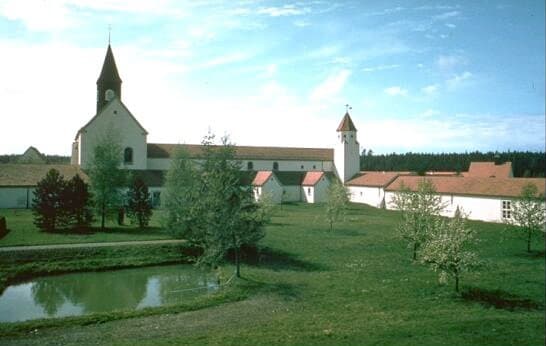
Maria Hain Charterhouse
Marienau Charterhouse is the sole active Carthusian monastery in Germany, serving as the successor to the Maria Hain Charterhouse in Düsseldorf. Founded in 1964, it relocated from its original site due to airport expansion. The monastery is renowned for its modern, functional architecture designed by Emil Steffann and Gisberth M. Hülsmann, and its capacity to house 24 monks, double the usual number, reflecting its significant role in preserving the Carthusian way of life.