
Pisa Charterhouse
Pisa Charterhouse, also known as Calci Charterhouse or Val Graziosa Charterhouse, is a former Carthusian monastery located in Calci, Tuscany, Italy. Founded in 1366/67, it later became home to monks from Gorgona Abbey and underwent Baroque renovations in the 17th and 18th centuries. Today, it houses the Pisa Museum of Natural History, featuring extensive collections including cetacean skeletons and renowned glass marine invertebrates.
Key Facts
- ›Founded in 1366/67 in Val Graziosa.
- ›Received the island and estate of Gorgona Abbey from Pope Gregory XI.
- ›Underwent Baroque renovations in the 17th and 18th centuries.
- ›Became the site of the Pisa Museum of Natural History in 1981.
- ›Houses one of Europe's largest collections of cetacean skeletons.
- ›Features a collection of 51 glass marine invertebrates by the Blaschka family.

Baroque
- Fresco of the Last Supper By Bernardino Poccetti
- Pisa Museum of Natural History
- Large Collection of Cetacean Skeletons
- Glass Marine Invertebrates By the Blaschka Family
Calci Charterhouse, Val Graziosa Charterhouse, Certosa Della Val Graziosa Di Calci
Francesco Moricotti Prignani, Pope Gregory Xi, Catherine of Siena, Bernardino Poccetti, Leopold Blaschka, Rudolf Blaschka
- Expulsion of Benedictines From Gorgona Abbey and Transfer To Carthusians
- Catherine of Siena's Visit
- Abandonment of Gorgona By Monks Due To Saracen Fears and Relocation To Calci
- Baroque Renovations
- Repopulation Attempt By Dutch Carthusians After Ww2
- Abandonment of Dutch Carthusian Project
- Departure of Last Monks
- Establishment of Pisa Museum of Natural History
About Pisa Charterhouse
Pisa Charterhouse, also known by its Italian name Certosa della Val Graziosa di Calci, or alternatively as Calci Charterhouse or Val Graziosa Charterhouse, is a significant former Carthusian monastery situated in the comune of Calci, approximately 10 kilometers outside the city of Pisa in Tuscany, Italy. Its history is deeply intertwined with monastic reforms and shifts in religious communities, culminating in its present-day role as a prominent museum.
History and Development
The Carthusians established their presence in Val Graziosa in 1366/67, a period marked by monastic reform under Archbishop Francesco Moricotti Prignani of Pisa. Shortly thereafter, Pope Gregory XI, a proponent of monastic reform, expelled the Benedictine monks from Gorgona Abbey and granted both the island and its estate to the Carthusians of Val Graziosa. This transfer is noted in the letters of Catherine of Siena, who visited around 1375 and wrote about the need to adapt the facilities for the Carthusian order, barring Benedictines from Gorgona.
A significant shift occurred in 1425 when political instability in the Mediterranean, and the fear of Saracen attacks, led the monks on Gorgona to abandon their island monastery. They sought refuge at Calci, bringing with them the records from Gorgona, which were subsequently published in Pisa. The monastery complex underwent substantial renovations during the 17th and 18th centuries, acquiring its distinctive Baroque appearance.
In the post-World War II era, members of convents from the Netherlands attempted to repopulate the monastery, which had sustained damage during the war. Their ambition was to potentially re-establish a Carthusian monastery in the Netherlands. However, this endeavor ultimately faltered in the 1960s due to a lack of funding, a scarcity of novices, and internal disputes. The last monks departed from Pisa Charterhouse in 1972.
Museum and Legacy
In 1981, the University of Pisa transformed the former monastery into the Pisa Museum of Natural History. The museum's origins trace back to the 16th century as a cabinet of curiosities associated with the Giardino dei Semplici. Today, it houses an impressive array of exhibits, including one of Europe's largest collections of cetacean skeletons. Particularly noteworthy is its collection of 51 meticulously crafted glass marine invertebrates created by the renowned Bohemian glass artists Leopold and Rudolf Blaschka. The monastic living quarters have since been renovated and are also accessible to the public, offering a glimpse into the lives of the monks who once resided there.
Source: Wikipedia ↗
Frequently Asked Questions
When was Pisa Charterhouse founded?
Pisa Charterhouse was founded in 1366 or 1367. The Carthusians established their monastery in Val Graziosa during this period.
What is the historical significance of Gorgona Abbey to Pisa Charterhouse?
In the 14th century, Pope Gregory XI expelled Benedictine monks from Gorgona Abbey and granted the island and its estate to the Carthusians of Val Graziosa. Later, in 1425, the monks from Gorgona relocated to Calci, bringing their records with them.
What architectural style is Pisa Charterhouse known for?
The complex was renovated in the 17th and 18th centuries, resulting in its current Baroque appearance. Earlier periods may have featured different styles, but the Baroque is noted for its transformation of the complex.
What is located at Pisa Charterhouse today?
Since 1981, Pisa Charterhouse has been home to the Pisa Museum of Natural History. The University of Pisa moved its extensive collections to the former monastery at this time.
What are some notable collections within the Pisa Museum of Natural History?
The museum boasts one of the largest collections of cetacean skeletons in Europe. It also houses a remarkable collection of 51 glass marine invertebrates crafted by Bohemian artists Leopold and Rudolf Blaschka.
Did any monastic community live at Pisa Charterhouse after it became a museum?
After World War II, Dutch Carthusians attempted to repopulate the monastery. However, due to financial difficulties, a lack of novices, and internal conflicts, they abandoned their project in the 1960s. The last monks departed in 1972.
Related Monasteries

Padula Charterhouse
Padula Charterhouse, also known as Certosa di San Lorenzo di Padula, is the largest Carthusian monastery in Italy, located in Padula within the Cilento National Park. Founded in 1306 and dedicated to Saint Lawrence, its construction spanned 450 years, resulting in a principal Baroque architectural style. The monastery is renowned for its immense size, the world's largest cloister, and significant artistic features, while also serving various roles in Italian military history.
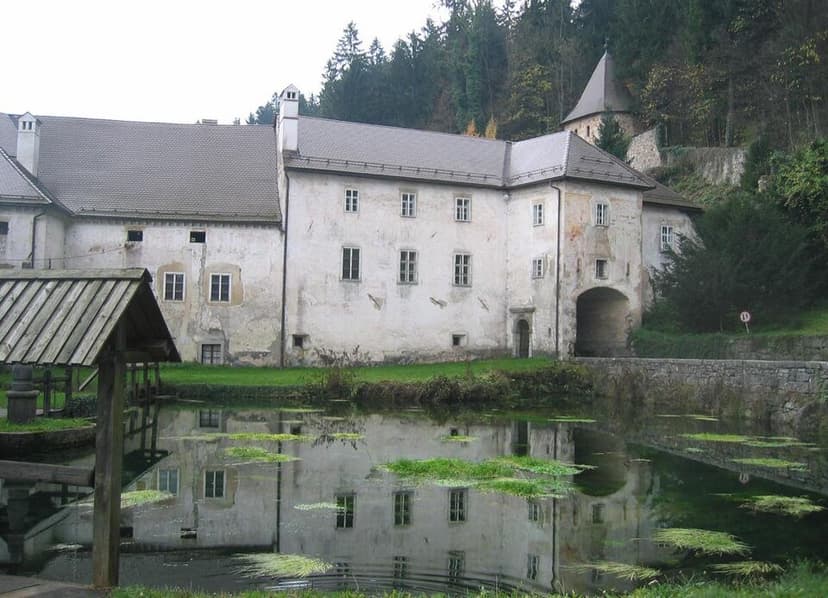
Bistra
Bistra is a settlement in Slovenia, best known for the Bistra Charterhouse, the first monastery in Carniola, founded in 1260. This complex, also referred to as "Bistra Castle," operated as a monastery until its dissolution in 1782. Today, the site houses the Technical Museum of Slovenia, featuring collections related to various technical fields and historical vehicles.

Pesio Charterhouse
The Certosa di Pesio is a Carthusian monastery with a long construction history spanning from 1173 to 1802. Situated in the Pesio Valley, within the municipality of Chiusa di Pesio in the Piedmont region of Italy, it is a significant historical religious complex. The monastery's extended building period reflects centuries of development and adaptation.