
Padula Charterhouse
Padula Charterhouse, also known as Certosa di San Lorenzo di Padula, is the largest Carthusian monastery in Italy, located in Padula within the Cilento National Park. Founded in 1306 and dedicated to Saint Lawrence, its construction spanned 450 years, resulting in a principal Baroque architectural style. The monastery is renowned for its immense size, the world's largest cloister, and significant artistic features, while also serving various roles in Italian military history.
Key Facts
- ›It is the largest monastery in Italy, covering 51,500 m2 with 320 rooms.
- ›Founded on April 27, 1306, by Tommaso DI San Severino.
- ›Features the world's largest cloister, spanning 12,000 m2 and surrounded by 84 columns.
- ›The principal architectural style of its main buildings is Baroque.
- ›Houses the archaeological museum of Western Lucania.
- ›Has served as a military headquarters and internment camp.

Baroque
World's Largest Cloister, Spiral Staircase To Library, Vietri Ceramic Tiled Floor, Inlaid Marble Works, 18th-Century Scagliola Work, Archaeological Museum of Western Lucania, Large Wine Vats
Certosa Di Padula, Certosa Di San Lorenzo Di Padula
Tommaso Di Severino
- French Headquarters During the Napoleonic Wars
- Base For Garibaldi's Southern Army During the Risorgimento
- Internment Camp During World War 1 and World War 2
- Establishment of the Czechoslovak Legion In Italy In 1917
About Padula Charterhouse
Padula Charterhouse, known in Italian as Certosa di Padula or Certosa di San Lorenzo di Padula, stands as the largest Carthusian monastery in Italy, situated in the town of Padula within the Cilento National Park in Southern Italy. It holds the distinction of being a UNESCO World Heritage Site, recognized for its immense scale and historical significance.
History and Construction
The foundation of Padula Charterhouse dates back to April 27, 1306, established by Tommaso di San Severino on the site of an earlier monastic settlement. The monastery is dedicated to Saint Lawrence, and its architectural layout is said to symbolically represent the griddle-iron upon which the saint was martyred. The construction and development of the charterhouse spanned an impressive 450 years, with the majority of its principal structures exhibiting Baroque architectural characteristics.
Architectural and Artistic Significance
One of the most striking features of Padula Charterhouse is its colossal size, covering 51,500 square meters and containing 320 rooms and halls. It proudly houses the world's largest cloister, a vast expanse of 12,000 square meters surrounded by 84 columns. Within its annexes, a remarkable spiral staircase crafted from white marble leads to a grand library adorned with fine Vietri ceramic tiles. The monastery's chapels are notable for their exquisite inlaid marble works and some of the most spectacular 18th-century scagliola creations, representing the highest concentration of such artistry in one location.
The Carthusian tradition emphasizes a strict separation between contemplation and work. This is reflected in the monastery's design, with peaceful cloisters, the library, and chapels designated for contemplation, while large kitchens, cellars with enormous wine vats, laundries, and expansive external yards were dedicated to productive activities and trade with the outside world.
Museum and Historical Roles
Padula Charterhouse also serves as a repository for history beyond its monastic origins. It houses the archaeological museum of Western Lucania, showcasing a collection of finds from the necropolis of Sala Consilina and Padula, spanning from protohistory to the Hellenistic Age. Furthermore, the charterhouse has played a significant role in Italy's military history, serving as French headquarters during the Napoleonic Wars, a base for Garibaldi's Southern Army during the Risorgimento, and an internment camp during both World War I and World War II. It was within these walls that the Czechoslovak Legion in Italy was established in 1917.
Source: Wikipedia ↗
Frequently Asked Questions
When was Padula Charterhouse founded?
Padula Charterhouse was founded on April 27, 1306. The monastery's building history spans approximately 450 years after its initial establishment.
What is significant about the cloisters at Padula Charterhouse?
The monastery boasts the largest cloister in the world, covering an area of 12,000 m2 and enclosed by 84 columns. These cloisters represent the contemplative aspect of the Carthusian way of life.
Is Padula Charterhouse a UNESCO World Heritage Site?
Yes, Padula Charterhouse is designated as a World Heritage Site.
What architectural styles are present at Padula Charterhouse?
While its building history is extensive, the principal parts of the monastery's buildings are in the Baroque style. Other notable artistic elements include Vietri ceramic tiles and 18th-century scagliola work.
What historical roles has Padula Charterhouse played?
Beyond its religious function, the charterhouse has served significant military roles, including as French headquarters during the Napoleonic Wars, a base for Garibaldi's army, and an internment camp during both World Wars.
Does Padula Charterhouse house any museums?
Yes, the monastery contains the archaeological museum of Western Lucania, which displays artifacts from the necropolis of Sala Consilina and Padula, covering periods from protohistory to the Hellenistic Age.
Related Monasteries

Pisa Charterhouse
Pisa Charterhouse, also known as Calci Charterhouse or Val Graziosa Charterhouse, is a former Carthusian monastery located in Calci, Tuscany, Italy. Founded in 1366/67, it later became home to monks from Gorgona Abbey and underwent Baroque renovations in the 17th and 18th centuries. Today, it houses the Pisa Museum of Natural History, featuring extensive collections including cetacean skeletons and renowned glass marine invertebrates.
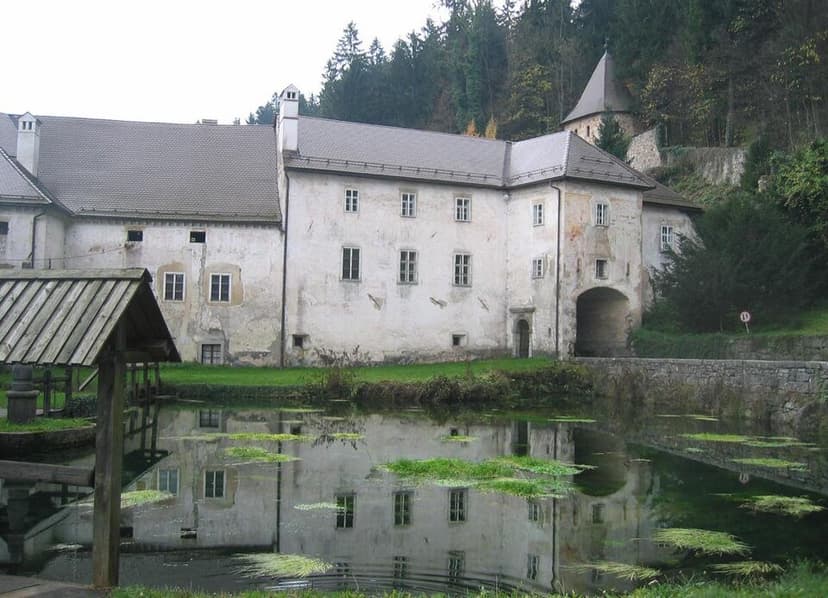
Bistra
Bistra is a settlement in Slovenia, best known for the Bistra Charterhouse, the first monastery in Carniola, founded in 1260. This complex, also referred to as "Bistra Castle," operated as a monastery until its dissolution in 1782. Today, the site houses the Technical Museum of Slovenia, featuring collections related to various technical fields and historical vehicles.

Pesio Charterhouse
The Certosa di Pesio is a Carthusian monastery with a long construction history spanning from 1173 to 1802. Situated in the Pesio Valley, within the municipality of Chiusa di Pesio in the Piedmont region of Italy, it is a significant historical religious complex. The monastery's extended building period reflects centuries of development and adaptation.