
Pavlovac Monastery
Pavlovac Monastery is situated on Kosmaj Mountain in Koraćica, Serbia, and is believed to have been reconstructed under Stefan Lazarević, with construction beginning in the 14th century and concluding in the early 15th century. The monastery suffered destruction by Ottoman invaders in 1690, leading to the martyrdom of its monks. Following centuries of ruin, the monastery was reconstructed between 1963 and 1967, with the relics of the martyred monks interred in the foundation of the new Church of Saint Nicholas.
Key Facts
- ›Believed to have been reconstructed under Stefan Lazarević.
- ›Construction started in the 14th century and completed in the early 15th century.
- ›Monks were killed by Ottoman invaders in 1690.
- ›Buildings were set ablaze by Ottoman invaders in 1690.
- ›Reconstruction efforts took place from 1963 to 1967.
- ›The reconstructed church is dedicated to Saint Nicholas.

Church of Saint Nicholas
Manastir Pavlovac
Stefan Lazarević, Patriarch Arsenije Iii Crnojević
Great Migrations of the Serbs, Ottoman Invasion
About Pavlovac Monastery
Pavlovac Monastery, also known as Manastir Pavlovac, is an Orthodox monastery located on Kosmaj Mountain in the village of Koraćica, Serbia. Its name is derived from a nearby stream. Historical assumptions suggest that the monastery saw reconstruction under the direction of Stefan Lazarević, with its initial construction phases occurring in the 14th century and completion at the commencement of the 15th century.
Historical Significance and Destruction
A pivotal moment in the monastery's history occurred in 1690 when Patriarch Arsenije III Crnojević conducted a final liturgy there before the large-scale Serbian migrations to Hungary, known as the Great Migrations. Tragically, the monks who chose to remain at their spiritual home were subsequently killed by invading Ottoman forces, and the monastic complex was set ablaze, leaving it in ruins for centuries.
Reconstruction and Memorial
From 1963 to 1967, efforts were undertaken to identify and mark the relics of the martyred monks. These sacred remains were then laid within the foundation of the newly reconstructed Church of Pavlovac Monastery, which was dedicated to Saint Nicholas. This act commemorated the monks' sacrifice and marked the revival of the monastery after nearly three centuries of desolation.
Source: Wikipedia ↗
Frequently Asked Questions
Where is Pavlovac Monastery located?
Pavlovac Monastery is located on Kosmaj Mountain, in the village of Koraćica, Serbia. It is named after a nearby stream.
When was Pavlovac Monastery built?
The monastery was partially built in the 14th century and completed at the start of the 15th century. It is assumed to have been reconstructed under the instruction of Stefan Lazarević.
What happened to Pavlovac Monastery in 1690?
In 1690, Patriarch Arsenije III Crnojević performed a final liturgy there before the Great Migrations of the Serbs. The monks who remained were killed by Ottoman invaders, and the monastery buildings were set ablaze.
When was the monastery reconstructed?
The monastery underwent reconstruction from 1963 to 1967. During this period, the relics of the martyred monks were identified and placed in the foundation of the newly reconstructed Church of Pavlovac Monastery.
What is the reconstructed church dedicated to?
The newly reconstructed Church of Pavlovac Monastery is dedicated to Saint Nicholas.
Related Monasteries

Vojlovica Monastery
Vojlovica Monastery is a Serb Orthodox monastery located in the Banat region of Vojvodina, Serbia, within the municipality of Pančevo. Founded during the reign of Despot Stefan Lazarević in the late 14th or early 15th century, it holds significant historical and cultural importance. The monastery was officially declared a Monument of Culture of Exceptional Importance in 1990 and is protected by the Serbian state.

Privina Glava Monastery
Privina Glava Monastery is a Serb Orthodox monastery situated on Fruška Gora mountain in Vojvodina, northern Serbia. While legend attributes its founding to a 12th-century feudal lord named Priba/Priva, historical records first mention the monastery in the mid-16th century. It is recognized as a Monument of Culture of Exceptional Importance and is protected by the state.
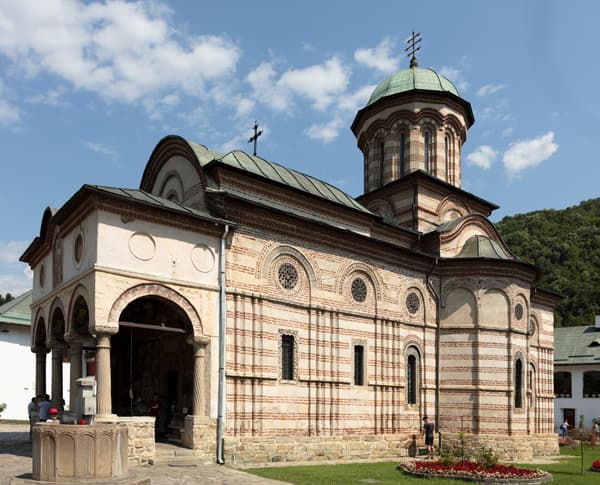
Cozia Monastery
Cozia Monastery is a significant medieval monastic complex in Romania, founded by Voivode Mircea the Elder in the late 14th century. It played a crucial role in the spiritual, cultural, and political history of Wallachia for over six centuries, serving as a prominent Orthodox center, a royal necropolis, and a model for subsequent religious architecture. The monastery is renowned for its Byzantine-influenced architecture, well-preserved frescoes, and its enduring importance as a pilgrimage site and symbol of national heritage.