
Privina Glava Monastery
Privina Glava Monastery is a Serb Orthodox monastery situated on Fruška Gora mountain in Vojvodina, northern Serbia. While legend attributes its founding to a 12th-century feudal lord named Priba/Priva, historical records first mention the monastery in the mid-16th century. It is recognized as a Monument of Culture of Exceptional Importance and is protected by the state.
Key Facts
- ›Legendary founding by feudal lord Priba/Priva in the 12th century.
- ›Earliest historical records date to 1566/1567.
- ›Attributed founding by the Branković family in the 15th century is another possibility.
- ›Altar screen icons painted by Andrej Šaltist in 1786.
- ›Wall paintings completed by Kuzman Kolarić in 1791.
- ›Declared a Monument of Culture of Exceptional Importance in 1990.

Altar Screen Icons, Wall Paintings
Manastir Privina Glava
Priba/Priva
About Privina Glava Monastery
The Privina Glava Monastery is a significant Serb Orthodox religious site located on the slopes of Fruška Gora mountain in Vojvodina, northern Serbia. While local legend attributes its establishment to a 12th-century feudal lord named Priba or Priva, historical documentation places its earliest confirmed existence in the period of 1566/1567.
Another historical account suggests a connection to the Branković family, powerful Srem despots, who may have founded or patronized the monastery in the 15th century. The monastery's artistic heritage includes notable works from the late 18th century; the icons adorning the altar screen were painted by Andrej Šaltist in 1786, and Kuzman Kolarić created the wall paintings in 1791.
Recognizing its cultural and historical importance, Privina Glava Monastery was designated a Monument of Culture of Exceptional Importance in 1990 and remains under state protection. It continues to function as an active monastery within the Serb Orthodox tradition.
Source: Wikipedia ↗
Frequently Asked Questions
When was Privina Glava Monastery founded?
According to legend, it was founded by a feudal lord named Priba/Priva in the 12th century. Another tradition suggests the Branković family founded it in the 15th century. The earliest confirmed historical records of the monastery date back to 1566/1567.
Where is Privina Glava Monastery located?
The monastery is situated on Fruška Gora mountain in the province of Vojvodina, in northern Serbia.
What is the significance of Privina Glava Monastery?
It is a significant Serb Orthodox monastery. In 1990, it was declared a Monument of Culture of Exceptional Importance and is protected by the state.
Who painted the artwork in Privina Glava Monastery?
The icons in the altar screen were painted by Andrej Šaltist in 1786. The wall paintings were created by Kuzman Kolarić in 1791.
Related Monasteries

Vojlovica Monastery
Vojlovica Monastery is a Serb Orthodox monastery located in the Banat region of Vojvodina, Serbia, within the municipality of Pančevo. Founded during the reign of Despot Stefan Lazarević in the late 14th or early 15th century, it holds significant historical and cultural importance. The monastery was officially declared a Monument of Culture of Exceptional Importance in 1990 and is protected by the Serbian state.

Pavlovac Monastery
Pavlovac Monastery is situated on Kosmaj Mountain in Koraćica, Serbia, and is believed to have been reconstructed under Stefan Lazarević, with construction beginning in the 14th century and concluding in the early 15th century. The monastery suffered destruction by Ottoman invaders in 1690, leading to the martyrdom of its monks. Following centuries of ruin, the monastery was reconstructed between 1963 and 1967, with the relics of the martyred monks interred in the foundation of the new Church of Saint Nicholas.
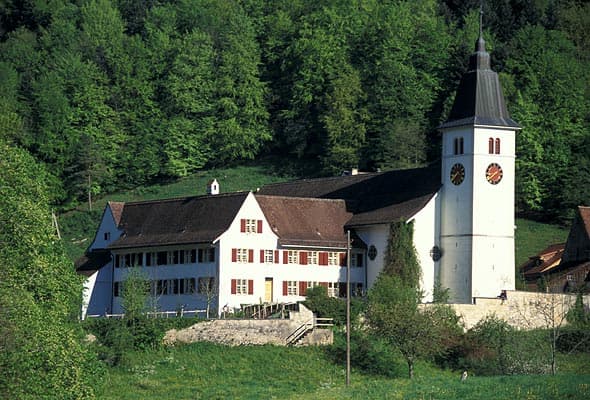
Beinwil Abbey
Beinwil Abbey, originally a Benedictine monastery founded around 1100, experienced periods of conflict, dissolution, and revival. Despite being dissolved in the 16th century and later re-established, it faced further dissolution during the Kulturkampf. In recent times, it transitioned from an ecumenical center to an Orthodox monastery, though its canonical affiliation has been questioned.