
Cozia Monastery
Cozia Monastery is a significant medieval monastic complex in Romania, founded by Voivode Mircea the Elder in the late 14th century. It played a crucial role in the spiritual, cultural, and political history of Wallachia for over six centuries, serving as a prominent Orthodox center, a royal necropolis, and a model for subsequent religious architecture. The monastery is renowned for its Byzantine-influenced architecture, well-preserved frescoes, and its enduring importance as a pilgrimage site and symbol of national heritage.
Key Facts
- ›Founded by Voivode Mircea the Elder between 1387 and 1391.
- ›Serves as the royal necropolis for Mircea the Elder and other historical figures.
- ›Features a synthesis of Byzantine, Serbian Morava, and local Romanian architectural styles.
- ›The Bolnița Church, built in 1543, contains notable frescoes, including a votive portrait of the founder.
- ›Renovated and expanded by Prince Constantin Brâncoveanu in the early 18th century.
- ›Remains an active monastic community and a significant pilgrimage destination.
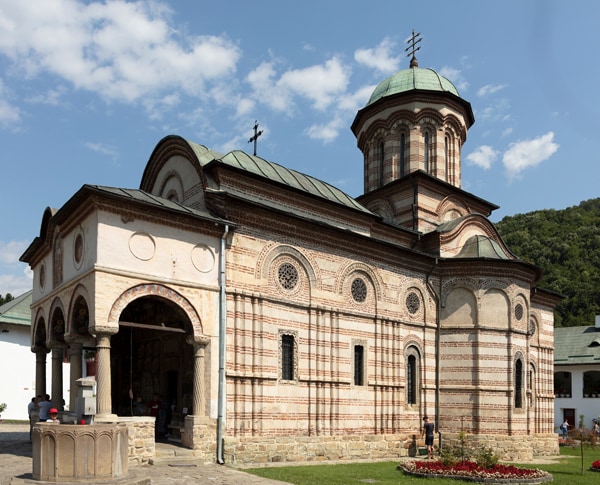
Byzantine, Serbian Morava, Romanian, Neo-Byzantine, BrâNcovenesc
Church of the Holy Trinity, BolnițA Church, Mircea the Elder's Tomb, Well-Preserved Frescoes, Iconostasis, Monastic Cells, Watchtower, Courtyard Fountain
MăNăStirea Cozia, Nucetul
Mircea the Elder, Radu Paisie, Constantin BrâNcoveanu, Gheorghe Bibescu, Barbu șTirbei, Nicolae CeaușEscu, Miron Cozma, Radu Vasile, David, Radoslav, Maxim, Mihail, Carol Hohenzollern, Teodora Cantacuzino
- Construction Completed and Consecrated
- BolnițA Church Constructed
- Renovations By Constantin BrâNcoveanu
- Repairs and Restorations Under Bibescu and șTirbei
- Government Restoration Program
- Visit By Nicolae CeaușEscu
- the 'Peace of Cozia' Agreement During the January 1999 Mineriad
About Cozia Monastery
Cozia Monastery stands as one of Romania's most significant medieval monastic complexes, situated on the right bank of the Olt River near Călimănești in Vâlcea County. Its foundations were laid by Voivode Mircea the Elder, who ruled Wallachia from 1386 to 1418. Construction of the monastery commenced in 1387 and concluded in 1391, with its consecration taking place in 1388, marking a pivotal moment in the development of Wallachian religious architecture and establishing Cozia as a prominent Orthodox monastic center.
History and Significance
Originally known as "Nucetul" (meaning "walnut grove"), the monastery later adopted the name "Cozia," derived from the nearby mountain and possessing Cuman origins. Mircea the Elder envisioned Cozia not only as a spiritual sanctuary but also as a strategic fortification and a cultural hub. It served as a royal necropolis, housing the tomb of Mircea the Elder, a ruler celebrated for his military resistance against the Ottoman Empire and his role in consolidating Wallachia. The monastery also functioned as a center for manuscript production, contributing to the preservation and dissemination of religious and cultural texts. Over the centuries, Cozia Monastery has been modified and expanded by various rulers, including Radu Paisie, who added the infirmary church (Bolnița) in 1543, and Constantin Brâncoveanu, who introduced elements of the Brâncovenesc style in 1707. Extensive restoration efforts were undertaken by the Romanian government between 1958 and 1980.
Architecture and Art
The architectural style of Cozia Monastery is a notable synthesis of Byzantine, Serbian Morava, and local Romanian influences. The central structure, the Church of the Holy Trinity, consecrated in 1388, is a triconch church built with alternating layers of stone and brick. Its façade design reflects the aesthetics of the Morava school of Serbian architecture. The Bolnița Church, built in 1543, is renowned for its exceptionally well-preserved interior frescoes, including a votive portrait of Mircea the Elder and his sons, considered among the last Wallachian monuments of high Byzantine art. The monastery's art and iconography, including its frescoes and icons, are considered an invaluable part of Romania's national cultural heritage, embodying vivid colors and intricate theological symbolism.
Legacy
Cozia Monastery remains an active monastic community and a significant pilgrimage site. It has held a symbolic place in Romanian national identity, inspiring poetry and appearing in historical narratives. The monastery continues to attract scholars, visitors, and pilgrims, preserving its legacy as a vital center of faith, culture, and history for over six centuries.
Source: Wikipedia ↗
Frequently Asked Questions
When was Cozia Monastery founded?
Cozia Monastery was founded by Voivode Mircea the Elder. Construction began in 1387 and was completed in 1391, with its consecration occurring in 1388.
Who is buried at Cozia Monastery?
Cozia Monastery is a royal necropolis. It houses the tomb of its founder, Mircea the Elder, who was a significant ruler of Wallachia. Other notable figures buried there include Carol Hohenzollern and Teodora Cantacuzino.
What is the architectural style of Cozia Monastery?
The architecture of Cozia Monastery is a blend of Byzantine, Serbian Morava, and local Romanian influences. The central Church of the Holy Trinity is a prime example of medieval Wallachian architecture, characterized by its triconch design and stone and brick construction.
What are some of the notable artworks within Cozia Monastery?
Cozia Monastery is celebrated for its medieval frescoes and icons. The main church features original frescoes from the late 14th century, including a votive portrait of Mircea the Elder and his sons. The Bolnița Church also contains well-preserved frescoes attributed to masters David and Radoslav.
What was Cozia Monastery originally called?
Initially, Cozia Monastery was known as 'Nucetul,' a name derived from the abundance of walnut trees in the area. The current name, 'Cozia,' is linked to the nearby Cozia Mountain and has Cuman origins.
Has Cozia Monastery undergone significant renovations?
Yes, Cozia Monastery has undergone several significant renovations and expansions. Notable periods include modifications in 1543, extensive work under Prince Constantin Brâncoveanu in 1707, repairs between 1850 and 1856, and a multi-decade government restoration program from 1958 to 1980.
Related Monasteries

Horezu Monastery
Horezu Monastery, founded in 1690 by Prince Constantin Brâncoveanu, is a masterpiece of the Romanian "Brâncovenesc style." Renowned for its architectural purity, balance, and rich sculpted and painted details, it represents a peak of cultural development in Wallachia during a period of geopolitical instability. The monastery is recognized as a UNESCO World Heritage Site.

Snagov Monastery
Snagov Monastery, also known as Vlad Țepeș Monastery, is a significant medieval Orthodox site in southern Romania, located on an island in Lake Snagov. Originally a Thracian settlement, it likely dates to the late 14th century and was supported by various rulers, including Vlad the Impaler, who is believed to be buried there. The monastery served as a center for Orthodox spirituality, culture, and printing, notably under Abbot Anthim the Iberian.

Brebu Monastery
Brebu Monastery is a significant 17th-century Romanian Orthodox monastic complex, noted for its architectural preservation and importance in Romanian art of the period. Construction began in 1640 under Matei Basarab, and the monastery is situated in Prahova County, Romania, nestled in the foothills of the Bucegi and Grohotiş Mountains. It stands as one of the few medieval Romanian monuments largely preserved in its original form.