
Order of Fontevraud
Christian·France·Suppressed (historical)·12th century
The Order of Fontevraud was a monastic order founded in 1101 by Robert of Arbrissel, notable for its unique "double monastery" structure where monks served nuns under an abbess. Based on the Benedictine Rule, it evolved into a women-only order by the 15th century and was protected by royal houses. The order was suppressed during the French Revolution in 1790, with a brief revival attempt in the 19th century, and its mother house became a prison, which ironically aided its preservation.
Key Facts
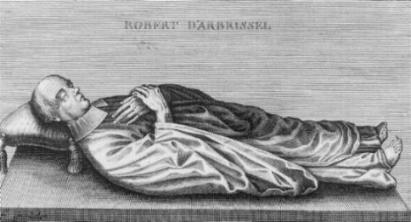
- ›Founded in 1101 by Robert of Arbrissel with a rule based on the Benedictine Rule.
- ›Initially a double monastery with separate houses for men and women, both under the authority of the Abbess of Fontevraud.
- ›Became a women-only order early in the 15th century.
- ›Protected by the House of Plantagenet and later the Capet branch of the House of Bourbon.
- ›Suppressed in 1790 during the French Revolution.
- ›Members used the initials O.R.F. (Ordre Royal de Fontevraud).
Unique Double Monastery Structure, Fontevraud Gradual, Bourbon-Lavedan Seminary, Archives of the Order
Fontevraud Order
Robert of Arbrissel, Hersende of Champagne, PéTronille De Chemillé, Eleanor of Aquitaine, Henry Ii of England, Richard I of England, Louise De Bourbon Lavedan, Jeanne-Baptiste De Bourbon, Dom Jean Lardier
- Founding of the Order
- Cancellation of Injunction Regarding Abbess Selection By Pope Innocent Iii
- Devastation of the Hundred Years War
- Canonical Visitation of Priories
- Suppression During the French Revolution
- Attempted Revival
- Official Revival By Royal Decree
- Merger of Remaining Fontevrist Communities
About Order of Fontevraud
The Order of Fontevraud
The Order of Fontevraud was a significant monastic institution founded in 1101 by Robert of Arbrissel. Its rule was based on that of Saint Benedict, but it distinguished itself through its unique "double monastery" structure. This arrangement involved neighboring but separate communities for men and women, both adhering to the same rule and, crucially, both placed under the ultimate authority of the Abbess of Fontevraud. This structure made the Order unique among monastic traditions.
Evolution and Significance
Initially, the Order aimed for simplicity in life and dress, with specific injunctions regarding silence and good works. While founded as a double monastery, it transitioned into a women-only order early in the 15th century. During its zenith, the Order enjoyed the protection of powerful royal houses, including the Plantagenets and the Capet branch of the House of Bourbon. However, its economic stability was challenged by conflicts like the Hundred Years' War, and by the mid-15th century, many of its priories were sparsely occupied or abandoned.
Suppression and Legacy
The Order of Fontevraud, along with its mother house, met its end with the French Revolution, being suppressed by decree in 1790. The main abbey was subsequently sacked and later repurposed as a prison, a fate that ironically contributed to the preservation of its structures. Despite an attempt at revival in the early 19th century and a more official revival in the mid-19th century, the Order formally ceased to exist in the mid-20th century. Nevertheless, its unique governance structure and the historical documentation it produced, such as the "Inventory of Titles" by Dom Jean Lardier, continue to be subjects of study.
Source: Wikipedia ↗
Frequently Asked Questions
When was the Order of Fontevraud founded?
The Order of Fontevraud was founded in 1101 by Robert of Arbrissel. This marked the establishment of a new monastic community with a distinctive structure.
What was the unique structure of the Order of Fontevraud?
It was a "double monastery," meaning it had neighboring but separate houses for men and women. Both groups followed the same rule but were under the authority of the Abbess of Fontevraud, making it the only order governed in this way.
What happened to the Order of Fontevraud?
The Order and its mother house were suppressed in 1790 due to the French Revolution. The mother house was later turned into a prison, which paradoxically helped in its survival.
Was there any attempt to revive the Order?
Yes, there was an attempt to revive the Order in 1806 by Mme Rose as a women-only order. A more official revival occurred by royal decree in 1847, with a unification of remaining priories in 1849. However, the order finally ended in 1956.
Who were some key figures associated with the Order?
Key figures include the founder Robert of Arbrissel, co-founder Hersende of Champagne, and various abbesses such as Louise de Bourbon Lavedan. Dom Jean Lardier also served as the Order's first archivist.
Related Monasteries

Abbaye Blanche
The Abbaye Blanche was a Benedictine nunnery founded in 1112 in Mortain, France, by Saint Vitalis. It was established for women with his sister, Adelina, as its first abbess. The community followed a strict interpretation of the Rule of Saint Benedict and later joined the Cistercian order in 1147. Though much has been lost to time, remnants of its Romanesque and Early Gothic architecture endure.

Abbaye du Paraclet
The Abbaye du Paraclet was a Benedictine monastery initially founded by Peter Abelard near Ferreux-Quincey, France. It was later transformed into a nunnery under the leadership of Héloïse, his wife, who served as its abbess for the remainder of her life. Though a significant portion of the abbey was demolished during the French Revolution, surviving structures and monuments continue to acknowledge its historical and religious importance.
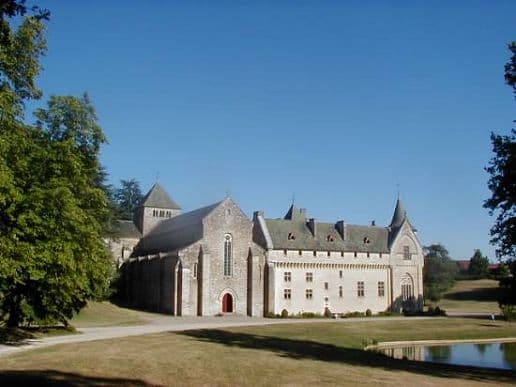
Abbey of Loc-Dieu
Abbey of Loc-Dieu is a Cistercian abbey situated in Aveyron, France, founded in 1123 on a site historically known as "devil's place" before being renamed "place of God" by its monastic inhabitants. Despite facing destruction and rebuilding, it became a significant Gothic architectural site and, during World War II, served as a safe haven for artworks from the Louvre, including the Mona Lisa. Today, the abbey and its park are open to the public.