
Nunraw Abbey
Nunraw Abbey, also known as Sancta Maria Abbey, Nunraw, is a functioning Trappist monastery and the first Cistercian house established in Scotland since the Reformation. Founded in 1946 by monks from Ireland, it is situated in East Lothian at the foot of the Lammermuir Hills. The modern monastery's buildings, constructed between 1952 and 1970, are recognized as a significant example of 20th-century purpose-built monastic architecture.
Key Facts
- ›First Cistercian house founded in Scotland since the Scottish Reformation.
- ›Founded in 1946 by monks from Mount St. Joseph Abbey, Roscrea, Ireland.
- ›Constituted as an Abbey in 1948.
- ›Modern buildings constructed between 1952 and 1970, and are Category a listed.
- ›The abbey church was never built, leaving the complex unfinished.
- ›The estate is technically called White Castle, named after an early hill-fort.

20th Century Monastic
Category A Listed Buildings, Estate Named White Castle
Sancta Maria Abbey, Nunraw
Ada De Warenne, Countess of Huntingdon, Bernard of Clairvaux, Peter Rice Whiston, Michael Sherry, O.C.S.O., Columban Mulcahy, O.C.S.O., Donald Mcglynn, O.C.S.O., Raymond Jaconelli, O.C.S.O., Mark Caira, O.C.S.O., Benedict Okakpu
- Founded As the First Cistercian House In Scotland Since the Scottish Reformation.
About Nunraw Abbey
Nunraw Abbey, officially Sancta Maria Abbey, Nunraw, stands as a working Trappist monastery and holds the distinction of being the first Cistercian house established in Scotland since the period of the Scottish Reformation. Founded in 1946 by monks originating from Mount St. Joseph Abbey in Roscrea, Ireland, it was elevated to the status of an Abbey in 1948. The monastery is picturesquely situated at the base of the Lammermuir Hills, marking the southern boundary of East Lothian. The land itself holds historical significance, with the abbey's estate technically known as White Castle, named after an early hill-fort that once occupied the site.
History and Architecture
The area where Nunraw Abbey is located was historically associated with the Cistercian Nuns of Haddington. It is believed that the land became known as Nunraw, translating to 'Nun's Row,' during that period. The Nunnery of Haddington was established by Ada de Warenne, Countess of Huntingdon, shortly after the death of Bernard of Clairvaux, and available evidence suggests Nunraw may have served as a grange for that convent.
The construction of the modern monastic complex took place between 1952 and 1970. Although a significant undertaking, the architectural project remained unfinished, as the planned abbey church was never built. The buildings, designed by architect Peter Rice Whiston, are recognized for their historical and architectural merit, being designated as Category A listed. They are considered a rare and important example of a monastery purpose-built in Britain during the 20th century.
Leadership and Legacy
The modern establishment of Nunraw Abbey has seen several abbots guide its community. Father Michael Sherry served as the Superior from the foundation in 1946 until its inauguration as an Abbey in 1948, holding the title of Prior. Dom Columban Mulcahy became the first Lord Abbot in 1948, serving until 1969. He was succeeded by Dom Donald McGlynn, who served as Lord Abbot from 1969 to 2003 and notably received the honorary title of 'Chief' of the Igbo people in Nigeria. Dom Raymond Jaconelli was Abbot from 2003 to 2009, followed by Dom Mark Caira from 2009 to 2026. As of 2026, Dom Benedict Okakpu serves as Superior ad nutum.
Source: Wikipedia ↗
Frequently Asked Questions
When was Nunraw Abbey founded?
The modern monastery of Nunraw Abbey was founded in 1946. It was consecrated as an Abbey in 1948.
Where is Nunraw Abbey located?
Nunraw Abbey is located in East Lothian, Scotland, at the foot of the Lammermuir Hills. The estate is known as White Castle.
What is the religious tradition of Nunraw Abbey?
Nunraw Abbey is a working Trappist monastery, belonging to the Ordo Cisterciensis Strictioris Observantiae.
Are the buildings at Nunraw Abbey historically significant?
Yes, the modern monastery buildings, constructed between 1952 and 1970, are Category A listed. They are noted as a rare example of a purpose-built monastic abbey constructed in Britain during the 20th century.
Is Nunraw Abbey complete?
No, the monastery is unfinished as the abbey church was never built. Construction of the other buildings occurred between 1952 and 1970.
Related Monasteries
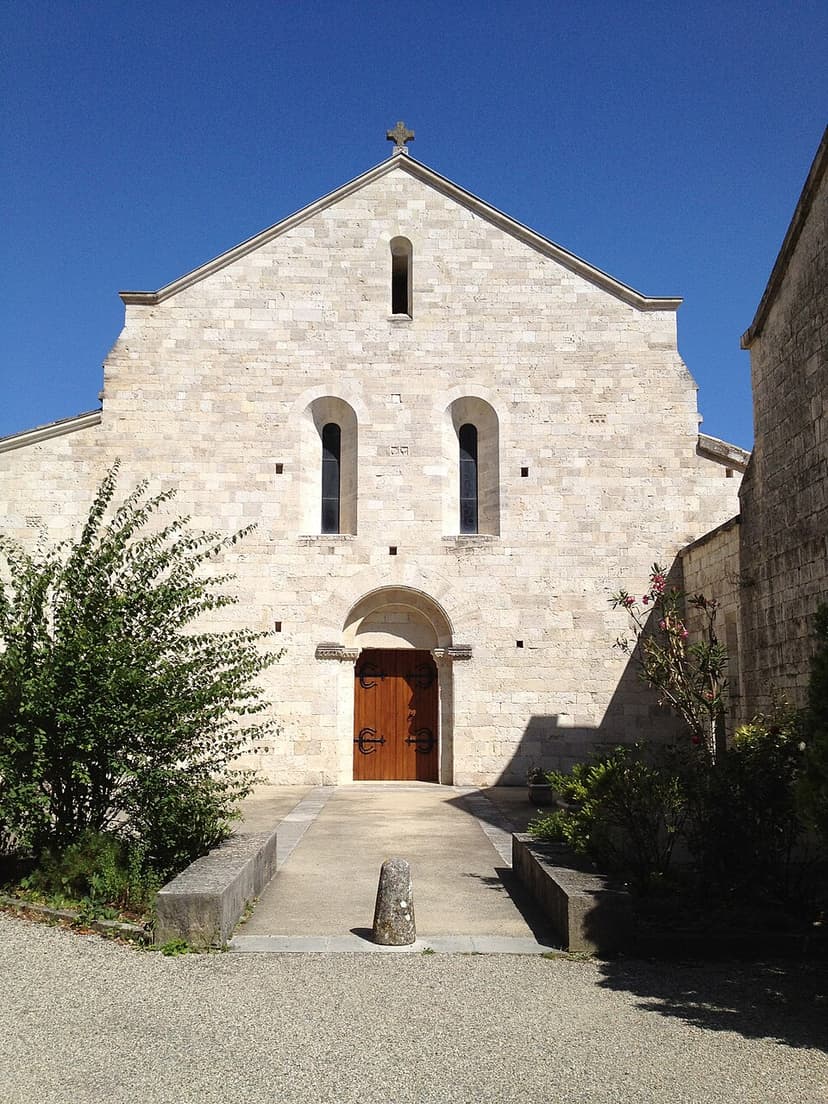
Aiguebelle Abbey
Aiguebelle Abbey, officially Abbaye Notre-Dame d'Aiguebelle, is a Trappist monastery located in the Drôme department of France, on the historical borders of Dauphiné and Provence. Originally founded as a Benedictine monastery in 1045, it was re-established as a Cistercian house in 1137 and later refounded as a Trappist monastery in 1815. The abbey is notable for preserving many of its medieval buildings and for its significant role in establishing numerous daughter houses across the globe.

New Melleray Abbey
New Melleray Abbey, located near Dubuque, Iowa, is a Trappist monastery established in 1849 by monks from Mount Melleray Abbey in Ireland. It has served the religious needs of the surrounding region for over a century and is notable for its Gothic Revival architecture, a significantly renovated chapel, and its business producing Trappist Caskets. The abbey continues to house an active monastic community dedicated to prayer, work, and contemplation.

Scourmont Abbey
Scourmont Abbey, also known as Abbaye Notre-Dame de Scourmont, is a Trappist monastery located on the Scourmont plateau in Chimay, Belgium. Famous for its spiritual life and the production of Trappist beer and cheese under the Chimay brand, the abbey was founded in 1850. Despite early challenges including criminal acts by some monks and the arduous task of cultivating the land, Scourmont grew to become an abbey in 1871 and has since founded other monasteries.