
Nimnik Monastery
The Nimnik Monastery, also known as the Mariјanski Monastery, is a Serbian Orthodox monastery located in an oak forest near Kurjače, Serbia. Dedicated to the Transfer of the Relics of Saint Nicholas of Mirliki, it is recognized as an immovable cultural asset and a cultural monument. The monastery's history is marked by periods of destruction and reconstruction, with its current form largely dating from the 19th century, and it transitioned into a women's monastery in 1938.
Key Facts
- ›The monastery is dedicated to the Transfer of the Relics of Saint Nicholas of Mirliki.
- ›It is recognized as an immovable cultural asset and a cultural monument in Serbia.
- ›The name 'Nimnik' likely derives from the Vlach word for 'unknown,' possibly referencing an unknown saint.
- ›Tradition suggests the church was built by Duke Bogosav after 1376.
- ›It was rebuilt in 1825 and later had a bell tower added in 1841.
- ›In 1938, it was converted into a women's monastery and currently houses an active community of nuns.
Orthodox
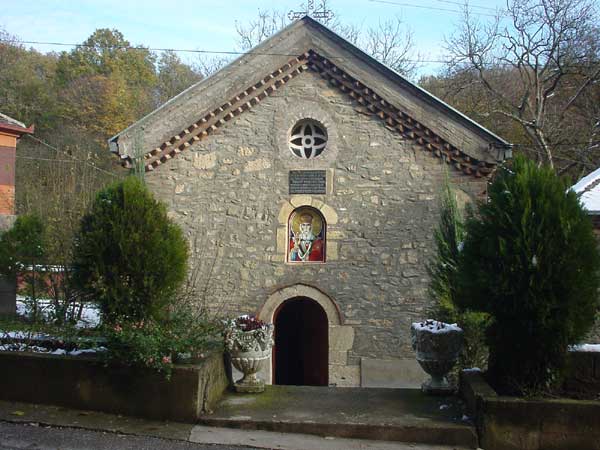
- Chapel of the Sanctuary
- Svetinja Chapel
- Chapel Dedicated To the Intercession of the Blessed Virgin Mary
- Iconostasis By Painter Milisav Marković With Romanian Influence
MariјAnski Monastery
Duke Bogosav, Prince Lazar, Maksim Ratković, Joakim Vujić, Paraskeva Jovanović, Ilarija Sretenović, Jefrosinija Milanović, Milisav Marković
Reconstruction In 1825, Bell Tower Built In 1841, First School Operated In the Inn Building, Converted To Women's Monastery In 1938, Renovation At the End of the 20th Century
About Nimnik Monastery
The Nimnik Monastery, also referred to as the Mariјanski Monastery, is a significant religious site belonging to the Serbian Orthodox Church and administered by the Eparchy of Braničevo. Situated amidst an oak forest approximately one kilometer northeast of Kurjače, Serbia, the monastery and its church, which is dedicated to the Transfer of the Relics of Saint Nicholas of Mirliki, are recognized as an immovable cultural asset and a cultural monument.
History and Reconstruction
The monastery's name is believed to derive from the Vlach word "nimik," meaning "unknown" or "unfamiliar," possibly in reference to an unknown saint interred in the Chapel of the Sanctuary. Tradition holds that the church was constructed by Duke Bogosav after 1376, during the era when northern Braničevo was part of Prince Lazar's domain. Nimnik Monastery is first documented as a metoch (dependency) of Ravanica Monastery in the Ravanica charter and appears in Turkish tax registers from the early 16th century. Historical accounts from 1733/34 describe it as a very old stone church with a stone vault, unpainted and covered with shingles, featuring an exceptionally beautiful and ancient iconostasis.
The monastery suffered destruction during the Kočina Krajina uprising and again after the First Serbian Uprising. It underwent a substantial rebuilding in 1825, as noted by Joakim Vujić, resulting in a church constructed from hard materials with a wooden vault and brick floor. A bell tower was added in 1841, and a building to the northwest served as an inn and, from 1851 to 1853, housed one of the region's early schools.
Architectural and Artistic Significance
The church itself is a single-nave structure with a semi-circular vault and a similarly shaped altar apse. Despite numerous demolitions and reconstructions, its current appearance largely dates from the 19th-century renovations. In 1891, its crushed stone walls were covered with bricks, a feature still visible on the facades. Notably, some building materials were repurposed from the Roman site of Viminacium, including fragments of a marble column capital depicting a female head, which legend attributes to a child killed for refusing to guide invaders to the monastery.
The classically designed iconostasis, featuring fourteen icons arranged in three zones, was created during the late 19th-century restoration by painter Milisav Marković. The icons are valued for their quality, antiquity, and the artist's hand, displaying a notable Romanian influence in Orthodox iconography. The most recent renovation occurred at the end of the 20th century, which included the painting of the temple and the demolition of the old inn.
Legend and Modern Status
Nimnik Monastery is home to two chapels. One, named Svetinja, is situated on the grave of a young girl who, according to legend, was killed by Turks for protecting the monastery. The other chapel is located within the monastery dormitory and is dedicated to the Intercession of the Blessed Virgin Mary. Historically serving as the parish church for the village of Kurjače, Nimnik Monastery was transformed into a women's monastery in 1938 and continues to function as such today, currently maintained by three nuns.
Source: Wikipedia ↗
Frequently Asked Questions
What is the origin of the name Nimnik Monastery?
The name Nimnik Monastery likely originates from the Vlach word 'nimik,' meaning 'unknown' or 'unfamiliar.' This is thought to be in reference to an unknown saint whose grave is located in a chapel next to the main church.
When was the Nimnik Monastery church originally built?
According to tradition, the church was built by Duke Bogosav sometime after 1376, during a period when the area of northern Braničevo was under the rule of Prince Lazar. Historical mentions date back to the Ravanica charter and Turkish tax books from the first half of the 16th century.
What historical events have affected the Nimnik Monastery?
The monastery has endured significant hardship, including being burned and demolished during the Kočina Krajina conflict and after the First Serbian Uprising. It has undergone numerous reconstructions throughout its history.
What is notable about the church architecture?
The Nimnik monastery church is a single-nave building with a semi-circular vault and altar apse. While its current appearance is from the 19th-century reconstruction, some building materials, such as marble column fragments, may have been sourced from the ancient Roman site of Viminacium.
When did Nimnik Monastery become a women's monastery?
Nimnik Monastery served as the parish church for the village of Kurjače for much of its history. It was converted into a women's monastery in 1938 and has remained a female monastic community since then.
Related Monasteries
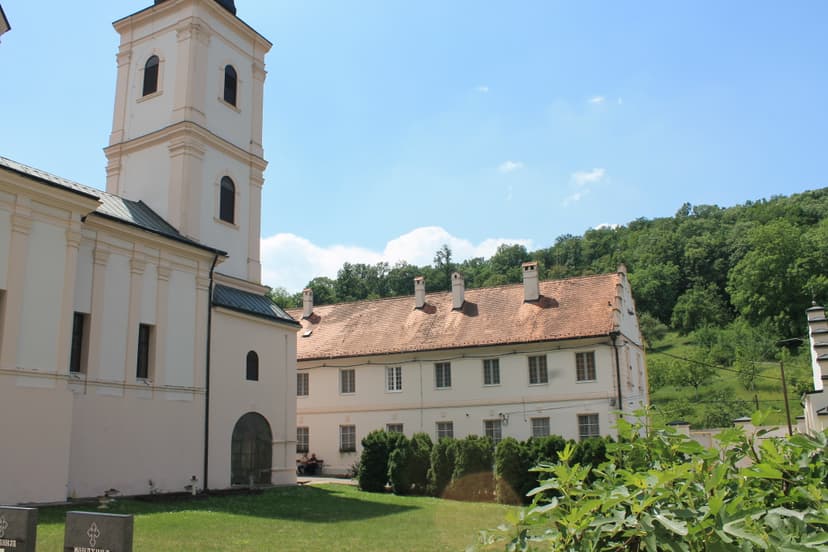
Beočin Monastery
Beočin Monastery is a Serbian Orthodox monastery situated on Fruška Gora mountain in Vojvodina, Serbia. While its exact founding date is unknown, it was first documented in 1566/1567. The monastery has undergone significant reconstruction, particularly between 1732 and 1740 for its church and in 1762 for its bell tower, and was declared a Monument of Culture of Exceptional Importance in 1990.

Berkasovo Monastery
The Berkasovo Monastery, dedicated to Saint Petka Trnovska, is a Serbian Orthodox monastery situated near the village of Berkasovo in Serbia's Srem region. Established as a monastery on August 8, 2008, its current church was founded in the latter half of the 19th century, built around a sacred spring believed to possess healing properties. Historically, the area was significant, with mentions of a fortified town in the possession of notable figures like Vuk Grgurević and Jovan Branković.

Bođani Monastery
Bođani Monastery is the oldest Serbian Orthodox monastery in the Bačka region of Vojvodina, Serbia, founded in 1478. According to tradition, it was established by a merchant named Bogdan who regained his sight after washing in a local spring. The monastery has undergone numerous reconstructions due to damage from wars, fires, and floods, with the current church dating to 1722. It is renowned for its Baroque architecture and extensive frescoes by Hristofor Žefarović, which are considered a significant contribution to Serbian art.