
Beočin Monastery
Beočin Monastery is a Serbian Orthodox monastery situated on Fruška Gora mountain in Vojvodina, Serbia. While its exact founding date is unknown, it was first documented in 1566/1567. The monastery has undergone significant reconstruction, particularly between 1732 and 1740 for its church and in 1762 for its bell tower, and was declared a Monument of Culture of Exceptional Importance in 1990.
Key Facts
- ›First mentioned in Ottoman Turkish records from 1566/1567.
- ›Reconstructed by monks from Rača Monastery after being damaged during Austro-Turkish Wars.
- ›The current church was constructed between 1732 and 1740.
- ›The bell tower was completed in 1762.
- ›Underwent a general reconstruction in 1893.
- ›Declared a Monument of Culture of Exceptional Importance in 1990.
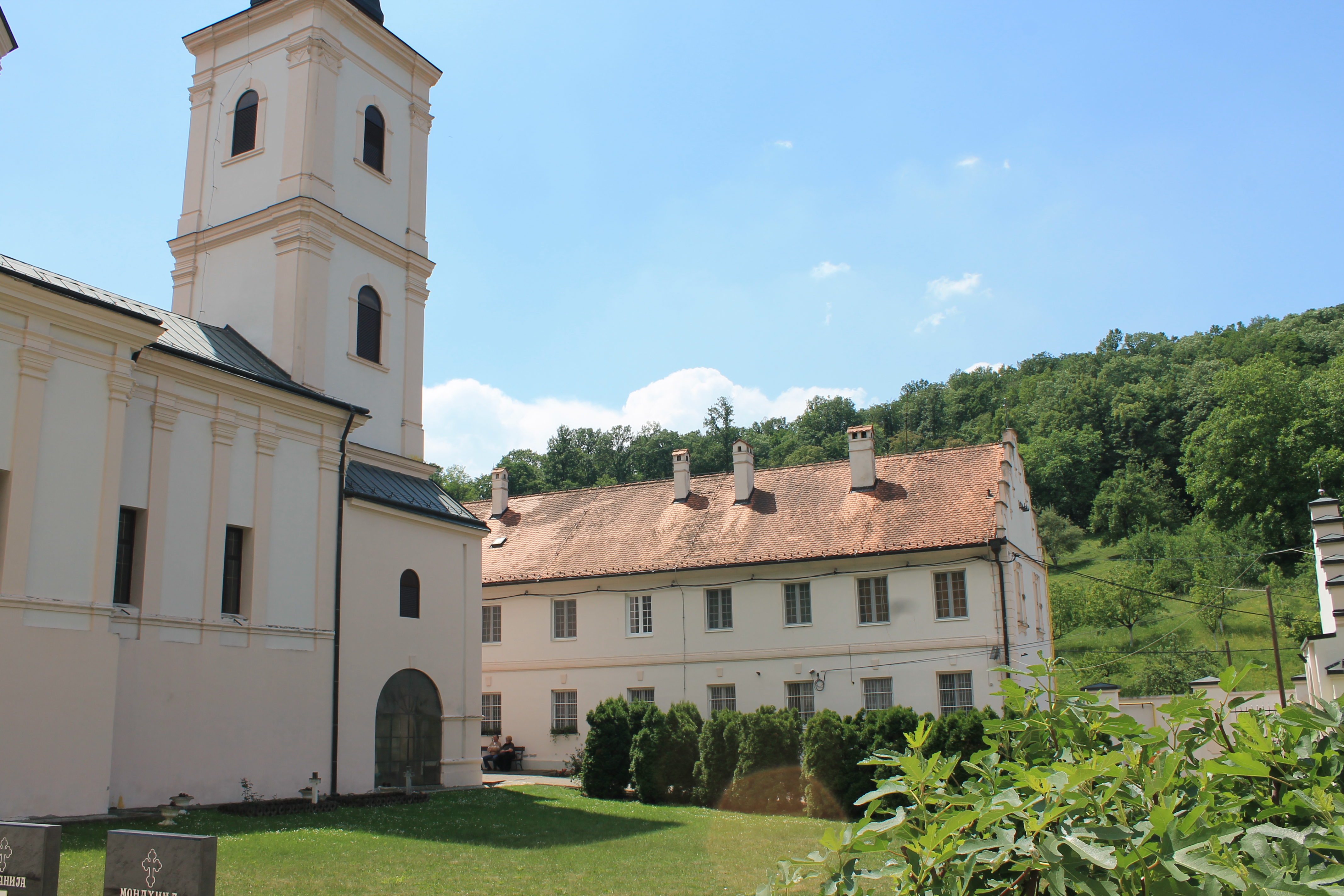
- Monastery Church
- Bell-Tower
- Icons Painted By Janko Halkozović, Dimitrije BačEvić, and Teodor KračUn
Manastir BeočIn
Janko Halkozović, Dimitrije BačEvić, Teodor KračUn
- Suffered Heavy Damages and Was Abandoned During the Austro-Turkish Wars
- Reconstruction Efforts By Monks of RačA
About Beočin Monastery
Beočin Monastery is a significant Serbian Orthodox monastic complex situated just outside the town of Beočin, nestled within the picturesque Fruška Gora mountain range in the northern Serbian province of Vojvodina. While the precise year of its establishment remains unrecorded in historical documents, the monastery's presence is first noted in Ottoman Turkish administrative records dating from 1566/1567. Its history is marked by periods of hardship, notably suffering severe damage and abandonment during the protracted Austro-Turkish Wars that spanned from 1593 to 1791.
Following this period of disrepair, the monks from the nearby Rača Monastery in western Serbia undertook the vital task of reconstructing Beočin. The construction of the monastery's extant church was a substantial undertaking, lasting from 1732 until 1740. The completion of its bell-tower followed in 1762, adding to the monastic complex's architectural profile. Further restoration and renovation efforts were carried out in a general reconstruction in 1893. The artistic heritage of Beočin Monastery includes icons painted by prominent artists of the era, namely Janko Halkozović, Dimitrije Bačević, and Teodor Kračun.
In recognition of its historical and cultural value, Beočin Monastery was officially designated a Monument of Culture of Exceptional Importance in 1990 and is currently under the protection of the Republic of Serbia. It continues to function as an active monastic community and a site of spiritual and historical significance.
Source: Wikipedia ↗
Frequently Asked Questions
When was Beočin Monastery founded?
The exact date of Beočin Monastery's founding is unknown. The earliest mention of the monastery appears in Ottoman Turkish records dating back to 1566/1567.
What is the architectural style of Beočin Monastery?
The extant church at Beočin Monastery was constructed between 1732 and 1740, with the bell-tower completed in 1762. While specific architectural styles are not detailed, these dates suggest a Baroque influence common in Serbian church architecture of the period.
Has Beočin Monastery undergone significant damage or reconstruction?
Yes, the monastery suffered heavy damages and was abandoned during the Austro-Turkish Wars. It was later reconstructed by monks from Rača Monastery, with major construction on the current church and bell-tower occurring in the mid-18th century. A further general reconstruction took place in 1893.
Who painted the icons in Beočin Monastery?
The icons in Beočin Monastery were painted by notable artists Janko Halkozović, Dimitrije Bačević, and Teodor Kračun.
What is the current status of Beočin Monastery?
Beočin Monastery is an active Serbian Orthodox monastery and has been declared a Monument of Culture of Exceptional Importance, protected by the Republic of Serbia.
Related Monasteries

Berkasovo Monastery
The Berkasovo Monastery, dedicated to Saint Petka Trnovska, is a Serbian Orthodox monastery situated near the village of Berkasovo in Serbia's Srem region. Established as a monastery on August 8, 2008, its current church was founded in the latter half of the 19th century, built around a sacred spring believed to possess healing properties. Historically, the area was significant, with mentions of a fortified town in the possession of notable figures like Vuk Grgurević and Jovan Branković.

Bođani Monastery
Bođani Monastery is the oldest Serbian Orthodox monastery in the Bačka region of Vojvodina, Serbia, founded in 1478. According to tradition, it was established by a merchant named Bogdan who regained his sight after washing in a local spring. The monastery has undergone numerous reconstructions due to damage from wars, fires, and floods, with the current church dating to 1722. It is renowned for its Baroque architecture and extensive frescoes by Hristofor Žefarović, which are considered a significant contribution to Serbian art.

Bogovađa Monastery
Bogovađa Monastery is a Serbian Orthodox monastery situated in Bogovađa, near Lajkovac, central Serbia. It holds a historical significance as a center of learning and has undergone numerous renovations throughout its existence. The monastery's origins trace back to the 15th century, with its current structures reflecting reconstructions and additions from the late 18th and mid-19th centuries.